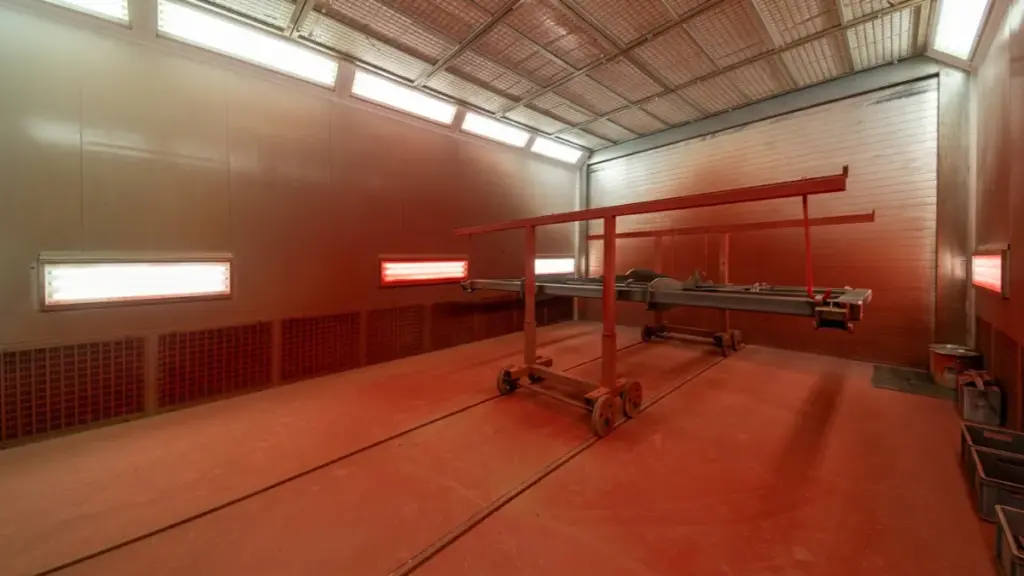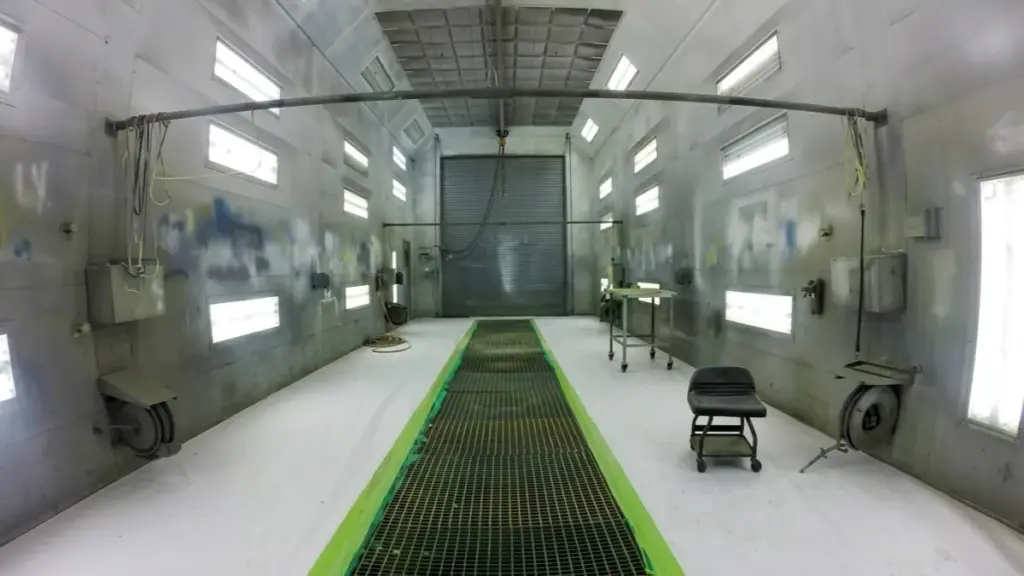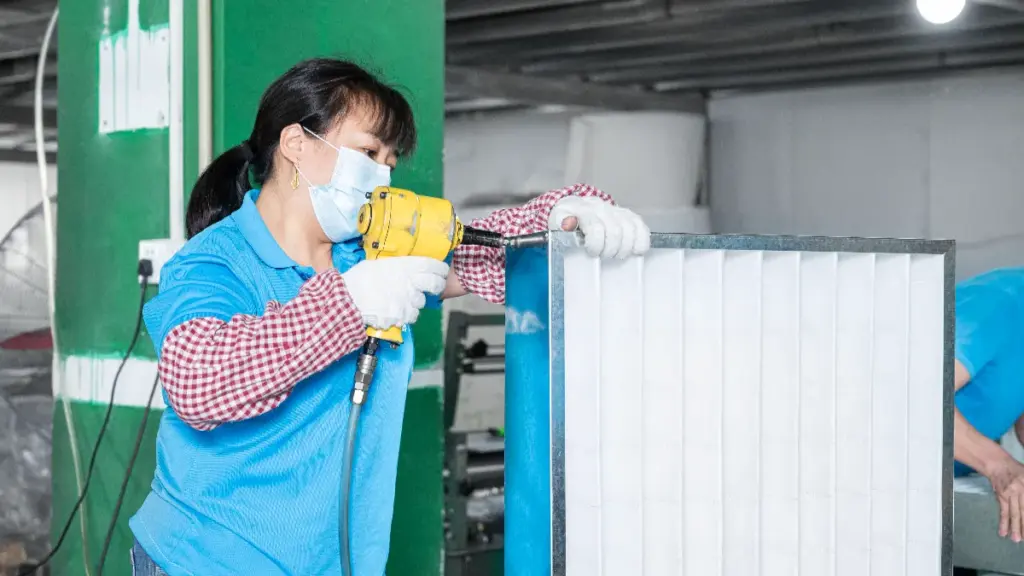
In a paint booth, air quality directly affects coating results, transfer efficiency, and the cleanliness of the final finish. Among all filtration stages, ceiling filters play a critical role because they help deliver clean, balanced air from the top of the booth to the work area below. If the wrong ceiling filter is used, problems such as dust contamination, uneven airflow, poor paint finish, and higher maintenance costs can quickly appear.
This article explains the different types of ceiling filters used in paint booths, how they compare with other filtration products, and how to choose the right option for your spray booth system.
What Are Ceiling Filters in a Paint Booth?
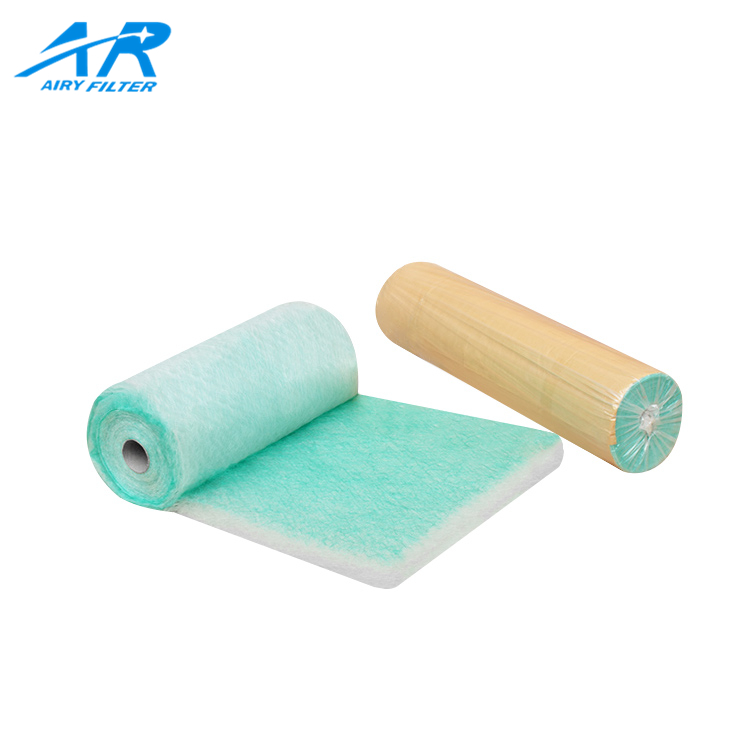
Ceiling filters act as the primary intake barrier in downdraft paint booths, capturing microscopic contaminants to ensure clean, downward airflow and defect-free finishes.
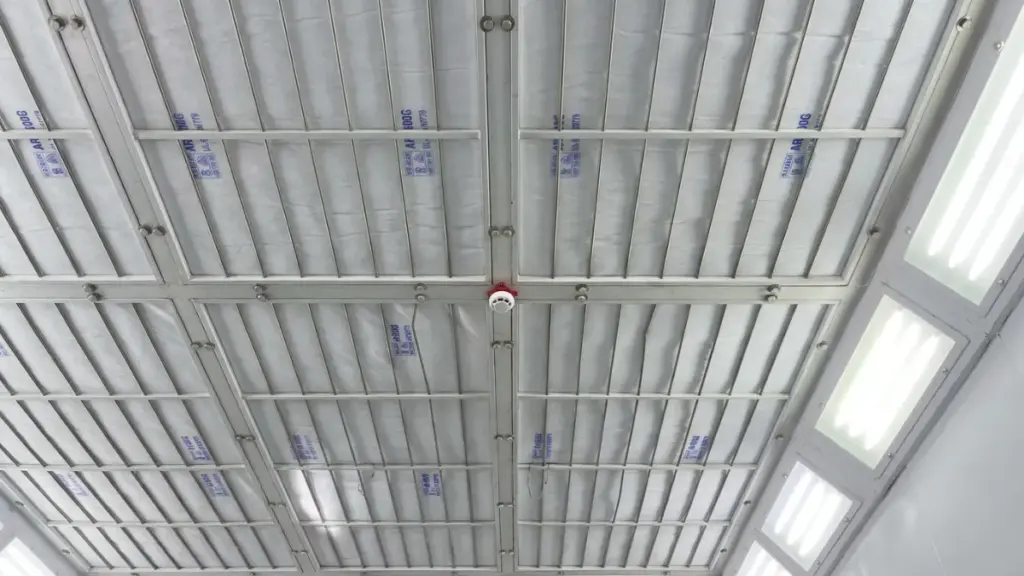
Ceiling filters are air intake filters installed in the upper section of a spray booth, usually in the ceiling plenum or air supply chamber. Their main job is to clean incoming air before it enters the painting zone. By filtering dust, partículas finas, y contaminantes en el aire, ceiling filters help create a cleaner spraying environment and support a smooth, high-quality finish.
In most paint booth systems, ceiling filters work together with other filtration products, such as pre-filters and paint arrestor filters. Pre-filters usually capture larger particles before air reaches the ceiling filter, while the ceiling filter provides finer filtration and more even air diffusion. This layered setup helps maintain stable airflow and extends the service life of the full filtration system.
Ceiling filters are especially important in automotive refinish booths, industrial coating lines, furniture painting facilities, and other environments where finish quality matters.
For more information, please read ¿Qué es un filtro de techo para cabina de pintura y cómo funciona??
Diferentes tipos de filtros de techo que debes conocer
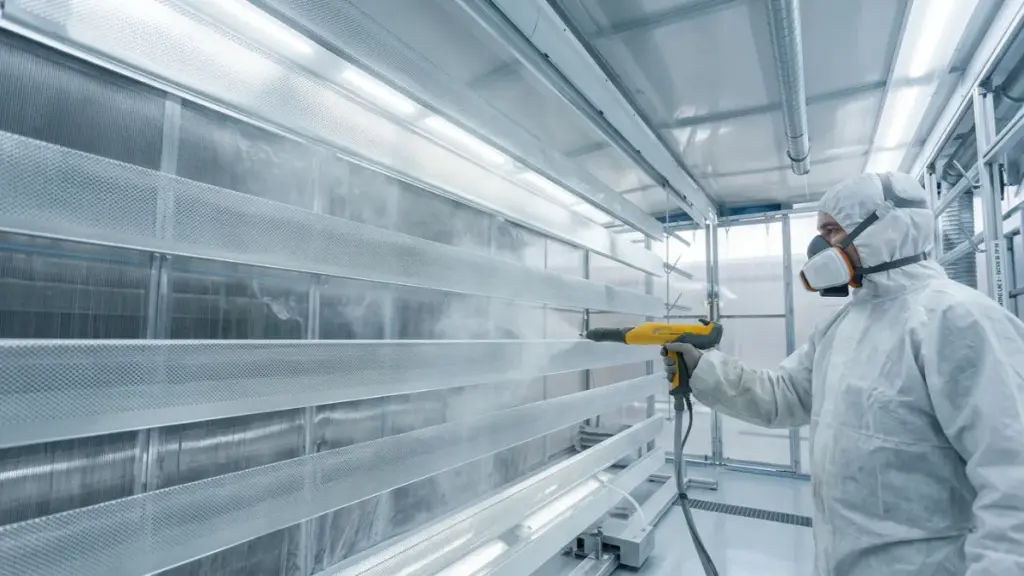
Choosing the right ceiling filter dictates your paint booth’s airflow, contamination levels, and finish quality. Your exact choice depends on booth design and particulate demands.
Different paint booths use different ceiling filter structures depending on airflow design, cleanliness requirements, installation preferences, y presupuesto. Below are the main types you should know.
| Ceiling Filter Type | Main Form | Material / Estructura | Características clave | Best For | Main Advantage |
|---|---|---|---|---|---|
| Blanket Ceiling Filters | Roll media | Progressive synthetic fiber media with density gradient | Good dust holding capacity, stable airflow distribution, flexible cutting, easy replacement in large ceiling areas | Full-ceiling coverage in automotive spray booths and industrial painting systems | Flexible size customization and practical use for large booth ceilings |
| Panel Ceiling Filters | Pre-cut panels, framed or semi-rigid units | Structured filter media in fixed panel format | Convenient installation, consistent shape, cleaner maintenance handling, suitable for modular ceiling layouts | Spray booths with fixed ceiling grids or holding frames | Fast installation and standardized fit |
| Linked Panel Ceiling Filters | Connected multi-panel sections | Multiple panel units linked into a larger filtration surface | Easier coverage of large ceiling sections, organized installation, faster replacement | Large commercial or industrial spray booth systems | Combines panel neatness with better large-area coverage |
| Diffusion Media Ceiling Filters | Roll or pad media, depending on system design | Air-distribution-focused filtration media | Supports even air spread, reduces localized high-velocity airflow, improves finish consistency, helps create smoother airflow | High-standard spray booths and precision finishing applications | Better airflow uniformity across the booth |
| Tackified Polyester Ceiling Filters | Roll media, cut pads, or customized formats | Polyester fiber media treated with tackifier | Better particle retention, reduced dust shedding risk, reliable intake filtration, good cost-performance balance | Estándar paint booth intake filtration where dust control is important | Improved dust capture and holding performance |
| High-Efficiency Ceiling Filters for Special Applications | Customized panels, pads, or special formats | Higher-efficiency filtration media for cleaner air supply | Finer particle control, higher cleanliness level, more stable air quality, better protection for sensitive products | Special applications such as electronics finishing, pharmaceutical equipment coating, and controlled-environment production | Enhanced contamination control for critical environments |
Blanket Ceiling Filters
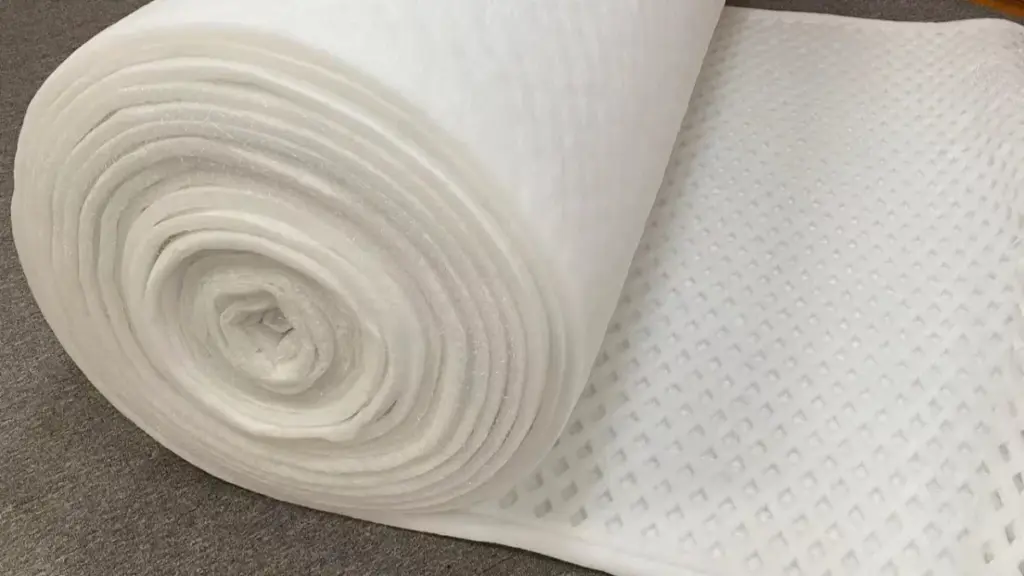
Blanket ceiling filters are one of the most common options in spray booths. They are usually supplied in roll form and made from progressively structured synthetic fiber media. Many blanket filters are designed with a density gradient, which means larger particles are trapped in the outer layer while finer particles are captured deeper inside the media.
This type is widely used because it offers:
- Good dust holding capacity.
- Stable airflow distribution.
- Flexible cutting for different booth sizes.
- Easy replacement in large ceiling areas.
Blanket ceiling filters are a practical choice for full-ceiling coverage and are often used in automotive spray booths and industrial painting systems. They are especially suitable when customers need roll media that can be cut into custom sizes on site.
Panel Ceiling Filters
Panel ceiling filters are pre-cut and framed or semi-rigid filter units designed for direct installation into ceiling grids or holding frames. Compared with blanket media, panel filters are more structured and easier to install in booths that use modular ceiling layouts.
Their advantages include:
- Convenient installation and replacement.
- Consistent shape and fit.
- Cleaner handling during maintenance.
- Better suitability for booths with fixed panel slots.
Panel ceiling filters are often preferred in systems where maintenance speed and standardized dimensions are important. They also help reduce errors during installation because operators do not need to cut media manually.
Linked Panel Ceiling Filters
Linked panel ceiling filters are made of multiple panel sections connected together to create a larger filtration surface. This design combines the structural convenience of panels with easier coverage of larger ceiling sections.
These filters are useful when:
- The booth ceiling is large and divided into multiple sections.
- Faster replacement is needed.
- A more organized installation format is preferred.
- The user wants a balance between roll media flexibility and panel filter neatness.
Linked panel ceiling filters are commonly used in larger commercial or industrial spray booth systems. They can simplify handling and improve installation efficiency, especially in projects requiring repeated filter replacement across multiple booths.
Diffusion Media Ceiling Filters
Diffusion media ceiling filters are designed not only to filter incoming air but also to improve air distribution. In paint booths, uniform airflow is just as important as filtration efficiency. If air enters unevenly, it can create turbulence, dead zones, or contamination risks on the painted surface.
Diffusion media ceiling filters help by:
- Supporting even air spread across the booth ceiling.
- Reducing localized high-velocity airflow.
- Improving finish consistency.
- Contributing to cleaner laminar-like airflow in the working area.
This type is often selected for higher-standard spray booths where airflow balance is a major concern. It is particularly valuable in precision finishing applications.
Tackified Polyester Ceiling Filters
Tackified polyester ceiling filters are made from polyester fiber media treated with a tackifier or adhesive property that helps capture and hold dust particles more effectively. The tackified surface reduces the chance of captured contaminants being released back into the airflow.
Key benefits include:
- Better particle retention.
- Reduced dust shedding risk.
- Reliable performance in paint booth intake filtration.
- Good cost-performance balance for many standard applications.
Because paint finishing is highly sensitive to dust, tackified polyester media is a popular material choice in spray booth ceiling filtration. It helps maintain a cleaner booth environment and supports improved coating quality.
High-Efficiency Ceiling Filters for Special Applications
Some paint booths require higher filtration performance than standard ceiling filters can provide. In these cases, high-efficiency ceiling filters are used for special applications, such as sensitive industrial coating, electronics finishing, pharmaceutical equipment coating, or other controlled-environment production.
These filters are typically chosen when the application demands:
- Finer particle control.
- Higher cleanliness standards.
- More stable air supply quality.
- Better protection for high-value painted products.
While high-efficiency ceiling filters may come with higher pressure drop and cost, they can be the right investment for operations where contamination control is critical.
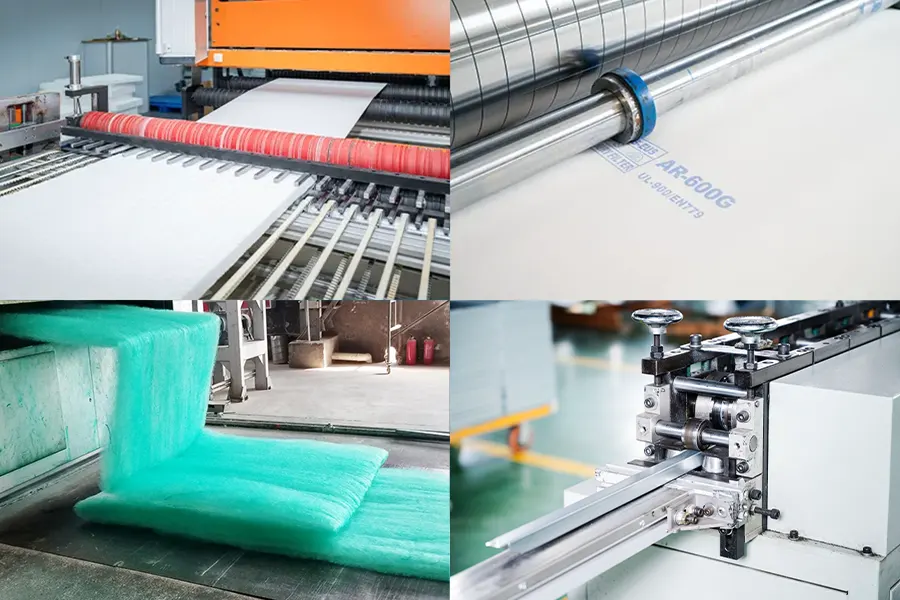
Maximize Efficiency with Custom OEM Air Filters
Ceiling Filters vs Other Paint Booth Filters
Ceiling filters purify intake air, while exhaust filters capture outbound overspray. Combining them with pre-filters creates a multi-stage system for flawless finishes and strict compliance.
Comparing Intake and Exhaust Air Filtration
A paint booth relies on a dual-action airflow system to maintain a pristine environment. The roles of intake and exhaust filtration differ drastically in function, placement, and lifespan.
- Filtros de techo: Manage the intake stage by capturing fine dust and debris from incoming air before it interacts with the wet paint surface.
- Filtros de escape (Paint Arrestors): Handle outbound airflow by trapping overspray to stop environmental contamination.
- Saturation Rates: Exhaust arrestors reach saturation quickly from heavy paint loads, whereas ceiling filters maintain efficiency for much longer periods.
Pre-Filters and Activated Carbon Integration
High-performance spray booths rarely rely on a single filter type. Booth operators stack complementary filters with ceiling pads to create multi-stage filtration setups for strict environmental compliance.
- Prefiltros: Trap coarse, large particles before the air reaches the ceiling intake, directly extending the lifespan of the finer ceiling media.
- Activated Carbon Units: Work alongside standard particle filters to specifically absorb volatile organic compounds (COV) and hazardous chemical fumes.
This multi-stage approach ensures the ceiling filters focus entirely on fine particulate diffusion, keeping the primary workspace completely free of incoming contaminants.
How to Choose the Right Ceiling Filter for Your Booth
Selecting the right ceiling filter depends on matching your booth type, airflow requirements, and material construction to balance high filtration efficiency with optimal air resistance.
Choose by Paint Booth Type
Different booth designs demand specific airflow management. Your filter setup has to align directly with how air moves through the workspace.
- Cabinas de tiro descendente: You need high-efficiency polyester ceiling filters designed for vertical airflow. Pair these directly with floor exhaust filters to capture overspray effectively.
- Semi-downdraft setups: Use a combination of ceiling or side intake filters to balance downdraft and crossdraft particle capture.
- Cabinas de tiro cruzado: Match your ceiling or side intake filters to horizontal airflow. If ceiling space restricts coverage, install fiberglass panels for wall intakes.
- Side-draft systems: Focus heavily on side intake filters. Add ceiling filters only for light-duty applications like furniture painting.
Choose by Filter Material and Construction
The media you select dictates both your maintenance schedule and the quality of your paint finish.
- Filtros de fibra de vidrio: These deliver affordable mechanical filtration through layered fibers. Plan for frequent replacements, as they have a lower dust-holding capacity.
- Pleated panel filters: Built with polyester or synthetic media encased in sturdy metal frames. They offer massive surface areas for superior particle capture and tight seals that prevent air bypass.
- Polyester ceiling filters: The standard for downdraft booths. They feature progressive filtration layers that capture dirt deeper in the pad, extending the service life.
- Multi-layered roll media: This combines synthetic and fiberglass materials for depth filtration. It boosts efficiency while helping you manage airflow resistance.
Choose by Filtration Efficiency and Airflow Resistance
Chasing the highest MERV rating without checking your fan capacity will choke your booth. Más alto MERV ratings capture much finer particles but significantly increase air resistance. You must balance your filtration targets with what your exhaust and intake fans can actually handle.
Maintaining low initial and loaded pressure drops keeps your operation running steady. Fiberglass gives you lower resistance, while pleated media delivers better efficiency with a moderate pressure drop.
Ultimately, dust-holding capacity controls your replacement frequency. Higher-efficiency filters remain essential for setups with demanding airflow needs.
Choose by Size and Installation Format
A premium filter fails immediately if it does not seal properly. You must match your exact booth filter frames. For custom or varied dimensions, operators typically cut bulk roll media to size.
Rigid and semi-rigid panels fit flush into standard ceiling grids. This guarantees a tight seal against air leaks, ensuring dirty air never bypasses the media.
Always reference coverage charts to determine the exact ceiling filter area required. This keeps airflow controlled and consistent across your entire workspace. Pay attention to specific booth guidelines that dictate the required filter weight, media thickness, and format to optimize performance in your specific air paths.
Common Problems Caused by the Wrong Ceiling Filter
Using the wrong ceiling filter restricts airflow, bypasses filtration, and damages internal components, leading to contaminated air quality and expensive system repairs.
Installation and Sizing Mistakes
Installing a filter incorrectly completely defeats its purpose. Even premium filters fail if they do not fit the system perfectly or if operators rush the installation process.
- Edge Gaps: Spaces around the filter edges let unfiltered air, polvo, and contaminants enter ducts directly, creating heavy buildup on coils and blowers.
- Backward Installation: Reversing the filter prevents proper particle trapping, leaves evaporator coils dirty, and forces the blower to work harder to push air.
- Loose Frames: Poorly fitted frames cause the system to recirculate dirty air, lowering indoor air quality and forcing more frequent duct cleaning operations.
Incompatible MERV Ratings and Materials
Selecting the wrong media type or efficiency rating creates a severe imbalance in your airflow. You must match the filter’s specifications directly to your system’s design limits to avoid mechanical failures.
- High-MERV Restrictions: Overly dense filters choke airflow in standard setups, straining the blower motor, raising energy bills, and risking frozen coils.
- Low-MERV Inefficiency: Cheap fiberglass filters miss fine particles like pollen, esporas de moho, y caspa de mascota, which degrades the environment and aggravates respiratory issues.
- Material Collapse: Flimsy filter materials degrade fast and collapse under system pressure, letting heavy debris bypass the media and damage internal HVAC components.
When Should You Replace Ceiling Filters?
Ceiling filter lifespan heavily depends on the material and your operating environment. Expect to swap basic fiberglass monthly, while thicker pleated filters can last nearly a year.
Standard Replacement Timelines by Filter Material
Filter material directly dictates holding capacity. Basic options load up fast, while deeper, high-efficiency media holds significantly more particulate before your airflow drops.
- Filtros de fibra de vidrio: Swap every 30 días. Their low capacity causes them to clog quickly with large particles like dust and pet hair.
- Filtros plisados: Expect these to last around 90 días. Higher-end versions stretch up to 180 days under ideal conditions.
- 5-inch high-MERV filters: Leave these in place for 5 a 12 meses. The increased surface area captures more particles without restricting airflow.
Environmental Factors That Change Your Schedule
Baseline timelines only work in standard conditions. You must adapt your replacement schedule to the specific air quality challenges in your space.
- Multiple pets: Change filters every 20 a 45 days to manage the continuous buildup of dander and fur.
- Allergies or asthma: Replace filters every 20 a 45 days to capture allergens aggressively and support respiratory health.
- Poor outdoor air quality: Swap filters every 30 days during periods of heavy smog or wildfire smoke to prevent rapid clogging.
- Low-usage spaces: Wait 9 a 12 months to replace filters in vacation homes or areas that accumulate minimal indoor pollutants.
Common signs that replacement is needed include:
- Rising pressure drop.
- Reduced airflow in the booth.
- More dust defects on painted parts.
- Visible dirt loading on the filter surface.
- Uneven air distribution.
- Recommended service interval reached.
Why Choose the Right Ceiling Filter Supplier
A reliable manufacturer can help you match the correct material, eficiencia, espesor, and format to your booth system instead of simply selling a standard item.
A dependable spray booth ceiling filter supplier should offer:
- Stable product quality.
- OEM and ODM customization.
- Multiple ceiling filter types and sizes.
- Technical advice for booth applications.
- Flexible supply in rolls, pads, panels, or private-label formats.
- Export experience and quality control support.
For distributors, booth manufacturers, and industrial users, working with an experienced manufacturer can reduce sourcing risk and improve long-term consistency.
Por ejemplo, a manufacturer like Guangzhou Airy Filter Media Co., Limitado. provides a full range of ceiling filter solutions, from blanket media to high-efficiency filters, along with OEM/ODM customization and global export support. With integrated production and quality control systems, we can help match filtration products to real-world industrial applications.
Preguntas frecuentes
What types of ceiling filters are used in paint booths?
Common types include blanket ceiling filters, panel ceiling filters, linked panel ceiling filters, diffusion media ceiling filters, tackified polyester ceiling filters, and high-efficiency ceiling filters for special applications.
What is the difference between blanket and panel ceiling filters?
Blanket ceiling filters are usually supplied in rolls and can be cut to size for large-area coverage. Panel ceiling filters come in pre-cut structured units, which makes installation easier in booths with fixed ceiling frames.
Which ceiling filter type is best for a spray booth?
The best type depends on your application. For most automotive spray booths, blanket or diffusion ceiling filters are preferred due to their ability to provide uniform airflow and consistent finish quality.
Can I order ceiling filters in rolls or cut pads?
Sí. Many ceiling filters are available in rolls, cut pads, panels, or customized sizes depending on the booth design and buyer requirements.
Where to find a reliable spray booth ceiling filter manufacturer?
You should look for a manufacturer with paint booth filtration experience, customization capability, stable quality control, and export service support. Suppliers that can provide both filter media and finished filters are often a better choice for long-term cooperation.
Pensamientos finales
If you are looking for a reliable manufacturer of spray booth ceiling filters, blanket filter media, filtros de panel, or customized paint booth filtration solutions, Guangzhou Airy Filter Media can support OEM, ODM, and wholesale needs for a wide range of industrial applications.