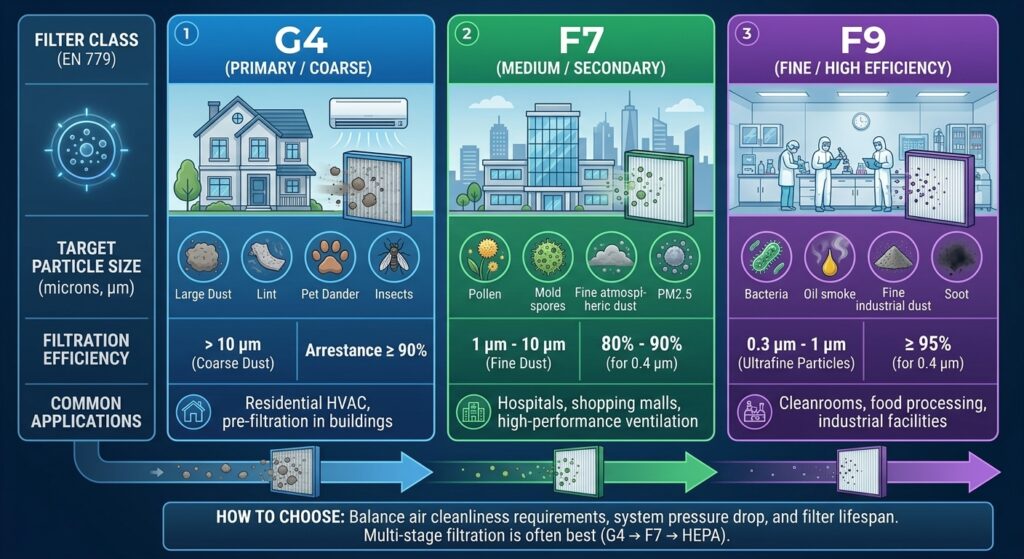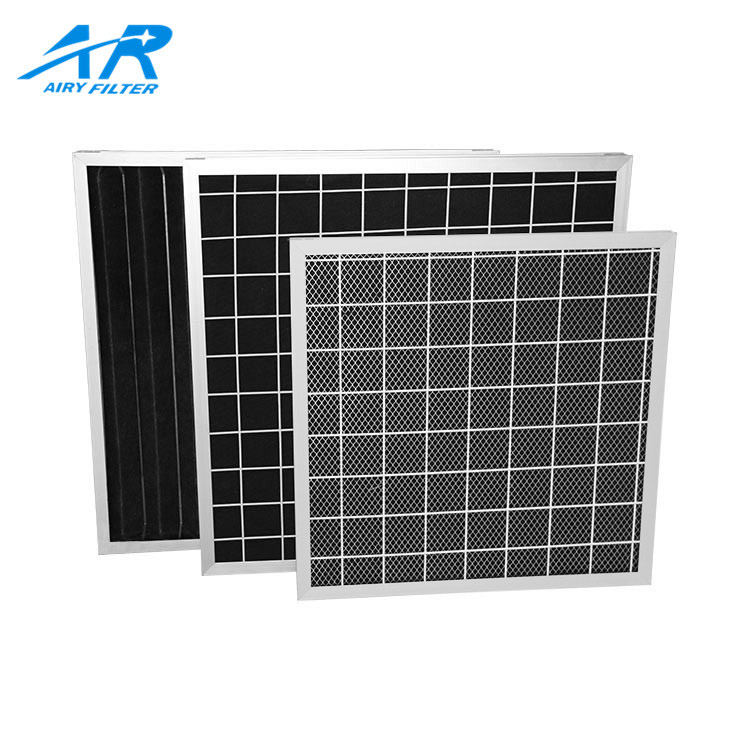
Un comprador que ha elegido el formato todavía no puede fijar el precio de un panel plisado únicamente a partir de una etiqueta de tamaño.. La cotización necesita una dimensión de control., una reclamación colectiva con su base de prueba, un flujo de aire que debe pasar el panel, y un marco que la vivienda aceptará. Las especificaciones del filtro de panel plisado son la lista de campos que convierte “24×24, G4” en un pedido, una fábrica y un inspector de recepción pueden verificar.
Este artículo recorre cada campo utilizando la hoja de prefiltro plisada publicada por Airy.. Cubre los modelos AR-ZK, sus cuatro tamaños y flujos de aire clasificados, las cifras del G3 y el G4, opciones de marco, y los números de resistencia. Donde la hoja permanece en silencio, el texto marca la brecha como una pregunta para el proveedor en lugar de una suposición.
Conclusiones clave
- Cuatro tamaños publicados: 595×595, 595×495, 495×495, y caras de 595×295 mm en 46 mm de profundidad, cada uno con su propio flujo de aire nominal.
- Ejemplo de calificación: las listas de filas de 595×595×46 mm 85% en 35 Pa para G3, 90% en 45 Pa para G4, y 250 Pa recomendado final.
- Campos de orden: tolerancia, marco, caza de focas, y el método de prueba son confirmaciones escritas para solicitar, no catalogar hechos.
¿Para qué etapa de filtración y carcasa es el filtro??
Cada campo de especificación significa algo solo después de que se soluciona el escenario.. Nombra la posición primero.
La página de Airy sitúa el prefiltro plisado en la etapa de filtración primaria de los sistemas de aire acondicionado., sistemas de ventilación, e ingeniería limpia. Las aplicaciones típicas mencionadas en la página van desde la calidad del aire de edificios comerciales hasta la fabricación industrial., Instalaciones de atención médica, e infraestructura de tránsito. Un panel ordenado para una etapa diferente hereda suposiciones erróneas sobre la carga de polvo y el cambio.. Nombra la posición y lo que se encuentra aguas abajo de ella en la misma línea de la hoja..
El lado de la carcasa es la ranura.. Arreglar la apertura de la cara, la profundidad utilizable alrededor 46 mm, y cómo la puerta o el riel sujeta el marco antes de cualquier discusión sobre eficiencia.. Si todavía estás pesando formatos, ver nuestro filtro de bolsillo vs filtro de panel plisado comparación.
Escriba el resumen de etapa y alojamiento en una línea en la parte superior de la especificación.. Esa línea es la que lee el ingeniero de un proveedor antes de los números., y lo que comprueba un inspector cuando dos lotes parecen idénticos. Todos los demás campos de las especificaciones del filtro de panel plisado cuelgan de esta frase.
El escenario también influye en el precio. Los paneles primarios compran área a bajo costo y cambian con frecuencia, mientras que los medios downstream ganan eficiencia y duran más. Una especificación que nombra la etapa incorrecta genera una cotización para el producto incorrecto, y ambas partes creen que están ahorrando dinero.

¿Cómo se deben especificar las dimensiones reales y la profundidad del marco??
Publica la verdad milimétrica. Una etiqueta nominal es un apodo., no es una dimensión.
La hoja AR-ZK enumera las dimensiones reales del panel en milímetros, con un 46 mm de profundidad en los cuatro tamaños: 595×595, 595×495, 495×495, y caras de 595×295 mm. Los compradores del mercado de pulgadas realizan pedidos con etiquetas como 24×24, por lo que la hoja de pedido debe llevar la cifra en milímetros, la etiqueta solicitada, y una nota que marca cuál controla la producción.. La hoja publicada no enumera equivalentes en pulgadas., así solicitar por escrito el nombre nominal y su tolerancia.
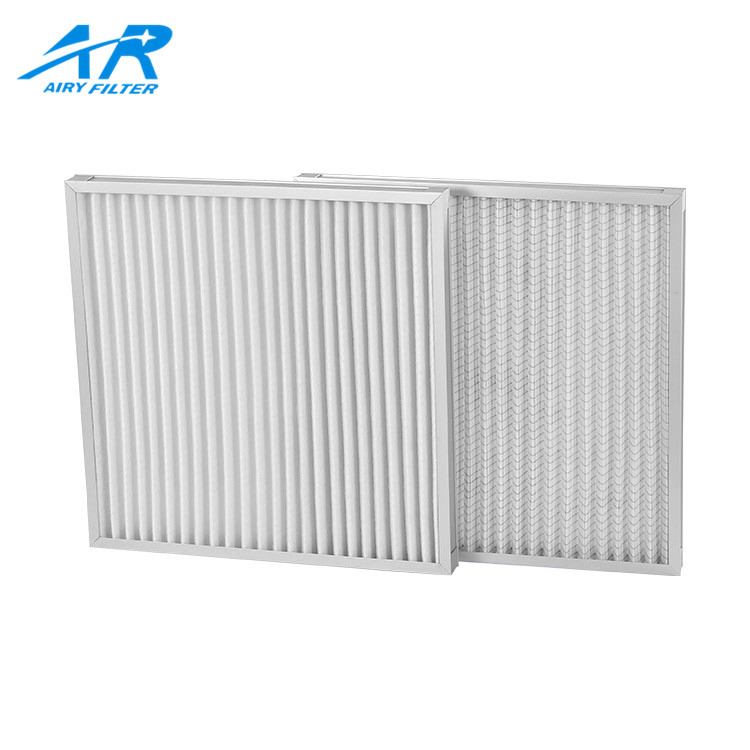
La profundidad merece su propia línea porque 46 mm es un tema de tolerancia estricta. Indique la profundidad de la ranura, la variación aceptable del panel, y quién mide con qué herramienta. Airy publica sin tolerancia en la página del producto, por lo que el número debe provenir de la confirmación escrita del proveedor., no de aritmética de catálogo. Una variación declarada también le dice al inspector de recepción exactamente qué rechazar a su llegada..
Pregunta por el retiro. Aquí es donde las especificaciones de los filtros de panel plisado dejan de ser etiquetas y se convierten en dibujos.. La ficha del proveedor muestra el perfil y la profundidad del marco exactamente como lo construirán.. Su aprobación se encuentra entonces en ese documento., no en una frase de correo electrónico.
¿Qué medios?, Marco, y los detalles del sellado deben confirmarse?
Medios de comunicación, marco, y el sello son tres campos de orden, ni un nombre de producto.
La página describe el medio como fibra de poliéster o material filtrante no tejido., Plisado para construir una gran área de filtro dentro de un panel poco profundo.. Sus características enumeradas incluyen una gran capacidad de retención de polvo., baja resistencia inicial, y lavabilidad, sin indicar qué configuraciones de marco toleran el lavado, el metodo, o rendimiento post-lavado. Copie cada afirmación en la que desea confiar en la especificación como requisito. Poner lavabilidad, método de lavado, y verificación posterior al lavado en la lista de preguntas de RFQ en lugar de asumir una rutina de limpieza.

El marco es una elección funcional.. La hoja nombra aglomerado impermeabilizante., aleación de aluminio, y chapa galvanizada, y la página no asigna cada material a una condición química o de humedad. Indique qué marco lleva el pedido y el motivo por el que ingeniería lo aceptó., y pedir al proveedor que cuestione la elección si la solicitud no está de acuerdo.
El sellado es el campo silencioso. La página publicada no incluye ninguna opción de junta., así que confirme con junta o sin junta, el método de sujeción, y la brecha aceptable entre el marco y la vivienda por escrito. Un panel que encaja en la ranura pero tiene fugas en el borde no ofrece la eficiencia que promete su propia etiqueta..
El marcado también es un campo de especificaciones. Indique lo que debe aparecer en el marco o soporte.: código de modelo, calificación, dirección del flujo de aire, y fecha de producción. Las reglas de impresión parecen cosméticas hasta que un inspector del muelle tiene que separar dos grados que comparten el mismo tamaño de caja..
¿Qué grado de eficiencia y evidencia de prueba se requieren??
Una calificación sin método es marketing. Especifique el número y la evidencia juntos..
La hoja vende la línea bajo un G3/G4/MERV. 5-8 título y publica dos grados. AR-ZK-G3 lleva 85% arresto promedio; AR-ZK-G4 lleva 90%. Esas son las cifras de la página., y la página no nombra el método de prueba detrás de ellos. La especificación debe preguntar por el método., la base de partículas, y el formato del informe que acompaña a cada lote.
Mantenga las etiquetas mixtas honestas. Las notaciones G y MERV provienen de diferentes familias de clasificación., y el título del producto usa ambos. Si su ingeniero de proyecto especifica una notación, indicarlo en el pedido y exigir al proveedor que repita la misma notación en la hoja de datos. La misma norma protege el stock de repuestos.: dos cajas etiquetadas con notaciones diferentes pueden ser el mismo producto, o no puede.
Calificaciones de jueces en el contexto del sistema. El Preguntas frecuentes sobre filtración y desinfección de ASHRAE apoya un principio: El rendimiento del filtro debe evaluarse junto con el flujo de aire y la condición del sistema instalado., no solo de una etiqueta. Esa fuente respalda el principio únicamente; no prueba, tasa, o certificar cualquier modelo Airy.
¿Cómo se deben comparar el flujo de aire nominal y la caída de presión??
flujo de aire, resistencia inicial, y la cifra final recomendada forma un conjunto cerrado. Cita los tres.
listas aireadas 3,200 m³/h y 35 Resistencia inicial Pa para el ejemplo AR-ZK-G3 de 595×595×46 mm. El ejemplo del G4 muestra el mismo flujo de aire nominal en 45 Pensilvania. La página también publica otros tres tamaños con flujos de aire nominales de 2,700, 2,200, y 1,600 m³/h. Solicite los datos de caída de presión y las condiciones de prueba para el tamaño exacto que se solicita. Lista de ambos grados 250 Pa como resistencia final recomendada, que debe compararse con los requisitos de mantenimiento del proyecto en lugar de aplicarse como un límite fijo.
| Atributo | AR-ZK-G3 | AR-ZK-G4 |
|---|---|---|
| arresto promedio (página) | 85% | 90% |
| Resistencia inicial (595×595×46 ejemplo) | 35 Pensilvania | 45 Pensilvania |
| Resistencia final recomendada | 250 Pensilvania | 250 Pensilvania |
Cifras que se enumeran en la página del producto de prefiltro plisado de Airy. La resistencia y 250 Los valores Pa aparecen en la fila del modelo 595×595×46 mm.. La página no indica los métodos de prueba subyacentes..
Compara proveedores a tu medida, no en su titular. Coloque el flujo de aire de diseño de la posición al lado de la cifra nominal.: ejecutar un panel por encima de su flujo de aire nominal aumenta la resistencia e invalida las comparaciones silenciosas. Donde un proyecto necesita un flujo de aire entre los tamaños publicados, Solicite datos medidos en ese momento antes de preseleccionar..
Comisión los números. Cuando entran los primeros paneles, medir la caída de presión en cada filtro. Registre el flujo de aire real, la ubicación de la medición, y las condiciones de prueba antes de comparar con la hoja.. Un espacio puede deberse a la configuración del ventilador., el punto del instrumento, o los propios medios, así que diagnostique esas causas antes de volver a dibujar el punto de servicio.
¿Qué muestra?, Inspección, y detalles de la solicitud de presupuesto Cerrar el pedido?
La muestra prueba la hoja.. La RFQ hace que cada cotización responda en la misma hoja.
Aprobar una muestra antes de cualquier línea a granel
Mida el primer panel con el dibujo aprobado., asiento en la vivienda real, y registre la resistencia limpia en el flujo de aire de la posición. Mantener esa unidad y su fecha como referencia del lote.. Acordar los elementos de inspección entrante., la frecuencia de muestreo, y los informes requeridos en la orden de compra. Verifique cada entrega con esa lista escrita y la muestra retenida., y anotar las desviaciones por escrito antes del almacenamiento..
Envíe una solicitud de cotización que compita en la misma página
Una solicitud comparable enumera el escenario y la línea de viviendas., el tamaño milimétrico de control, y la elección de medios y marcos.. Luego agrega la calificación con su evidencia de prueba., flujo de aire nominal con resistencia inicial y final, cantidad, y condiciones de embalaje. La hoja de Airy señala que se pueden personalizar otras especificaciones según los requisitos.. Trate la profundidad no estándar o la impresión como un intercambio de dibujos con una pregunta sobre el plazo de entrega, no es una casilla de verificación. Cuanto más ancho guía para obtener filtros HVAC de China cubre las comprobaciones de proveedores que envuelven esta lista de campos.
Dos cotizaciones solo compiten cuando todos los campos anteriores coinciden. Si un vendedor responde con una etiqueta y el otro con medidas, enviar la lista de campos de vuelta y requerir que ambos la completen.
Mantenga la lista de campos completa como revisión de las especificaciones de compra., y adjuntarlo a cada pedido posterior. Vuelva a emitirlo cuando la vivienda, la configuración del ventilador, o el cambio de grado. El silencio en un campo es una decisión del proveedor, no es un ahorro para el comprador.
Preguntas frecuentes
¿Qué detalles pertenecen a una solicitud de cotización de filtro de panel plisado??
Enumere la etapa de filtración y la carcasa., las dimensiones milimétricas de control, y los medios y el material del marco.. Agregue el grado de eficiencia con su evidencia de prueba., flujo de aire nominal, resistencia inicial y final, cantidad, y condiciones de embalaje. Solicite a cada proveedor que confirme cada campo por escrito para que las cotizaciones sean comparables y no poéticas..
¿El tamaño nominal es el mismo que el tamaño real??
No. Una etiqueta nominal como 24×24 es un nombre comercial para una clase de aberturas. El tamaño real es la dimensión del panel fabricado., y la hoja publicada de Airy enumera cifras milimétricas únicamente, sin etiquetas en pulgadas. Marca cuál controla en el pedido, y haga que el proveedor repita el número de control en la confirmación.
¿Cómo comparo la caída de presión en diferentes clasificaciones de flujo de aire??
Mueva la comparación a su punto de trabajo. A 35 La cifra inicial de Pa pertenece al flujo de aire nominal del propio panel., por lo que colocar dos hojas una al lado de la otra solo funciona cuando sus flujos de aire coinciden. Pídale a cada proveedor que indique la resistencia en el flujo de aire que realmente mueve su posición., escrito, antes de clasificar las ofertas.
Pensamientos finales
Las especificaciones de los filtros de panel plisado se mantienen cuando cada campo es comprobable. Registre el tamaño milimétrico de control, nombrar los medios y el marco, vincular la calificación a un método establecido, y cite la resistencia al flujo de aire establecida a su cargo. La muestra retenida luego compara cada lote posterior con esa hoja..
Las cifras anteriores provienen de la página de prefiltro plisada dentro del Panel y filtros plisados categoría, y la alineación más amplia se sienta en el Filtro de aire sitio.
Convierta la lista de campos en una cotización
Enviar el dibujo del filtro, eficiencia requerida, flujo de aire nominal, detalles del marco, y cantidad planificada. Pídele a Airy que confirme el modelo correspondiente., los datos disponibles en su deber, y los términos de muestra antes de realizar pedidos al por mayor.
4 tamaños| G3 y G4| 3 opciones de marco| 250 Pa recomendado final