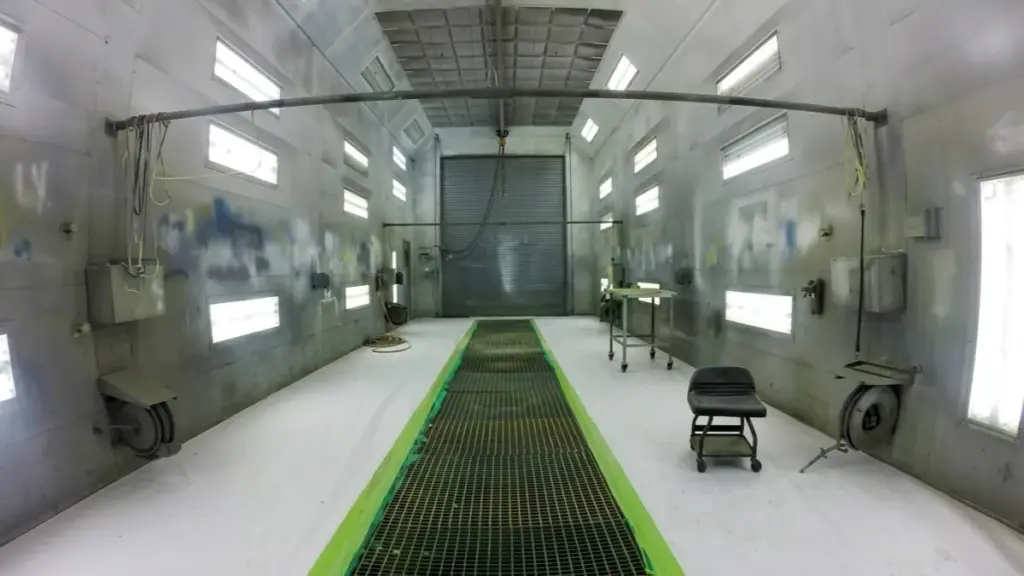
In a paint booth, even a small amount of airborne dust can ruin an otherwise perfect finish. That is why ceiling filters play such an important role in keeping incoming air clean and airflow evenly distributed across the spray area. If you want to understand how paint booth ceiling filters protect coating quality, reduce contamination risks, and support better booth performance, this guide will walk you through the basics.
What Is a Paint Booth Ceiling Filter?
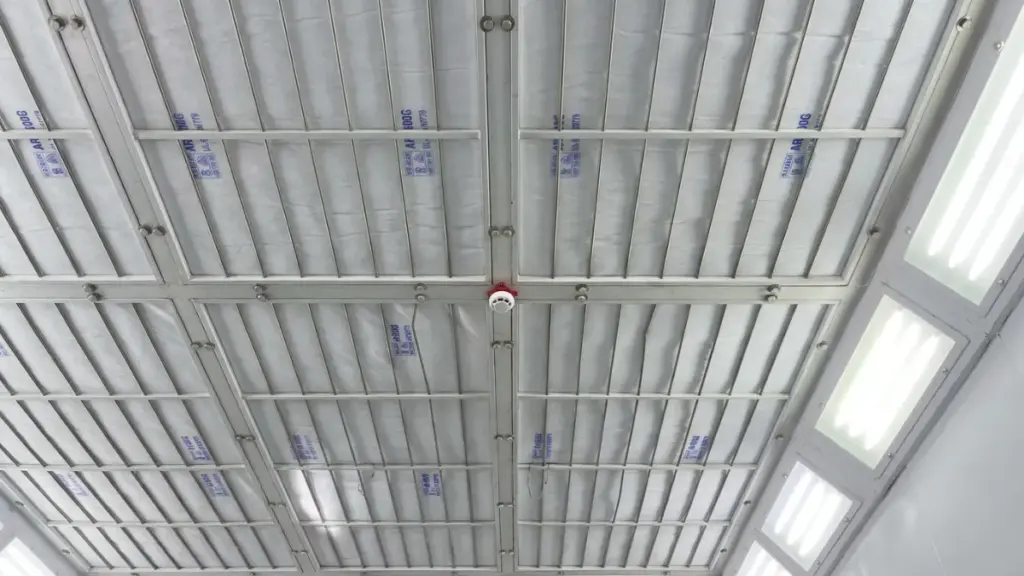
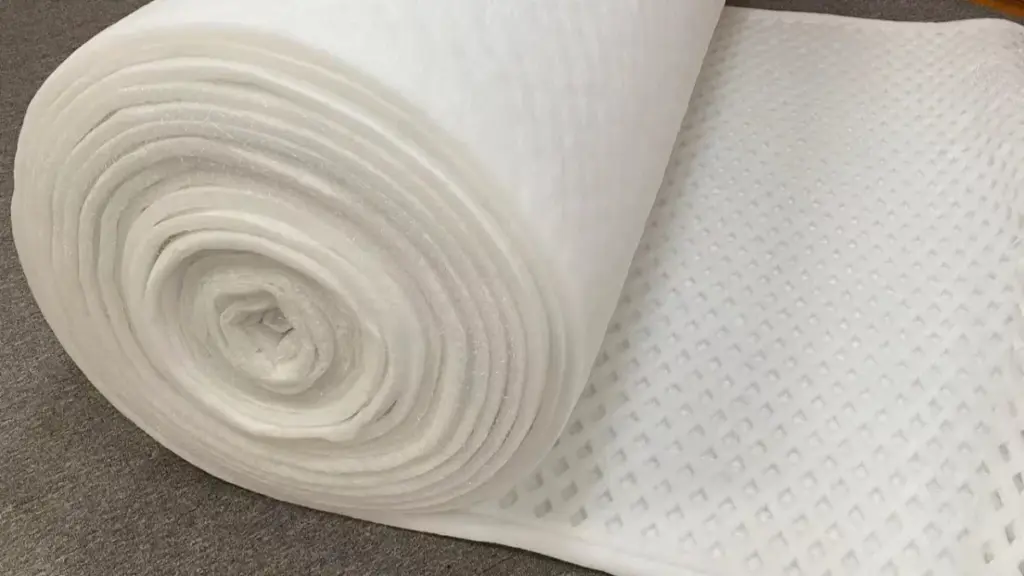
A paint booth ceiling filter, sometimes called a spray booth ceiling filter, ceiling intake filter, or top filter media, is a air filtration medium designed for the air supply side of a paint booth system. It is usually installed in the ceiling plenum or top air diffusion area. Its main function is to:
- Remove airborne dust and contaminants from incoming air
- Distribute airflow evenly across the spray zone
- Create a controlled, laminar airflow environment
These filters are typically made from synthetic fibers or fiberglass media and are designed to balance filtration efficiency and airflow performance.
Unlike exhaust filters, which capture overspray and contaminants before air leaves the booth, ceiling filters focus on protecting the painting process from contamination entering from the air supply side. In many industrial paint booths, especially those requiring a higher-quality surface finish, ceiling filters are a standard part of the intake filtration setup.
Related reading: Diferencia entre el filtro de admisión y el filtro de escape en una cabina de pintura
Why Ceiling Filters Matter in Paint Booths
Filtering Contaminants to Improve Paint Finishes
Ceiling filters serve as the main intake defense for downdraft paint booths. They trap dust, debris, and airborne overspray before these particles can enter the active painting area.
Delivering consistently clean airflow directly prevents surface imperfections on wet paint. This filtration process provides several operational advantages:
- Reduced Rework: Clean air minimizes defects like fisheyes and dust nibs, cutting rework rates and saving wasted coating materials.
- Consistent Quality: Active particle capture ensures smooth, durable finishes across all production runs.
- Industry Application: Facilities rely on these filters to meet the strict quality demands in automotive manufacturing, aerospace coating, and custom furniture finishing.
Supporting Worker Safety and System Efficiency
High-grade filter media do more than just clean the air for the paint. They actively capture hazardous chemical fumes, compuestos orgánicos volátiles (COV), and strong odors. This containment protects operators from inhalation risks and builds a significantly safer working environment.
Paint booth performance also depends heavily on balanced air permeability. The right ceiling filter maintains optimal resistance to prevent pressure imbalances inside the cabin. When air flows freely without excessive restriction, facilities lower their energy costs and avoid dangerous heat buildup in the blower and motor systems.
Operators must commit to regular maintenance and scheduled replacements to keep this airflow consistent. Swapping filters out on time prevents clogs, extends the operational life of downstream exhaust equipment, and ensures your facility aligns strictly with upcoming 2026 environmental compliance standards.
How Does a Ceiling Filter Work?
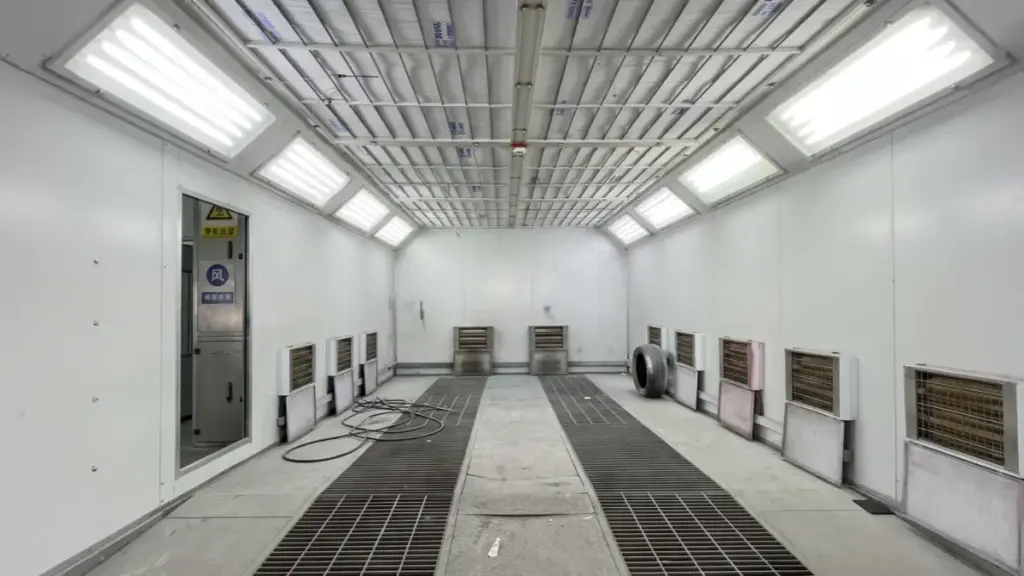
Ceiling filters draw ambient air through prefilters and high-efficiency media to remove particulates, then push clean air downward in a uniform, laminar flow to maintain positive room pressure.
| Component | Primary Function |
|---|---|
| Motorized Fan | Pulls ambient air into the unit and overcomes filter resistance. |
| Prefilter | Captures large coarse debris to extend the primary filter’s lifespan. |
| HEPA/ULPA Filter | Removes fine particulates with up to 99.999% eficiencia. |
| Housing Unit | Secures the system in standard ceiling grids and holds operational controls. |
Core Components of a Ceiling Filter
A functioning ceiling filter system relies on a precise combination of hardware and media to move and purify air. Each part plays a specific role in overcoming static pressure and trapping contaminants before they enter the workspace.
- Motorized Fans: Pull ambient air into the unit and generate continuous airflow against the system’s filter resistance.
- Prefilters: Capture large, coarse debris early in the cycle to protect and extend the lifespan of primary filters.
- HEPA or ULPA Filters: Remove extremely fine particulates, operating at highly regulated 99.97% a 99.999% efficiency rates.
- Housings: Fit securely into standard ceiling grids while providing structural support, speed dials, and monitoring controls.
The Airflow and Filtration Process
The operational cycle follows a strict path to guarantee a contaminant-free environment. Ambient air enters the unit from above or through the sides and moves directly into the prefilter. Once stripped of larger debris, the air passes into the primary filter. At this stage, physical mechanisms take over. The filter media traps small particulates through a combination of interception, impactación, y difusión.
After purification, the system pushes the filtered air downward into the room at a steady, uniform velocity. This creates a laminar flow, preventing turbulent air currents from stirring up settled dust. The newly introduced clean air forces existing dirty air to exit the space through low-level vents. This constant displacement maintains a positive pressure environment and helps facility managers achieve their required air changes per hour.
Key Features of Ceiling Filters
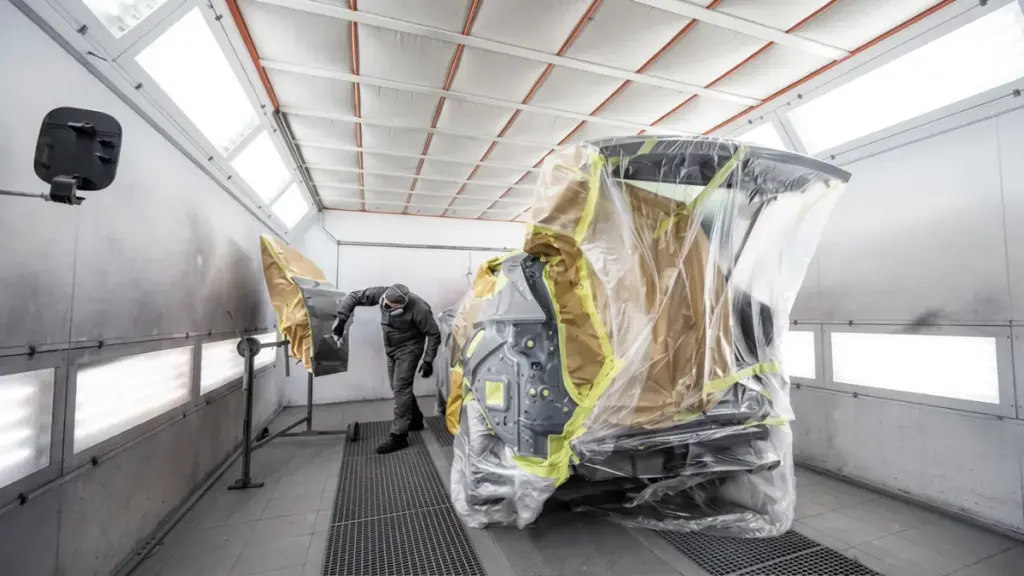
Ceiling filters combine high-density polyester and mini-pleat designs to deliver maximum dust-holding capacity and ultra-low airflow resistance for critical cleanroom and paint booth applications.
High-quality ceiling filters are engineered with several important features:
- High Dust-Holding Capacity
Allows longer service life and fewer replacements - Uniform Air Distribution
Ensures consistent airflow across the entire booth - Progressive Density Structure
Captures larger particles first and finer particles deeper in the media - Low Initial Resistance
Maintains efficient airflow and reduces energy consumption - Alta eficiencia de filtración
Typically ranges from G3 to F5 (EN779 standard), Dependiendo de la aplicación - Thermal Stability
Suitable for environments with elevated temperatures
Common Applications of Ceiling Filters
Ceiling filters are used in many spray finishing environments where clean intake air and even airflow are essential to coating quality. Common application scenarios include:
Ceiling filters are used wherever controlled airflow and dust-free conditions are critical for coating or finishing processes. Common applications include:
Automotive and Industrial Paint Booths
- Used in down-draft, semi down-draft, or cross-draft paint booths
- Flame-retardant or progressive-density filters help capture overspray and prevent surface defects
- Essential for body shops, OEM assembly lines, and refinishing facilities
Furniture and Woodworking Finishing
- Spray booths for cabinetry, furniture, and wood panels
- Ceiling filters remove airborne sawdust and finishing particulates
- Ensure smooth, high-quality paint and varnish finishes
Electronics and Precision Manufacturing
- Protect sensitive components during coating or conformal coating processes
- Prevent dust contamination that can compromise product reliability
Industrial Coating and Powder Coating Lines
- Ceiling filters help manage airborne particles in powder coating spray booths
- Maintain consistent airflow to achieve uniform coating thickness
Specialized or High-Value Finishing Facilities
- Aerospace parts coating
- Medical device and lab equipment finishing
- Any critical surface where paint defects or contamination are unacceptable
Flawless Paint Finishes & Lower Operating Costs
Common Types of Ceiling Filters
Ceiling filters come in several designs, each suited to specific spray booth requirements. Understanding the differences can help ensure optimal airflow, dust capture, and finish quality.
The following table provides a quick reference for common ceiling filter types, including their typical efficiency, caída de presión, dimensiones, and dust-holding capacity to help you compare options and select the right filter for your paint booth.
| Tipo de filtro | Eficiencia típica (F/MERV) | Caída de presión (Pensilvania) | Espesor / Tamaño | Capacidad de retención de polvo |
|---|---|---|---|---|
| Blanket-Style Ceiling Filters | F5–F7 / MERV 8–10 | 20–50 | 50–150 mm / customizable | Medio |
| Pad-Style Ceiling Filters | F5–F7 / MERV 8–10 | 25–60 | 25–100 mm / fit frame | Medio |
| Panel Ceiling Filters | F5–F8 / MERV 8–12 | 30–70 | Standard panels: 610×610 mm / 25–100 mm thick | Medium–High |
| Tacky Ceiling Filters | F6–F8 / MERV 10–12 | 30–80 | 25–75 mm / standard panels | Medio (surface-dependent) |
| Progressive-Density Ceiling Filters | F6–F9 / MERV 10–13 | 25–60 | 50–150 mm / custom | Alto |
Nota: All values are typical industry reference ranges and may vary depending on manufacturer, specific product, y condiciones de funcionamiento. They are intended for informational and comparison purposes only.
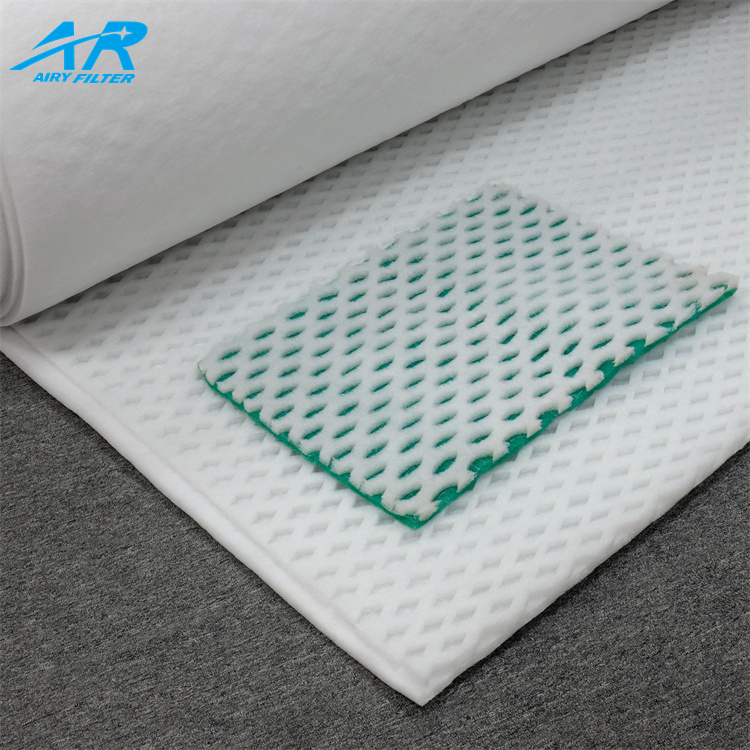
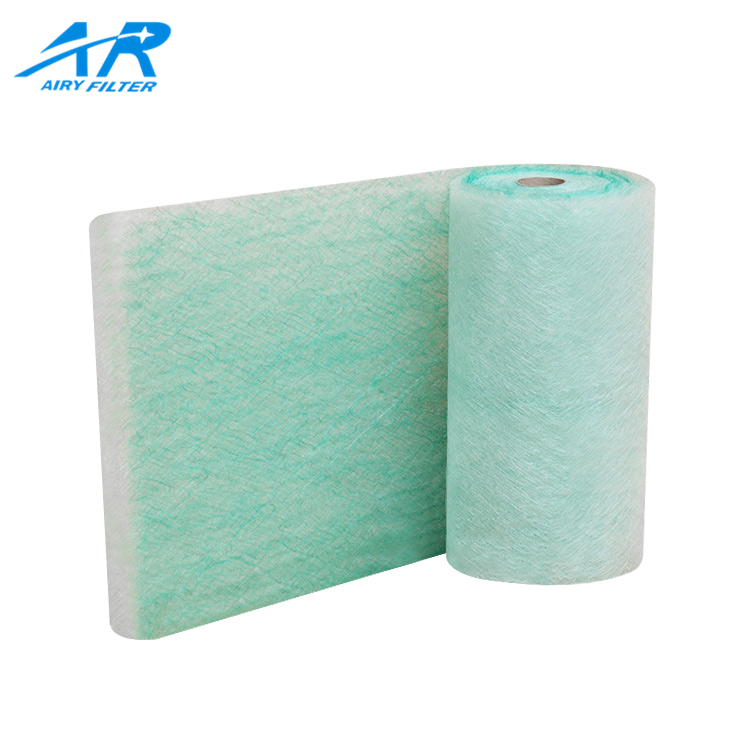
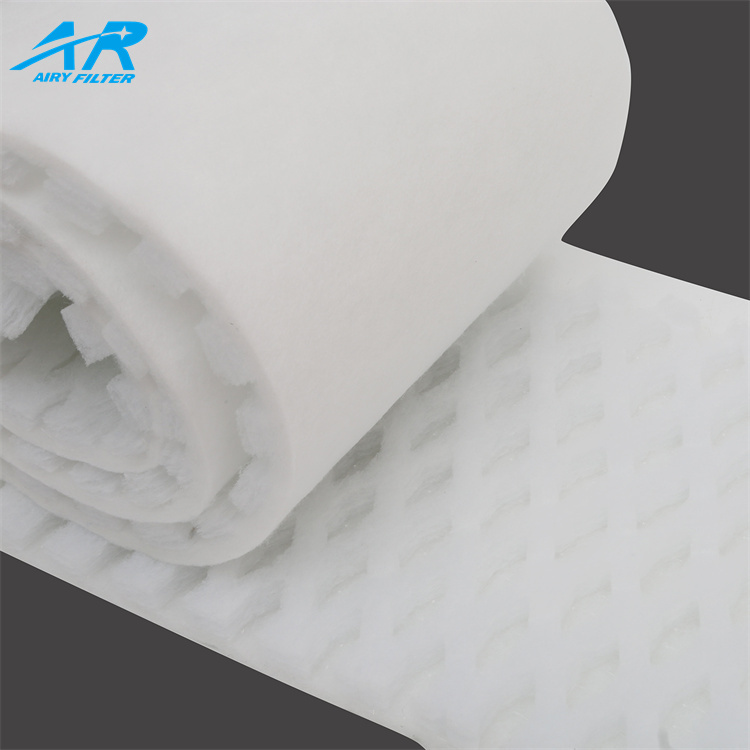
Blanket-Style Ceiling Filters
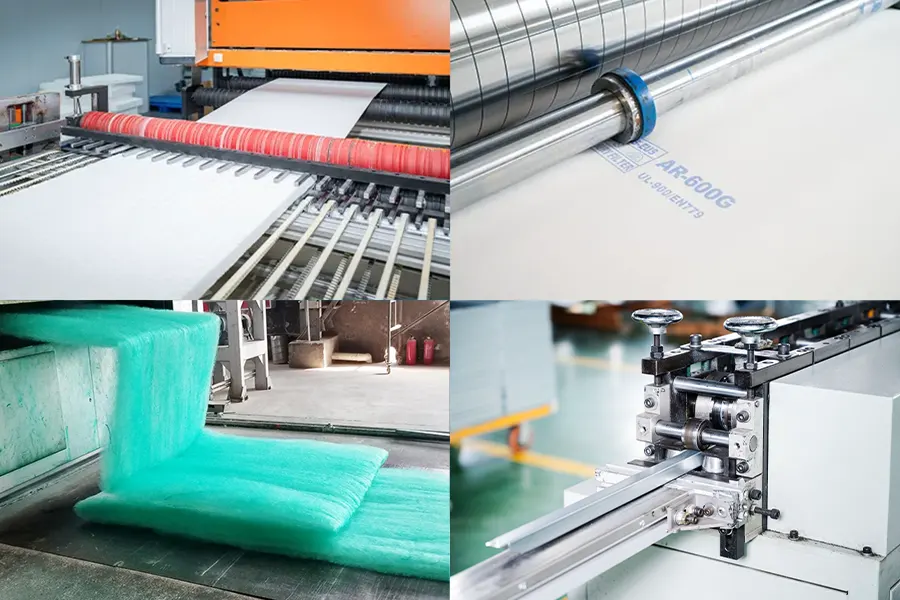
Blanket-style filters are large rolls or sheets of nonwoven polyester or fiberglass media, cut to fit the booth ceiling. Their dense fiber structure efficiently captures airborne dust while allowing uniform airflow.
Ventajas:
- Broad coverage for large booth areas
- Easy to install and replace
- Consistent airflow and dust capture
Limitations:
- Slightly shorter lifespan in very dusty environments
- Less effective for ultra-fine particle control
These filters are ideal for automotive assembly lines, industrial paint booths, and large-scale furniture finishing, where wide coverage and moderate filtration efficiency deliver high-quality finishes.
Pad-Style Ceiling Filters
Pad-style filters consist of pre-cut synthetic fiber sheets, often mounted in lightweight frames for simple installation. They provide steady airflow while capturing dust particles effectively.
Ventajas:
- Convenient maintenance and replacement
- Standardized sizes for easy sourcing
- Reliable performance in medium-sized booths
Limitations:
- Lower filtration efficiency than multi-layer designs
- Limited customization for unusual booth layouts
Pad filters are commonly used in medium-sized refinishing workshops and small industrial paint booths, balancing convenience with adequate dust control.
Panel Ceiling Filters
Panel filters are rigid or semi-rigid media fixed within a supporting frame, sometimes reinforced with mesh for extra strength. They maintain stable airflow and resist deformation under moderate pressures.
Ventajas:
- Durable and long-lasting
- Consistent filtration performance
- Can withstand repeated handling
Limitations:
- Higher initial cost than blanket or pad filters
- Less flexible for irregular ceiling shapes
Panel filters are suitable for industrial spray booths, OEM automotive lines, and furniture finishing shops where reliability and structural stability are key.
Tacky Ceiling Filters
Tacky filters feature a lightly adhesive surface that traps dust particles more effectively than standard media. The sticky layer prevents contaminants from bouncing back into the booth.
Ventajas:
- Superior dust capture
- Improved surface finish quality
- Ideal for sensitive coatings
Limitations:
- Typically single-use
- Higher cost per filter
Tacky ceiling filters work best in high-end automotive refinishing, aerospace parts coating, and fine furniture finishing, where achieving flawless surfaces is critical.
Progressive-Density Ceiling Filters
Progressive-density filters are built with multiple layers of increasing fiber density, capturing large particles on the upstream side and fine dust deeper in the media. This ensures consistent airflow and longer service life.
Ventajas:
- Alta capacidad de retención de polvo
- Stable airflow over time
- Reduced frequency of replacements
Limitations:
- Mayor costo inicial
- Slightly more complex replacement procedure
These filters are ideal for high-volume industrial paint booths, precision coating operations, and critical aerospace finishing, where consistent air quality and minimal maintenance are essential.
Different booth setups require different filter types. If you’re comparing options or looking for specific configurations, you can view available products here.
Related reading: ¿Cuáles son los diferentes tipos de filtros de cabina de pintura??
Key Considerations When Choosing Ceiling Filters
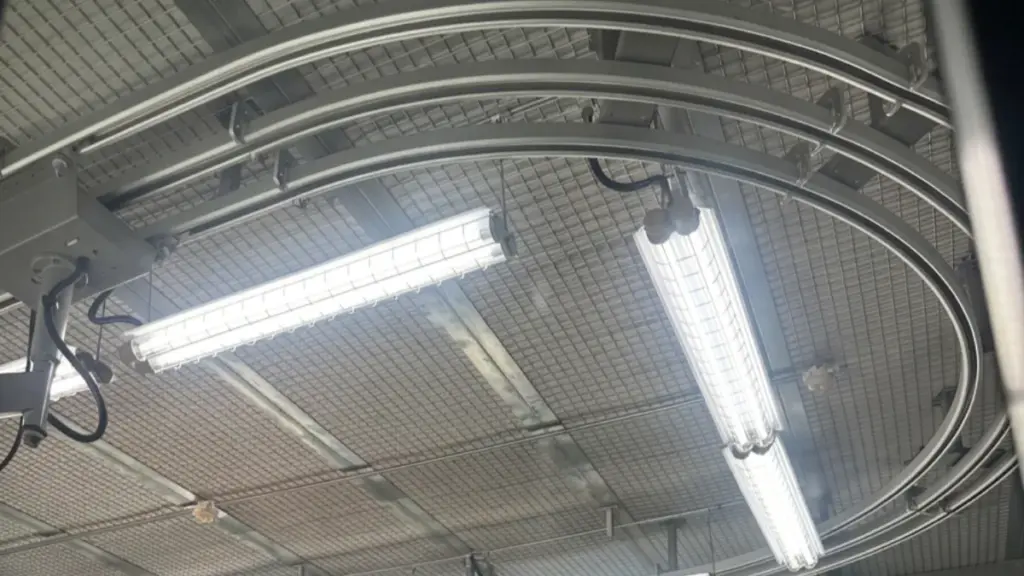
Selecting the right ceiling filter is critical to achieving consistent finish quality, maintaining booth efficiency, and controlling operating costs. Here are the most important factors to evaluate when choosing a filter for your paint booth:
1. Eficiencia de filtración
The efficiency rating of a ceiling filter determines its ability to capture airborne dust and overspray. Filters with higher ratings (F6–F9 or MERV 10–13) trap finer particles, reducing the risk of surface defects on high-value coatings.
Choosing the correct efficiency depends on the type of paint, desired finish quality, and booth conditions. Over-specifying can increase costs and airflow resistance, while under-specifying may compromise coating integrity, so balancing efficiency with booth performance is key.
2. Resistencia al flujo de aire
Low airflow resistance ensures that the ventilation system maintains consistent and even air movement across the booth. Filters with high resistance can reduce airflow speed, create turbulence, and cause uneven finishes or overspray buildup.
A commonly referenced range for low initial pressure drop in ceiling filters is:
- Resistencia inicial: ~20–50 Pa (0.08–0.20 in. H₂O)
- Final resistance (end of life): ~300–400 Pa before replacement is needed
In industry practice, keeping initial pressure drop below about 50 Pa is considered low resistance, ensuring smooth airflow and reduced load on fans — especially important in downdraft and high-production spray booths.
3. Dust-Holding Capacity
The dust-holding capacity measures how much particulate a filter can capture before needing replacement. The higher the dust-holding capacity, the longer the filter can remain in service with stable performance, reducing downtime and maintenance costs.
Typical dust-holding ranges for paint booth ceiling filters are:
- Medium-range filters: ~350–450 g/m²
- High dust-holding filters: ~500–650 g/m² or more
4. Tipo de material
Ceiling filters are typically made from synthetic fibers, fibra de vidrio, or carbon-based media, each suited to different environments. Synthetic fibers are lightweight and cost-effective, fiberglass offers high dust retention and thermal stability, while activated carbon media can absorb odors or chemical vapors.
The choice of material should match the coating type, booth temperature, and specific air quality requirements. Using the appropriate material ensures durability, actuación, y confiabilidad a largo plazo.
5. Booth Design Compatibility
Filters must fit the booth’s ceiling structure and airflow configuration. Consider whether your booth uses drop ceilings, flat panels, or a custom layout, and ensure that the filter dimensions and thickness are compatible.
Proper installation prevents gaps or airflow disruptions, which can lead to uneven coatings or contamination. Además, consider whether the filter can be easily replaced or maintained without dismantling other booth components.
6. Certification Requirements
Compliance with industry standards ensures both safety and reliability. Depending on your market, look for certifications such as EN779/ISO 16890, Ul, or other regional standards that validate filtration efficiency, fire resistance, and material safety.
Meeting these standards may be critical for customers in automotive, aeroespacial, or food-related coatings. Certifications also provide assurance that the filter will perform consistently under specified operating conditions.
Common Mistakes When Choosing Ceiling Filters
Choosing the wrong ceiling filter can lead to poor finish quality, higher maintenance costs, and uneven airflow in paint booths. Understanding common mistakes and how to avoid them ensures better performance and longer filter life.
1. Selecting Filters Solely Based on Price
Many operators choose the cheapest filters to save costs. While initial savings are tempting, low-quality media can clog quickly, reduce airflow, and cause surface defects.
Solution: Focus on the total cost of ownership by considering dust-holding capacity, eficiencia, and service life. Investing slightly more upfront often results in fewer replacements and more consistent booth performance.
2. Ignoring Booth Compatibility
Filters that don’t match the booth’s size, ceiling design, or airflow pattern can create turbulence or dead zones.
Solution: Always verify dimensions, espesor, and frame type before purchasing. For custom or unusual booth layouts, consult your filter supplier to select a compatible filter that maintains even airflow across the entire booth.
3. Overlooking Filtration Efficiency
Using a filter with insufficient efficiency allows fine dust and overspray to pass through, resulting in defects or contamination.
Solution: Choose efficiency ratings (F5–F9 or MERV 8–13) based on coating type and product finish requirements. Progressive-density or tacky filters are recommended for critical surfaces or high-value products.
4. Neglecting Pressure Drop and Airflow
High-resistance filters strain fans, reduce airflow, and create uneven coating application. Solution: Check initial pressure drop specifications (typically 20–50 Pa for standard paint booth filters) to ensure smooth airflow. Avoid replacing a filter with one that has excessive resistance unless the ventilation system is adjusted to compensate.
5. Underestimating Maintenance Needs
Assuming all filters last the same amount of time can lead to clogged filters and booth downtime.
Solution: Monitor dust-holding capacity (450–650 g/m² for industrial filters) and establish a replacement schedule based on booth usage, not just calendar time. High-capacity filters help reduce frequency while maintaining consistent air quality.
6. Ignoring Certification or Compliance Requirements
Using filters without relevant standards may risk regulatory non-compliance or inconsistent performance.
Solution: Ensure filters meet EN779/ISO 16890, Ul, or other regional standards, especially when exporting products or serving critical industries like automotive, aeroespacial, or healthcare.
Why Choose a Reliable Ceiling Filter Supplier
When it comes to industrial spray booths and precision coating operations, selecting a air filter supplier you can trust makes all the difference. Guangzhou Airy Filter Media Co., Limitado. combines over a decade of experience in air filtration with a vertically integrated manufacturing system that covers everything from filter media development to finished filter assembly, control de calidad, and export-ready solutions.
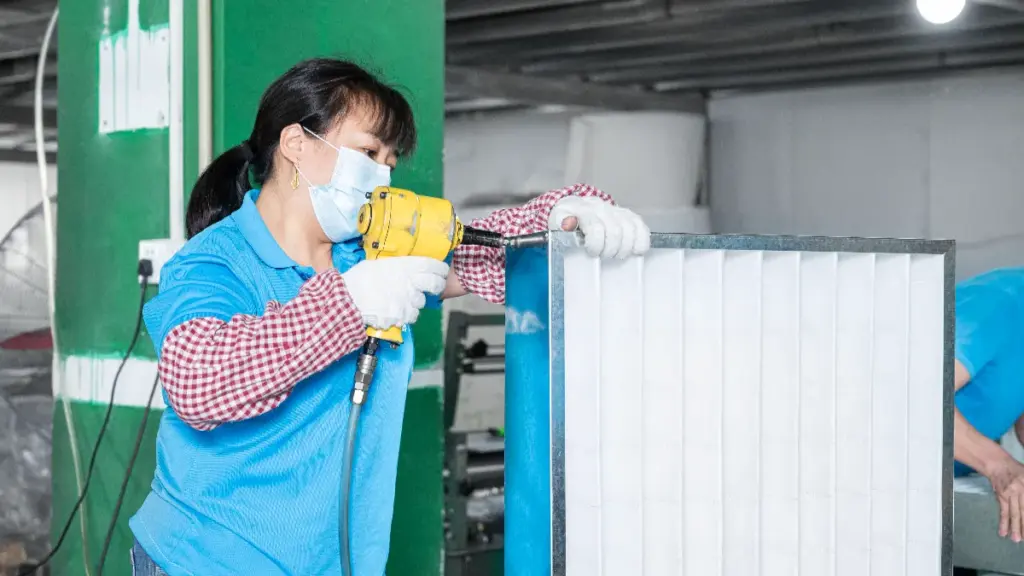
Operating from a 10,000㎡ factory in Baiyun District, Guangzhou, Airy runs multiple production lines capable of producing blanket, pad, panel, tacky, and progressive-density ceiling filters, as well as HEPA and activated carbon modules. This scale and specialization allow Airy to offer custom sizes, materiales, filtration grades, and packaging tailored to the specific needs of automotive, aeroespacial, furniture, and other industrial paint operations.
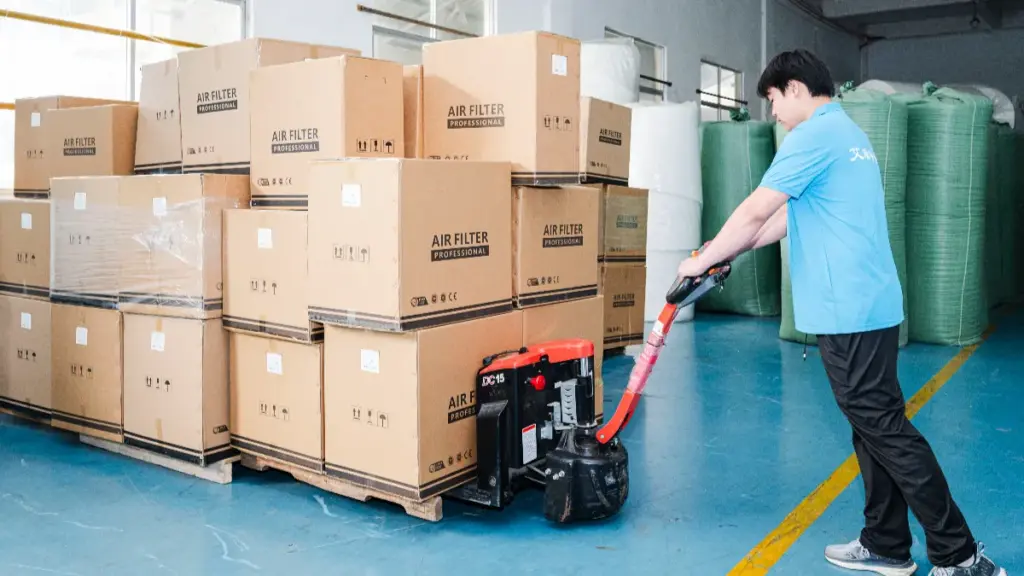
Beyond fabricación, Airy provides one-stop OEM/ODM support, including technical consultation, sampling, pre-production testing, and global shipping. Fast response times, low minimum order quantities, and flexible customization make it easier for distributors, engineering clients, and private-label partners to implement high-quality filtration solutions without compromise.
To explore available options and specifications, you can browse Airy’s full range of paint booth filters here.
Preguntas frecuentes
What is a ceiling filter made of?
Ceiling filters are typically made from synthetic fibers (polyester), fibra de vidrio, or multi-layer composite materials. Some versions include adhesive (tacky) coatings to enhance particle capture.
Do all paint booths have ceiling filters?
No, but most high-quality or enclosed spray booths use ceiling filters. Basic or open systems may rely only on pre-filters, but this significantly reduces finish quality.
What types of paint booths use ceiling filters?
Ceiling filters are commonly used in:
- Down-draft paint booths
- Semi down-draft booths
- Cross-draft booths (in some configurations)
- Automotive refinishing booths
- Industrial spray lines
What is the difference between ceiling and intake filters?
In many cases, ceiling filters are intake filters. Sin embargo:
- Ceiling filters refer specifically to filters installed at the top of the booth
- Intake filters can include both pre-filters and ceiling filters in the air supply system
How do ceiling filters affect paint finish quality?
Ceiling filters directly impact finish quality by:
- Removing airborne dust and contaminants
- Ensuring uniform airflow across the surface
- Preventing defects like dust particles and uneven coating
A high-quality ceiling filter is essential for achieving a smooth, defect-free finish.
Pensamientos finales
Paint booth ceiling filters are a crucial component in achieving high-quality coating results. By ensuring clean, evenly distributed airflow, they protect your products from contamination and improve overall production efficiency.
We recommend testing a sample order of our high-capacity ceiling filters to evaluate the airflow and capture rates directly in your own facility. Contact our team today to discuss custom cuts, bulk inventory, or specific OEM requirements for your paint booth systems.