Pule para o conteúdo

An HVAC filter is a component that removes airborne particles from the air moving through a heating, ventilação, and air conditioning system. It helps reduce dust, pólen, fibras, and other contaminants before they reach HVAC equipment or occupied spaces.
In commercial buildings, HVAC filters are often installed inside air handling units (Ahus) as part of a multi-stage filtration system. Their performance affects air cleanliness, fluxo de ar, equipment condition, e requisitos de manutenção.
This article explains what HVAC filters do, how they capture airborne particles, where they are installed in an AHU, and what buyers should check when replacing or specifying filters.
Principais conclusões
- HVAC filters capture airborne particles while allowing air to pass through the filtration media.
- Commercial AHUs may use multiple filtration stages to remove particles of different sizes.
- Filter performance depends on media, particle capture efficiency, Resistência ao fluxo de ar, and proper installation.
- A correctly fitted HVAC filter helps protect coils, fãs, canalização, and downstream filters.
- Buyers should match replacement filters to the AHU’s dimensions, fluxo de ar, efficiency requirements, and pressure limits.
What Is an HVAC Filter and Where Is It Used?

An HVAC filter is a filtration component installed in an air conditioning or ventilation system. It usually consists of filter media held inside a supporting frame. As air passes through the media, airborne particles are captured while filtered air continues through the system.
The filter media performs the main filtration work. The frame holds the media in place, while the sealing edges help prevent air from passing around the filter. A poor fit can allow unfiltered air to bypass the media and reduce the overall filtration performance.
HVAC filters are used in both residential and commercial systems. Residential applications commonly include furnaces and central air conditioning units. Commercial and industrial applications include office buildings, hotéis, hospitais, factories, and other facilities that use centralized air handling systems.
The filtration requirements vary by building use. An office may need general dust and particle control, while a healthcare or cleanroom application may require additional filtration stages and higher efficiency.
For a closer comparison of filter constructions and their applications, see Airy’s guide to different HVAC filter types.
Where Are HVAC Filters Installed in an AHU?
In an air handling unit, filters are installed along the airflow path. Their exact positions depend on the AHU design, the required air cleanliness, and the number of filtration stages.
A typical commercial AHU may use the following arrangement:
| Filter Stage | Typical Position | Main Function |
|---|---|---|
| Pré-filtro | Near the outside-air intake or mixing section | Captures larger particles before air reaches downstream components and filters |
| Filtro médio | After the pre-filter and before the final filtration stage | Removes a larger share of the remaining airborne particles |
| Filtro final | Near the downstream air supply section | Provides the required final level of particle filtration |
Air enters the AHU through the intake or return-air section and passes through the filters in sequence. The pre-filter captures larger dust particles first, helping reduce the load on later stages. Medium and final filters then handle progressively finer particles according to the system’s design requirements.
Not every AHU uses three stages. Some systems use only one or two filters, while applications with stricter air cleanliness requirements may include additional filtration.
When replacing filters, buyers should check the existing rack position, filter depth, sealing arrangement, and available space for removal. These details help ensure that the replacement fits the equipment and follows the intended airflow path.
How Do HVAC Filters Capture Airborne Particles?

Most HVAC particle filters use fibrous media to capture contaminants as air moves through the material. Particles do not all behave in the same way. Their size, mass, movement, and interaction with the filter fibers affect how they are collected.
Four mechanisms commonly contribute to particle capture:
| Capture Mechanism | Como funciona |
|---|---|
| Interceptação | Particles follow the airflow but touch and stick to filter fibers. |
| Inertial impaction | Larger particles cannot follow changes in airflow and collide with fibers. |
| Difusão | Very small particles move randomly and collide with fibers. |
| Electrostatic attraction | Charged fibers attract particles, improving capture. |
These mechanisms can work together in the same filter. Their contribution depends on the media structure, fiber properties, airflow velocity, and particle size.
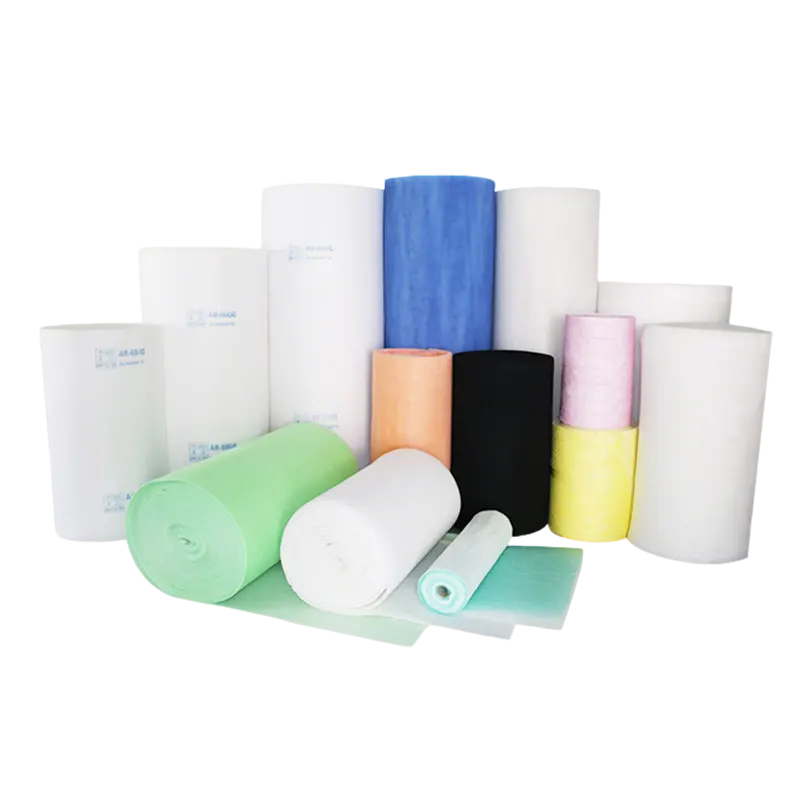
Filter media is therefore an important part of overall performance. Synthetic fibers, fibra de vidro, and polyester-based materials are used in different filtration applications. Buyers can review Airy’s air filter media range when checking material options for a filtration project.
How Do HVAC Filters Affect Airflow and System Performance?
An HVAC filter must capture particles without creating more airflow resistance than the system can handle. This balance is important because the filter affects both air movement and equipment operation.
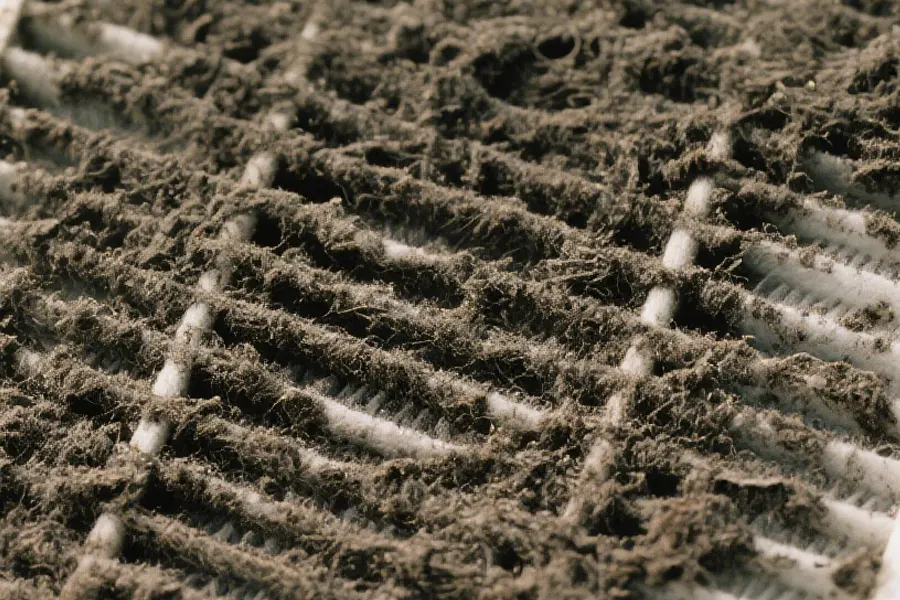
When air passes through clean filter media, it encounters resistance. This resistance is commonly measured as pressure drop. As dust accumulates, the filter becomes more restrictive and the pressure drop usually increases.
If the pressure drop becomes too high, the AHU fan may need to work harder to maintain the required airflow. In systems with limited fan capacity, airflow can fall below the design level. This may affect ventilation performance, temperature control, and overall system operation.
Filter fit also matters. Gaps between the filter frame and the housing can allow air to bypass the media. Even if the filter has the required efficiency rating, bypass leakage can reduce the actual filtration achieved by the AHU.
For this reason, buyers and maintenance teams should monitor both filter condition and system pressure. Arejado official website provides an overview of its filtration products and manufacturing capabilities for different air filtration applications.
What Does an HVAC Filter Protect in a Building?

An HVAC filter does more than remove visible dust from the air. It also helps protect components inside the air handling and ventilation system.
- Cooling and heating coils: Dust buildup on coil surfaces can reduce heat transfer and increase cleaning requirements.
- Fans and blowers: Capturing airborne particles before they reach moving components helps reduce dust accumulation and fouling.
- Ductwork: Filtration limits the amount of airborne dust that can settle inside downstream air ducts.
- Downstream filters: Pre-filtration reduces the particle load on finer filters, helping them operate under their intended conditions.
- Occupied spaces: Removing airborne particles helps support cleaner supply air and indoor air quality.
The level of protection depends on the filter’s efficiency, condition, instalação, and position in the system. A damaged or poorly sealed filter may allow contaminants to pass through even when its media is suitable for the application.
Maintenance teams should inspect filters regularly and monitor differential pressure across each stage. Replacement should follow the filter manufacturer’s recommended final resistance or the AHU’s operating limits, rather than relying only on a fixed calendar interval.
What Should Buyers Check Before Replacing an AHU Filter?

A replacement filter should match the existing AHU and its operating requirements. Choosing a product based only on its nominal size or efficiency rating can lead to installation problems or unwanted changes in system airflow.
Before requesting a replacement, confirm the following details:
| Fator de seleção | O que confirmar |
|---|---|
| Dimensões | Exact width, altura, and depth of the existing filter |
| Fluxo de ar | Required airflow and operating face velocity |
| Eficiência | Required MERV, EM 779, ou ISO 16890 classificação |
| Queda de pressão | Initial resistance and the maximum final resistance allowed by the system |
| Moldura e vedação | Material da moldura, header design, posição da junta, and sealing requirements |
| Condições operacionais | Dust concentration, umidade, temperatura, and available maintenance space |
MERV ratings under ASHRAE 52.2 and ePM classifications under ISO 16890 describe filtration performance using different test methods. They should not be treated as directly interchangeable. Buyers should check the applicable test report and confirm that the selected efficiency is suitable for the AHU.
A higher efficiency rating is not automatically the best choice. The filter must also meet the system’s airflow and pressure limits. If the existing filter specification is unavailable, photos, rack dimensions, equipment details, and the current filter label can help a supplier assess the replacement requirements.
For commercial applications, buyers can review Airy’s HVAC filtration filters to check available product formats, filtration stages, and standard or custom dimensions.
How Can Airy Support Commercial HVAC Filter Requirements?
Commercial HVAC projects often require filters that match existing equipment dimensions, filtration stages, e condições de operação. A supplier should be able to review these requirements before recommending a replacement or developing a custom product.
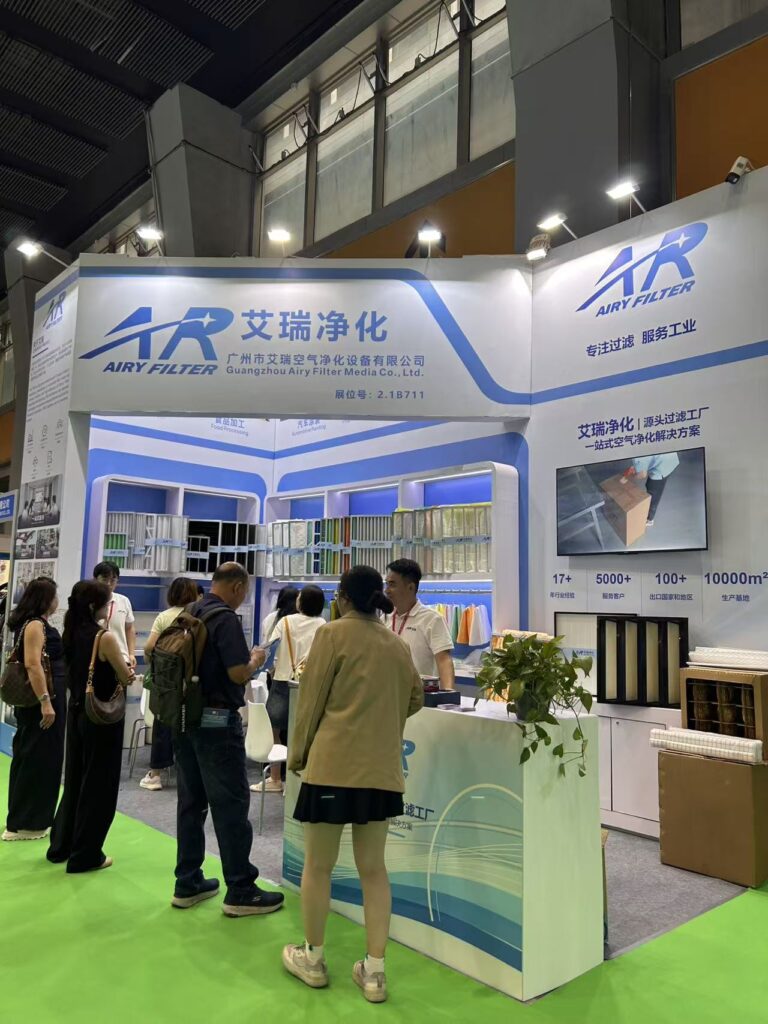
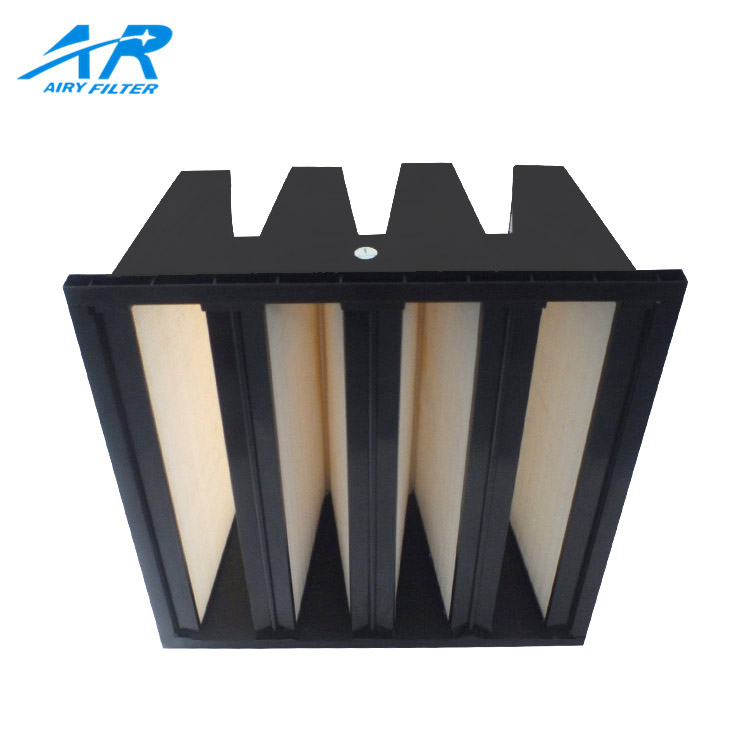
Airy manufactures air filtration media and finished filters for commercial and industrial applications. Its HVAC product range includes panel, bolso, and V-bank filters for different AHU stages, with standard and custom dimensions available.
The company was established in 2009 and operates a 10,000㎡ manufacturing facility. Its website also lists a monthly production capacity of more than 200,000 pieces for its commercial HVAC filter range.
Arejado manufacturing capabilities include media cutting, frame assembly, vedação, dimensional inspection, and airflow resistance testing. These processes help support filters made to specified equipment and application requirements.
When requesting a quotation, buyers should provide the existing filter dimensions, eficiência necessária, fluxo de ar, pressure limits, frame requirements, e quantidade do pedido. Photos of the current filter or AHU rack can also help clarify the installation details.
With these specifications, Airy can assess the requirements and discuss a suitable standard or customized filtration solution for the system.
Perguntas frequentes
How Often Should Commercial HVAC Filters Be Replaced?
There is no fixed replacement interval for every commercial HVAC filter. Service life depends on operating hours, dust concentration, filter efficiency, and airflow conditions. Monitor the pressure drop across the filter and replace it when it reaches the manufacturer’s recommended final resistance or the AHU’s operating limit.
Does a Higher MERV Rating Always Mean Better HVAC Filtration?
A higher MERV rating means the filter captures a greater share of certain particle sizes, but it is not always the best choice for every system. Higher-efficiency filters may create more airflow resistance. Check the filter’s pressure drop at the required airflow and make sure the HVAC fan can handle it before upgrading.
What Is the Difference Between MERV and ISO 16890 Avaliações?
MERV ratings are based on ASHRAE Standard 52.2, enquanto ISO 16890 classifies filters by their efficiency against different particle size ranges, including ePM1, ePM2.5, e ePM10. Both systems describe filtration performance, but their test methods and classifications differ. Buyers should compare the applicable test reports rather than treating the ratings as directly interchangeable.
Which HVAC Filter Type Is Best for Commercial Buildings?
The right filter depends on the required efficiency, fluxo de ar, carga de poeira, and available installation space. Panel filters are commonly used for coarse pre-filtration, pleated filters provide more media area, pocket filters offer greater dust-holding capacity, and V-bank filters suit high-airflow applications. Commercial AHUs may use several types in different filtration stages.
Can HVAC Filters Be Customized to Fit Existing AHU Systems?
Sim. Manufacturers can customize filter dimensions, mídia, Materiais de estrutura, and configurations to match existing AHU housings. When requesting a custom filter, provide the required width, altura, profundidade, fluxo de ar, filtration class, e condições de operação. This helps the manufacturer check system compatibility and recommend a suitable design.