The case for specifying a ULPA filter over a HEPA one is rarely “higher number is better.” It is a narrower question, with three parts. Does your process risk demand the extra class? Can your air-handling system carry the higher resistance? What does the higher grade make you prove at installation and at maintenance? A cleanroom that only needs H14 gains nothing from paying for U15, let alone re-engineering for it. A process with genuine sub-0.3 µm particle risk may need exactly that step. This guide starts from the requirement, not the catalog, and it separates the classification difference from the system consequences.
It covers what HEPA and ULPA each tell you as a rating. It explains why the decision begins with process risk rather than room class, how airflow and resistance constrain it, and what verification a higher class imposes. It ends with a decision checklist you can hand to the design team.
Ключевые выводы
- HEPA versus ULPA is a classification difference, not smaller holes: the classes describe tested efficiency bands under standards like ISO 29463.
- Start from process risk, not room class: a cleanroom grade does not mechanically dictate a filter grade.
- The higher class is a system decision: мощность вентилятора, space, interface, and verification requirements all move with it.
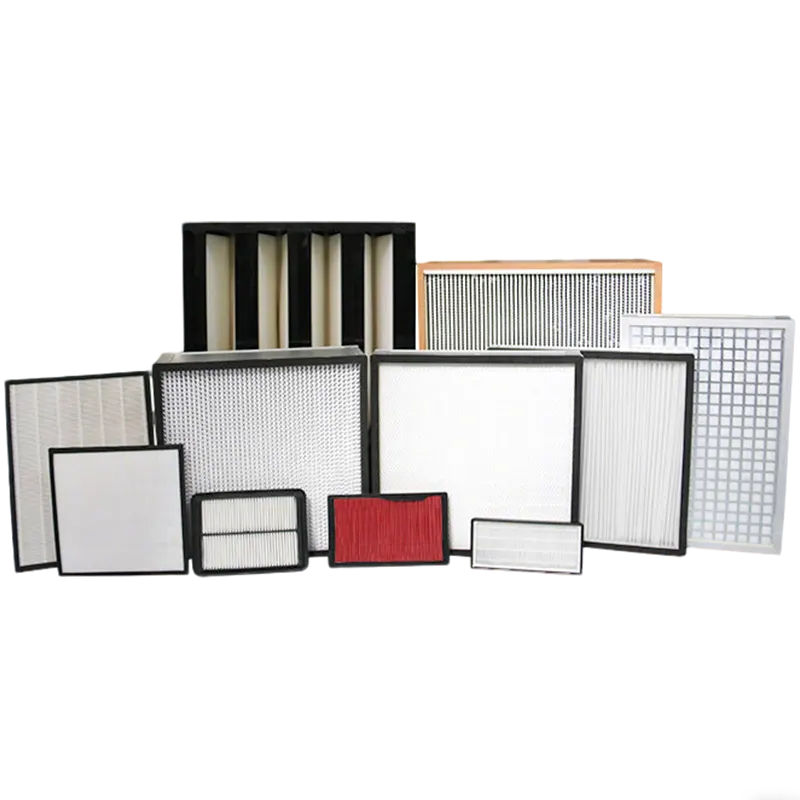
HEPA VS. Ульпа: The Essential Difference
Both are efficiency classes defined by test standards. ULPA sits one band above HEPA on the same scale. It is not a different material with smaller pores.
The honest way to hold the difference is as a classification, not a physical story about hole size. Two test families dominate, В 1822 и Iso 29463. Filters are sorted into letter groups by measured performance at the most penetrating particle size, the MPPS. “ЧАС” covers the HEPA range and “ты” covers the ULPA range. The letter moves because the rated efficiency is higher and the allowable local penetration is tighter. It does not move because a new medium replaced the old one. Media is already denser at high HEPA. MPPS is a measured point specific to the filter and the aerosol, not a fixed 0.3 µm you assume.
Read the small table as “what each rating proves,” not a full grade ladder. The ladder is a reference sheet rather than a decision, and one standard names every class on it.
| Аспект | HEPA class | ULPA class |
|---|---|---|
| Letter group (В 1822 / Iso 29463) | H range | U range, one band higher |
| What the rating describes | Tested efficiency at MPPS | Tested efficiency at MPPS, with lower local penetration allowed |
| Why it differs | Baseline high-efficiency band | Higher grade, not a different mechanism |
| Practical effect | Meets most cleanroom and critical-air duty | Pays off only where sub-micron risk is real |
That table is the same logic that separates one HEPA class from another. It is why we treat H13 versus H14 as a graded decision in our H13 vs H14 guide rather than “more is better.” ULPA is simply the next band up that same ladder. The reasoning carries over. Each step up is a higher tested efficiency and a lower allowable local penetration, bought at the cost of resistance and verification effort.
So do not picture a ULPA filter as one with finer holes that sieves out smaller dust. Picture the same family of pleated media, tested to a tighter pass criterion. The difference you act on is the class letter and the evidence it obliges, not a story about pore size.
Start with Process Risk and Project Requirements
The question is not “what is the best filter.” It is “what does this project require, and what must it prove.” Requirements come from the process, not the label.
Before any grade is written into a purchase, three sources decide it. They are the contamination-control logic of the process, the design specification for the space, and the acceptance criteria your project will be signed off against. Ask where the real particle risk comes from. It may be product contact, a critical environment, or a regulatory limit. Ask what the designer already committed you to, and what will be tested at handover. Those answers set the required class. A higher class than the process needs is a cost, and a lower one that fails acceptance is a far larger cost.
Name one trap explicitly: do not map a room cleanliness class straight onto a filter grade. They are related but different objects. A room’s airborne-particle class is the result of the whole ventilation design, its airflow, dilution, and containment. A filter grade is one input to that outcome. Turning one into the other by a fixed lookup oversimplifies it. The class-to-grade relationships people circulate are guidance, not physics. Наш cleanroom HEPA guide lays out that mapping with its caveats. Read that before you let “ISO Class X means H13” stand as a specification. Start here with your own process and acceptance requirement, not a shortcut table.
Compare Airflow, Сопротивление, and Installation Constraints
A higher class is usually a denser, higher-resistance filter at the same size and airflow. The system has to carry it.
Grade and pressure drop travel together, so the comparison must hold airflow, размер, and face velocity constant before it means anything. At a fixed size and duty, moving up a class typically raises the initial resistance because the media is denser. That pushes back on three parts of your system.
Первый, the fan has to have margin to hold rated airflow at the higher pressure drop. A unit already near its fan’s limit will simply move less air. Второй, the housing has to accept the physical unit. A ULPA terminal may share HEPA face dimensions yet still differ in depth, seal, and weight. Третий, the mounting interface and sealing have to suit an installation where the leak tolerance is tighter.
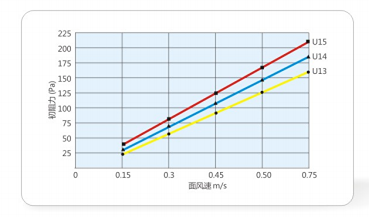
Because of this, the responsible move is to compare like-for-like on the actual products in question. Take a specific high-grade HEPA terminal unit with its rated airflow paired to its resistance. Then ask the supplier to quote the ULPA option at the same size and airflow. Read the two resistance figures side by side, because that pair of rows tells you more than any general claim.
Note one honest limit. ULPA availability for a given size is confirmed in writing per project. The quote is where you learn whether the exact format, глубина, and interface exist. There is no substitute for asking against your drawing.
Check Verification and Maintenance Requirements
A higher class shifts work to the evidence: what you test at installation, and how you keep confidence over time.
Choosing between HEPA and ULPA is not only a procurement call. It changes what you must verify later. Because the allowable local penetration at the higher class is smaller, the margin for an undetected leak or a bypass at the seal is smaller too. The documents you require on delivery, factory efficiency and per-unit leak records tied to the specific serial, carry more weight than they do for a lower grade. So does the installed-integrity test you run after mounting. Get the requirement from your acceptance criteria first, then match the reporting to it.
Maintenance follows the same logic. Leak-test intervals and the criteria that pass or fail are project-specific. Define them from the requirement rather than copying a generic interval. The details of how those tests run belong to our HEPA filter testing guide. That guide is the single place on this site that walks the methods. This section decides what to ask for, while the other explains how it is verified.
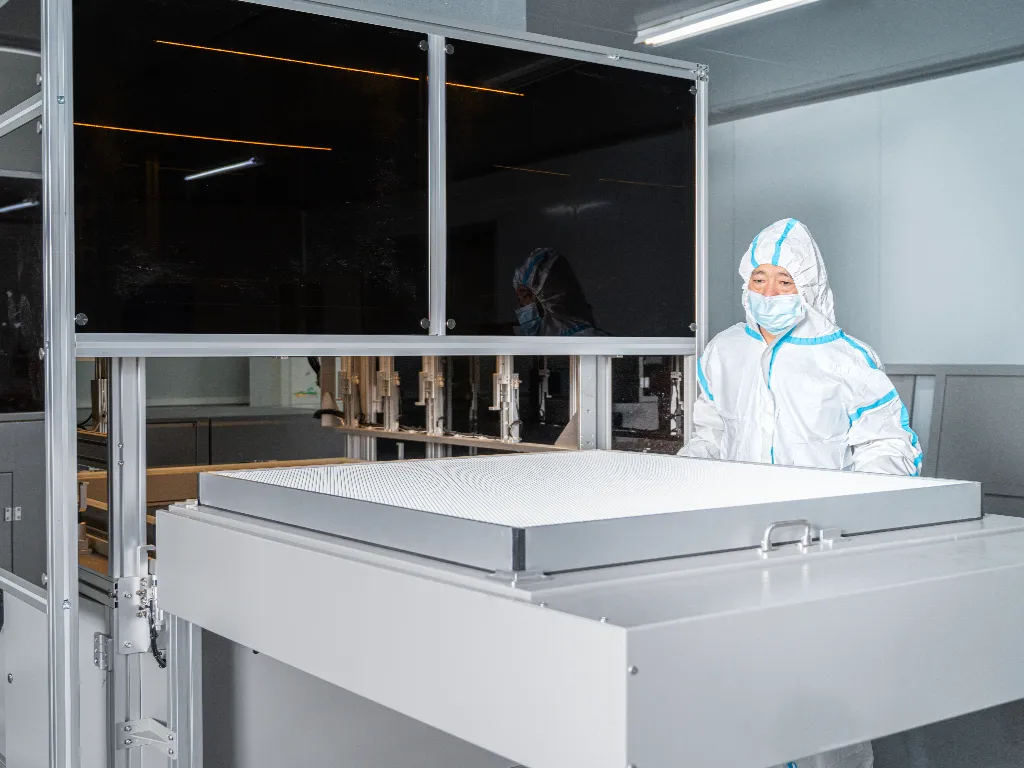
The higher class also means verification is not a one-time event. Keep the factory records, the installed-test results, and the re-test dates together per serial. At the next audit you can then show the system still meets the tighter penetration limit it was bought for, rather than re-arguing the choice.
Use a HEPA-or-ULPA Decision Checklist
Three gates decide it. Is the requirement clear, is the system compatible, and is the evidence sufficient. Work them in order.
Use the checklist below to move from “which is better” к “what does this project actually need.” Mark every item the design party must confirm. If you cannot answer a gate, that is the gap to close before ordering. It is not a reason to default upward.
| Gate | Question to answer | Доказательство / who confirms |
|---|---|---|
| 1. Requirement clear | Does the process risk or acceptance limit actually call for the higher class? | Contamination-control plan and project spec; design engineer confirms the grade is justified |
| 2. System compatible | At the same size and airflow, does the fan have margin for the higher resistance? | Fan curve and housing drawing; both parties confirm the format exists and fits |
| 3. Evidence sufficient | What factory reports and installed tests does the acceptance regime demand at this class? | Acceptance criteria; supplier states which per-unit documents ship, buyer defines installed test |
| Cross-cutting | Is the room class being confused with a filter grade? | Resolve via the cleanroom guide, not a lookup table; design party signs off |
A project that clears all three gates with the same answer is ready to specify a ULPA filter. That answer is “да, required; да, it fits; here is the evidence.” A project that cannot answer a gate should stay at the grade it can actually justify. The cost of a wrong “go higher” is a re-engineered air side. The cost of a wrong “go lower” is a failed acceptance test. Both are avoidable by filling this sheet before the purchase order.
Воздушная HEPA and ULPA Solutions
Airy provides customized cleanroom filtration to help buyers control class fit, maintain fan margin, and improve verification records.
Quoted at the Class the Process Needs
Airy can price a HEPA or ULPA terminal to your stated grade, размер, и воздушный поток. The quote holds one duty point so the two classes compare on equal terms.
Terminal and deep-body formats span the catalog in the HEPA и фильтры для чистых помещений line on this site.
System Fit Confirmed on Paper
Fan margin, глубина, seal, and weight are read against your housing drawing before any class is fixed. Airy can confirm the exact interface you need in writing.
From Checklist to Signed Sample
Send the three-gate checklist and Airy can help match each row to a documented build. One approved sample then fixes the class and evidence for every reorder.
Часто задаваемые вопросы
Five questions that decide whether to move from HEPA to ULPA.
Is ULPA always better than HEPA?
Нет. It is one classification band higher, and it helps only where sub-micron penetration is a genuine risk. Where a HEPA grade meets the process and acceptance requirement, a ULPA filter adds resistance, verification burden, and cost for no benefit.
Can a ULPA filter replace a HEPA one directly?
Only after a system check. Higher class usually means higher resistance at the same size and airflow, plus possible differences in depth, seal, and weight. The fan needs margin and the housing must accept the unit before “drop-in” means anything.
Does the cleanroom class decide the filter grade?
Not directly. Room class is the outcome of the whole ventilation design, while filter grade is one input to it. Setting one from the other by a fixed lookup oversimplifies it. Derive the grade from process risk and acceptance criteria, then read the cleanroom guide for the mapping caveats.
Is ULPA resistance always higher?
It tends to be at equal size and airflow, because the media is denser. But “tends to” is not a spec. Compare the resistance of the two candidate units at the same duty from their datasheets. Then judge fan margin against that pair of numbers.
What documents do I need when comparing options?
Take the project specification and acceptance criteria, plus the housing and fan drawings. For each candidate unit, ask for the datasheet with airflow and resistance at the same duty, and the per-unit test reports. A ULPA filter should be confirmed in writing against your exact size and interface.