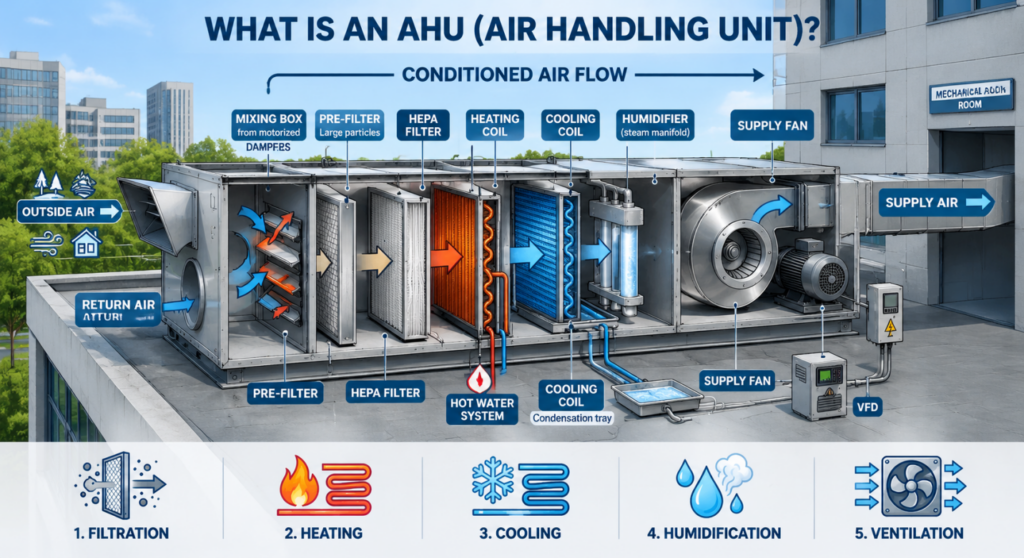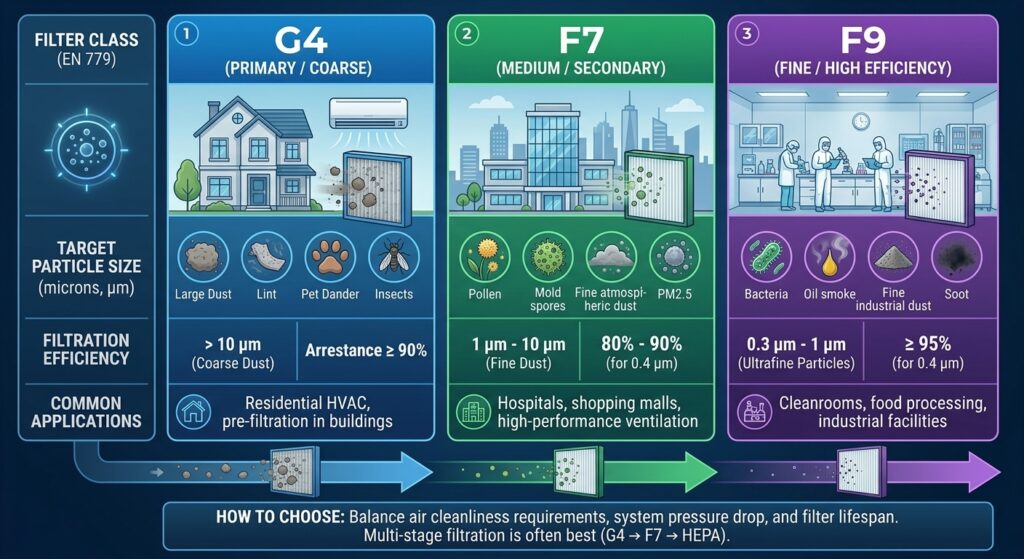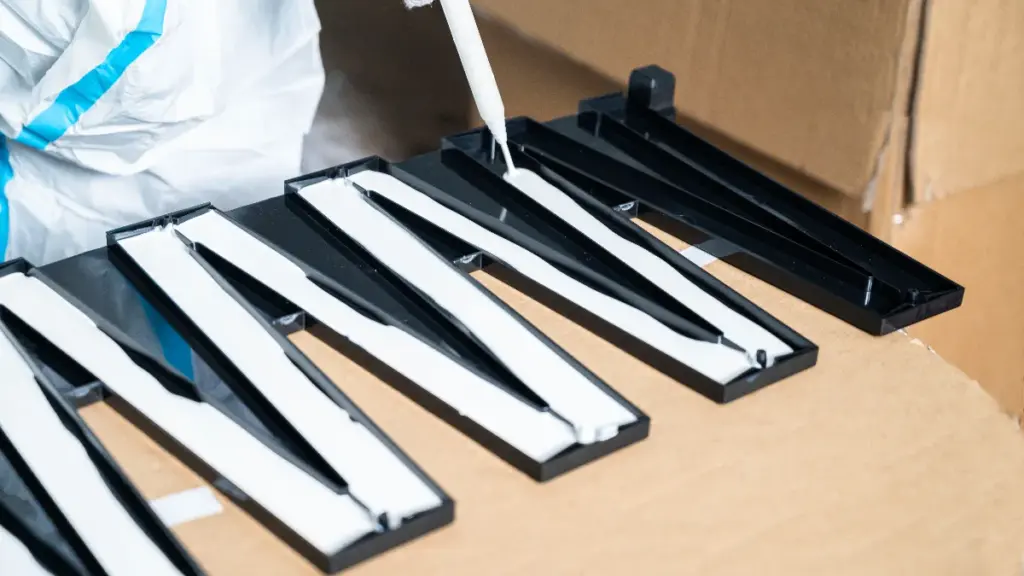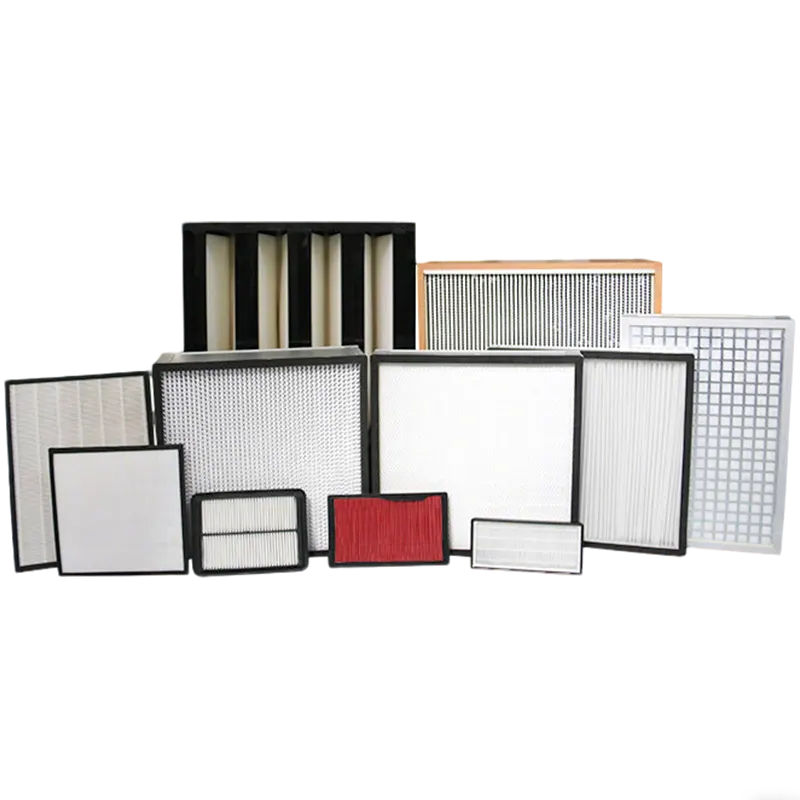
An activated carbon filter is not a better version of a HEPA filter. It is a different job. A pleated HEPA unit stops particles by squeezing air through a fine web. Activated carbon handles gases and odors by holding them on a huge internal surface, tramite adsorbimento. Confusing the two is the most common selection error. A carbon filter does not catch dust well, and a HEPA filter lets most vapors straight through. Getting value from an activated carbon air filter means choosing the right format, matching it to the actual gas and conditions, and knowing where it stops working.
This guide separates gas adsorption from particle filtration. It compares the finished carbon formats you can buy, and shows how to match a filter to the gas and duty. It explains why pressure drop and smell are unreliable life signals, and closes with a selection checklist.
Punti chiave
- Carbon captures gases, not dust: adsorption and particle filtration are different mechanisms, and one does not replace the other.
- No single carbon suits every gas: untreated carbon, impregnated carbon, and blended media target different pollutants.
- Life is about saturation and breakthrough: a low pressure drop or a “no smell yet” reading does not mean the carbon still works.
What Activated Carbon Filters Can and Cannot Do
Carbon adsorbs gas molecules onto its surface. It does not filter dust, and it does not treat every vapor equally.
Activated carbon is charcoal processed to develop a vast network of microscopic pores, giving a small amount of it an enormous internal surface area. Gas molecules drifting through the bed stick to that surface. That is adsorption. EPA guidance on air cleaners recommends choosing “an activated carbon filter or other filter designed to remove gases.” That advice targets the vapor and odor problems that particle filters miss, as set out in its air-cleaners guidance.
The limits matter as much as the capability. Three are worth stating plainly. Primo, carbon is weak on particles. Polvere, polline, and fine smoke are the job of a mechanical particulate filter, and a dusty air stream needs that stage too. Otherwise the carbon pores foul and lose capacity fast. Secondo, not every gas is held well by every carbon. Small, light, or highly volatile molecules adsorb poorly on untreated carbon and may need an impregnated or specially treated media. Terzo, adsorption is a capacity, not a permanent sink. The surface fills up, and once it does, gas passes through. A carbon filter is a consumable with a working life, not a one-time fix.
So the honest framing for anyone choosing an activated carbon air filter is simple. Carbon answers a gas or odor question, and a specific one. State what you are actually removing before anything else. That single fact decides the media, il formato, and the replacement schedule.
Compare Activated Carbon Filter Formats
Two choices are independent: the carbon inside, and the finished structure around it. Do not merge them.
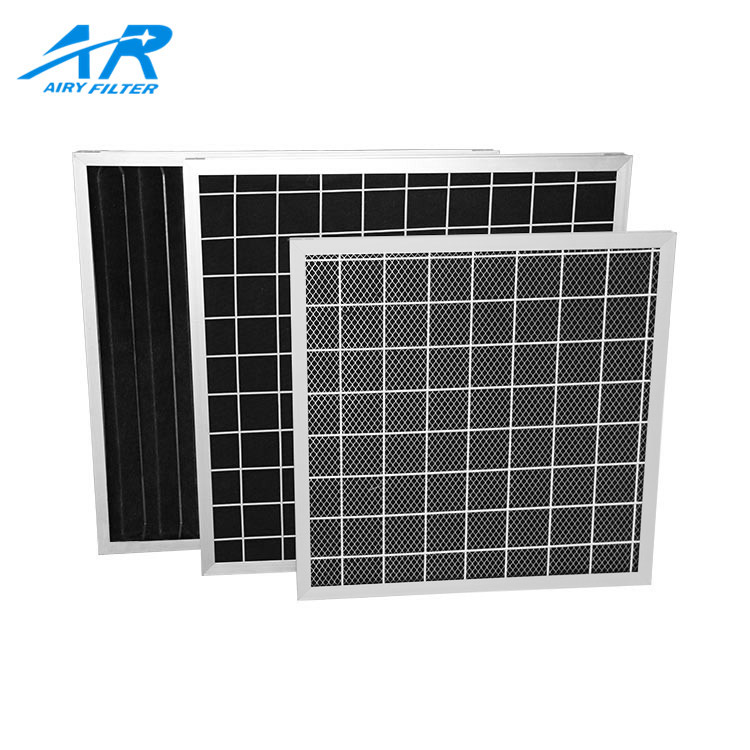
On the Airy catalog, the carbon line is sold in several finished formats. The distinctions are about how the air meets the carbon and where the unit fits, not about which pollutant it targets. UN carbon-impregnated filter media is the raw layer: carbon particles bound into a nonwoven, used where a thin gas-cleaning stage is added to an existing build. UN carbon panel filter puts that media or a carbon bed in a flat framed cell for a standard housing slot.
Two formats trade surface and depth for capacity and airflow. IL pleated carbon filter folds the media to raise face area, keeping resistance down where air volume is high. IL pocket-style carbon filter uses depth and multiple pockets to hold more carbon for a given footprint. That capacity costs room and careful handling. A broader format overview sits in our guide to HVAC filter types. For an activated carbon air filter, structure decides airflow, dust-holding, and fit. The carbon grade and the gas decide whether the unit does its job at all.
| Finished format | What it is | Where it fits | Capacity and airflow |
|---|---|---|---|
| Carbon-impregnated media | Carbon bound into a nonwoven layer | A thin gas stage added into an existing build | Low carbon mass and resistance, light duty |
| Carbon panel filter | Flat framed cell holding carbon media or bed | Standard housing slots | Moderate capacity, simple common fit |
| Pleated carbon filter | Folded media raising the face area | Higher air volumes | Keeps ΔP low at flow, less depth per face |
| Pocket carbon filter | Deep multi-pocket carbon bed | Housings with depth and access | More carbon and contact, higher ΔP |

Match the Filter to the Gas and Operating Conditions
Carbon only performs when matched to the specific gas and the real duty. Anything unknown goes on a to-confirm list, not a guess.
Five inputs decide the selection. Treat any you cannot state as an open item:
Target pollutant. Name the actual gas or vapor. A general odor job and a specific solvent, acid gas, or amine are different problems. Impregnated carbons exist to target classes untreated carbon handles poorly. Concentration. How much gas sits in the stream. This drives how fast capacity is used, and whether carbon is even the right first stage. Flusso d'aria. Volume and face velocity set format and size. Push air too fast through a thin bed and contact time collapses. Temperature and humidity. High heat and humidity reduce how well many gases adsorb, so a humid stream underperforms the same filter in dry air. Mixed gases. Competing vapors share the same surface, so one gas can displace another and shorten effective life.
Do not let a datasheet removal rate replace this matching. A percentage quoted without your gas, concentration, umidità, and contact conditions describes a laboratory case, not your duct. Ask for the conditions behind any figure. Where you do not know a value yet, say so and stage a check. Treat it as a field to confirm before ordering, not a default to fill. The specification is only as good as its weakest unknown.
Evaluate Carbon Loading, Contact Conditions, and Replacement
Carbon mass, contact, and resistance move together. A clean pressure reading is not proof the carbon still works.
Capacity is roughly a function of how much carbon the air touches, and for how long. More carbon in the bed buys more capacity, but only if the air passes through it slowly enough to leave real contact time. A heavier, deeper format like a pocket or a high-loading panel holds more carbon than a thin impregnated layer. It also adds resistance. So more carbon and low resistance must be weighed together against your airflow, never optimized in isolation.
Replacement timing is where assumptions cost the most, and two common signals are unreliable on their own. Pressure drop tells you the bed is loading with dust or holding moisture. A carbon unit can show a near-flat ΔP while its adsorption surface is exhausted. Smell is worse. Breakthrough, where the target gas starts passing downstream, can occur before anyone notices at the outlet. So define a change-out rule from your conditions. Use a tested outlet reading, a monitored interval tied to known concentration and duty, or a lab check on a used sample. Do not wait for the gauge or your nose.
Humidity needs its own caution. A damp bed adsorbs less of many gases and, in the wrong design, can host microbial growth. Where the air is wet, pair the carbon stage with proper particulate and, if needed, drying. Plan the end of life too. Spent carbon has adsorbed whatever you were removing, so its handling follows the contaminant, not the filter. Put that in the selection brief alongside the change-out rule.
Complete an Activated Carbon Selection Checklist
Fill every field before you ask for a quote. Blank rows are the questions to answer, not defaults to skip.
Use this as the working sheet for any activated carbon air filter enquiry. Where you lack data, write “to confirm.” That is what tells the supplier, and you, that the selection needs a check rather than a guess.
| Field | What to state | If unknown |
|---|---|---|
| Target gas or odor | The named pollutant, not general fumes | Confirm before sizing; it decides carbon type |
| Carbon type | Untreated, impregnated, or blended media | Ask the supplier to match it to the gas |
| Concentration | ppm or mg/m³ if known; drives capacity use | Measure it or state an expected range |
| Airflow and velocity | m³/h and the velocity across the media | Confirm from the fan and system |
| Temperature and humidity | Operating band; affects adsorption | Note if a pre-stage or drying is needed |
| Format and size | Pannello, pieghettato, or pocket; W×H×D; housing slot | Measure the housing first |
| Resistance budget | The maximum initial ΔP the system allows | Take it from the fan margin |
| Change-out rule | Desired outlet result and how life is judged | Do not rely on ΔP or smell alone |
| Disposal | Access, interval, and used-carbon handling | Confirm site and waste rules |
The checklist forces one caution. If several rows still say “to confirm,” the selection is not ready to buy. Activated carbon rewards precise briefs and punishes vague ones, because the cheapest wrong choice still adsorbs for a while before quietly breaking through. Fill the sheet, hand it over as the requirement, and judge the supplier’s recommendation against these fields. Do not judge it against a brochure claim.
Arioso Activated Carbon Solutions
Airy provides customized carbon filtration to help buyers control gas match, maintain contact time, and improve replacement planning.
A supplier that welcomes a precise brief can meet each checklist row with a real match, not a promise. Three things an overseas buyer usually has to force out of an activated carbon air filter enquiry are the ones Airy hands over up front.
Formats You Can Specify
Airy carries carbon as impregnated media, pannelli, pleats, and pockets, so the format matches your housing and airflow. The finished structure and the carbon grade are quoted as two separate decisions, never merged.
Carbon Matched to the Gas
Tell Airy the named pollutant and the real duty. The media is then chosen against that gas and its concentration, not against a generic catalog claim.
A Life Rule Before the Order
Agree the change-out rule and the duty point with Airy before you buy. Spent carbon is then caught by a measured outlet or a monitored interval, not by a smell test at the grille.

Domande frequenti
Five questions that decide a carbon selection.
Do activated carbon filters remove dust?
Not as their main job. Carbon targets gases and odors by adsorption. Fine particles are captured by mechanical particulate media. In a dust-laden stream, pair a particulate stage ahead of the carbon so its pores do not foul and lose capacity early.
Can carbon remove all VOCs?
NO. Untreated carbon adsorbs some vapors well and others poorly. Light or highly volatile compounds may pass through, and hot or humid air reduces performance. Impregnated carbons target particular gas classes, so matching the carbon to the gas is the real question.
Is more carbon always better?
Not on its own. Capacity scales with carbon actually contacted at the right velocity. A deeper bed only helps if contact time and fan margin support it. More carbon also means more resistance, so weigh loading against airflow and the system’s pressure budget.
Can pressure drop tell me the carbon is spent?
NO. ΔP rises with dust loading or moisture, not with adsorption saturation. Breakthrough can occur while pressure still looks normal. Define change-out from an outlet measurement, a monitored interval, or a lab check, not from the gauge or a smell.
What information do I need before selecting one?
Name the gas, the concentration, the airflow and velocity, the temperature and humidity, and the housing size and format. Add the resistance budget and how you will judge life. Mark any unknown “to confirm” and settle it before ordering.