Customer Problem
Overseas procurement managers and HVAC engineers frequently face confusion when reading technical submittals: “Why does one spec sheet say G4, while another lists ISO Coarse 75%? Can an F7 filter replace an F9 filter to save costs?” Misinterpreting filter rating standards leads to buying under-spec filters that fail audits, or over-spec filters that choke supply fans.
Cause & Principle
Air filter ratings define a filter’s ability to capture particles of specific micron sizes under defined airflows. Different filtration media, ranging from coarse synthetic fibers to ultra-fine meltblown polypropylene and glass fiber web structures, yield vastly different arrestance mechanics.
The industry is bridging two major standards:
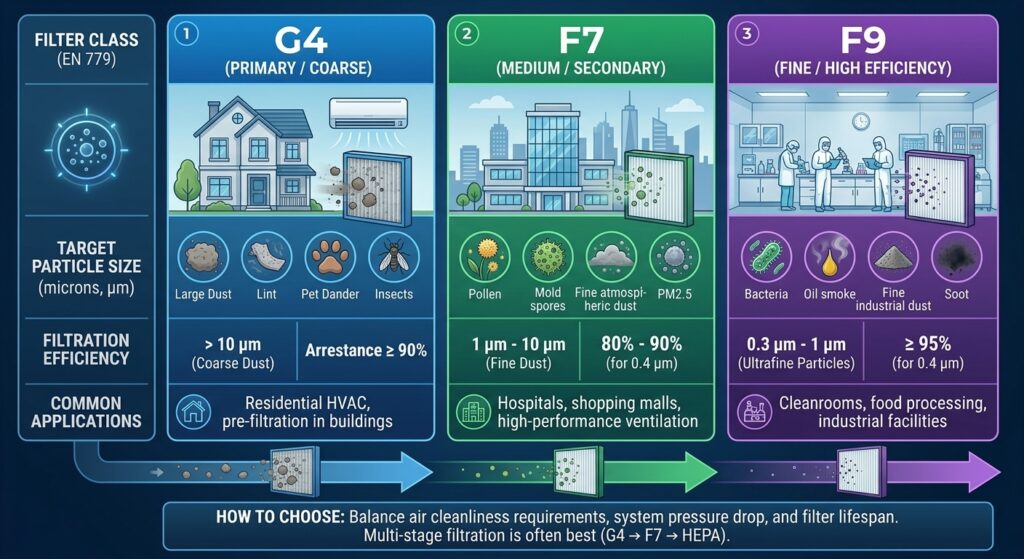
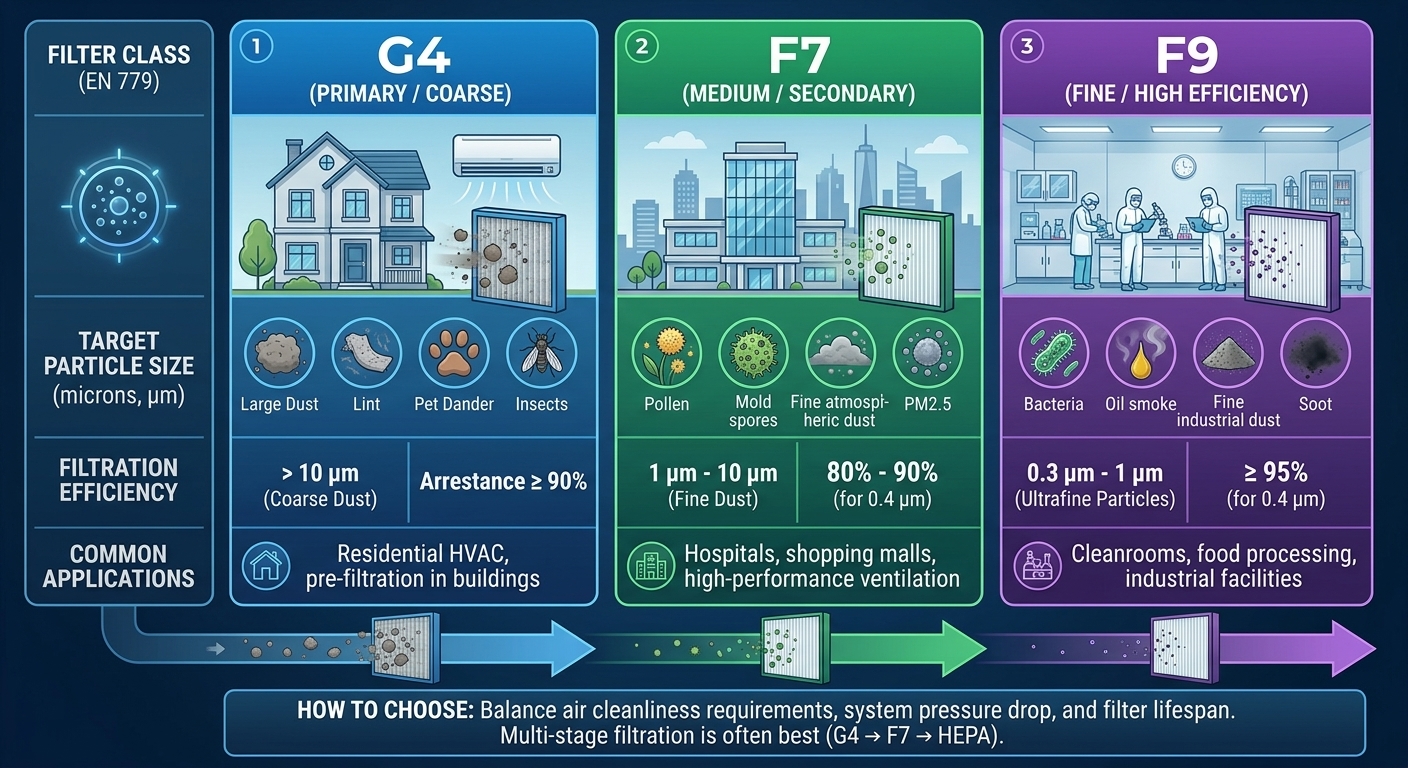
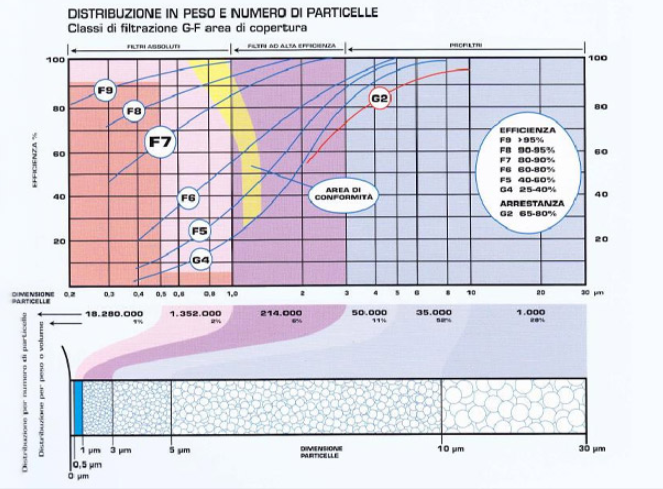
- EN779 (Legacy European Standard): Classifies filters as Coarse (G1–G4), واسطة (م5-م6), and Fine (F7-F9) based on average efficiency for 0.4 μm particles.
- ISO 16890 (Current Global Standard): Measures efficiency across particle size fractions: ePM1 (0.3–1.0 μm), ePM2.5 (0.3–2.5 μm), and ePM10 (0.3-10 ميكرومتر).
Comparison Analysis
| ميزة | G4 Air Filter | F7 Air Filter | F9 Air Filter |
|---|---|---|---|
| EN779 / فئة الأيزو | G4 / ISO Coarse 60–90% | F7 / ePM1 50-65% (ePM2.5 >70%) | F9 / ePM1 80–85% |
| Target Pollutants | Coarse dust, حبوب اللقاح, leaves, شعر | الغبار الناعم, PM2.5, bacteria carrier droplets | Fine combustion particles, welding fumes |
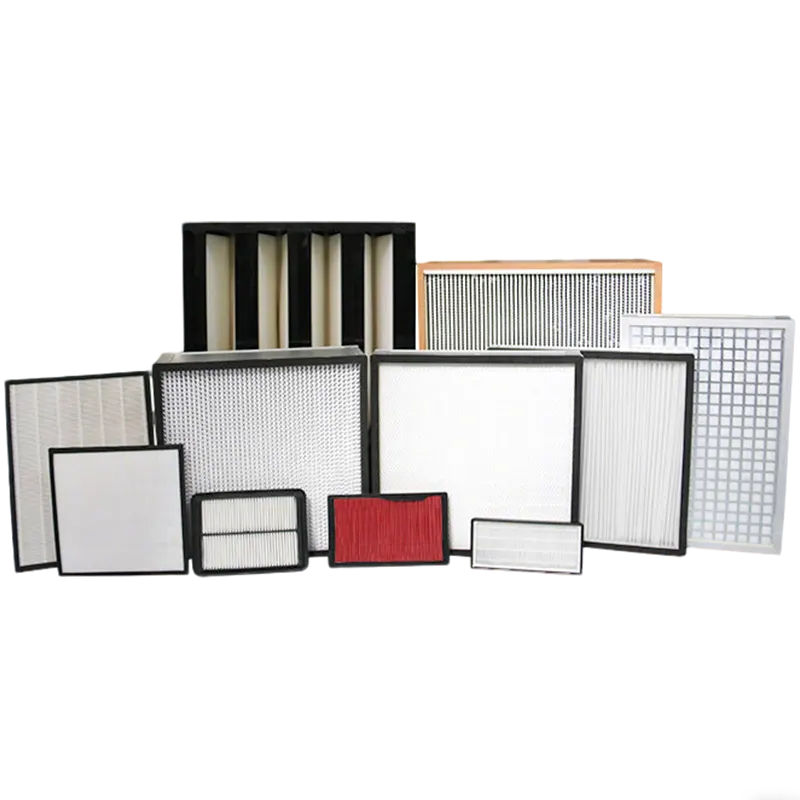
| Typical Structure | Pleated panel, synthetic mat | Pocket/Bag filter, rigid V-bank | Pocket/Bag filter, V-bank mini-pleat |
| Primary Placement | AHU air intake, primary protection | التدفئة والتهوية وتكييف الهواء التجارية, cleanroom pre-stage | High-spec industrial, HEPA pre-stage |
كيفية الاختيار
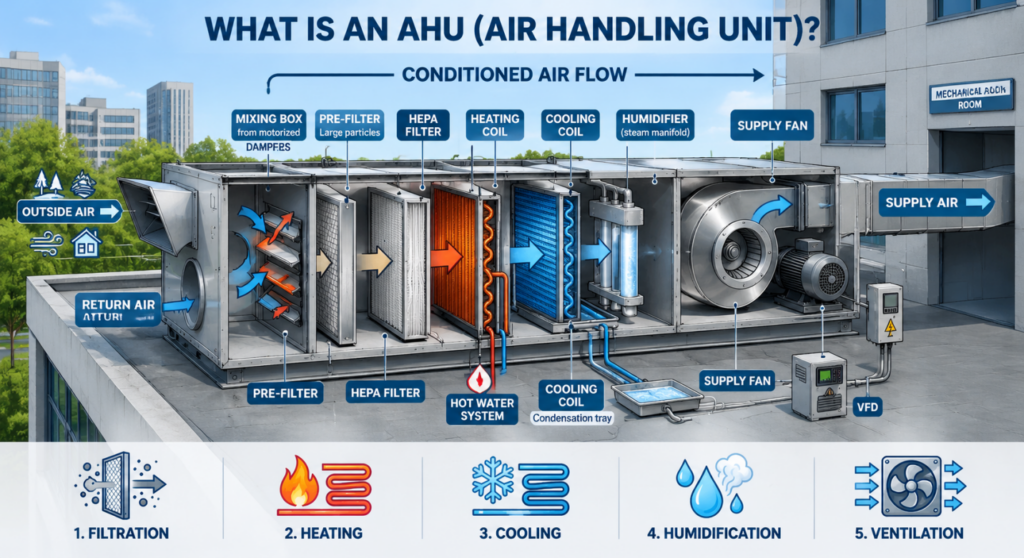
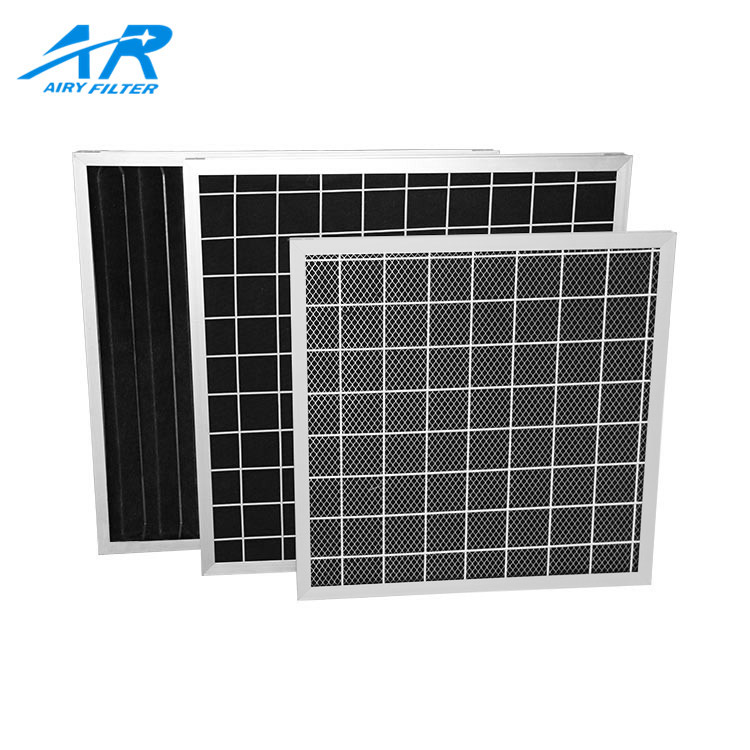
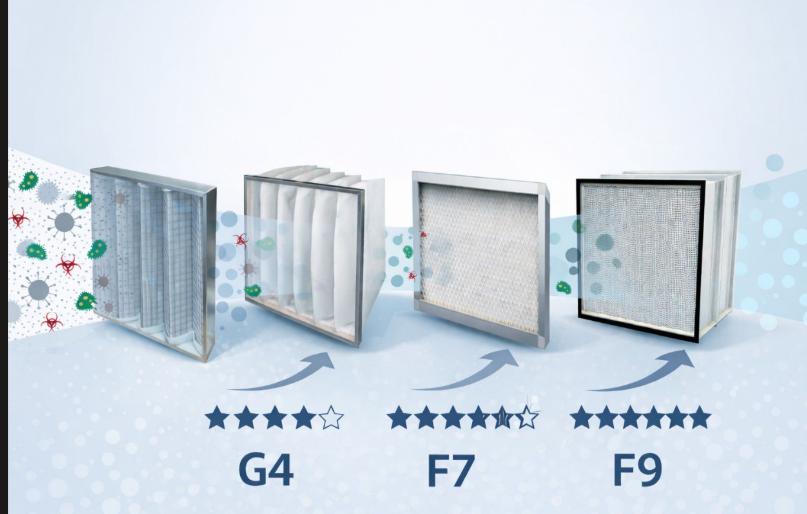
- Choose G4 when: You need a low-cost, low-resistance barrier at the fresh air intake to protect fan motors and cooling coils, as with a G4 panel filter.
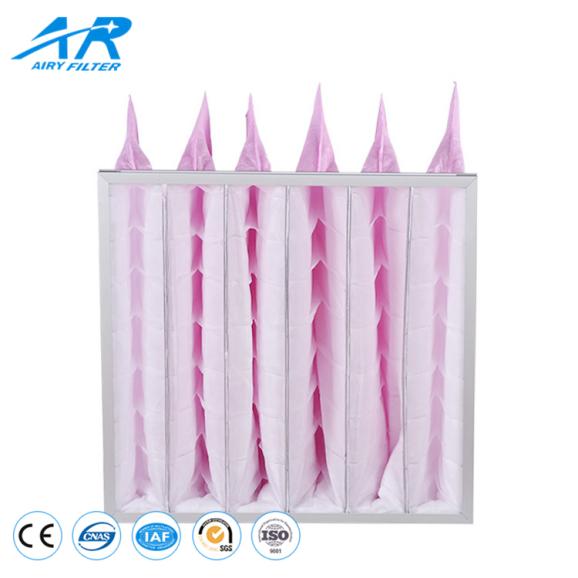
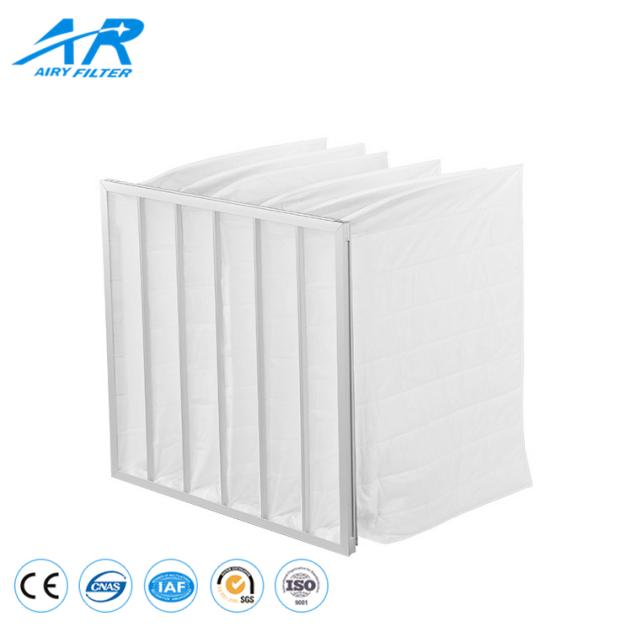
- Choose F7 when: You are designing general HVAC systems for commercial spaces, public buildings, or standard manufacturing plants to meet health and comfort IAQ standards. An F7 pocket filter is a common choice.
- Choose F9 when: You are supplying critical environments (على سبيل المثال. turbine intakes, pharmaceutical pre-filtration, automotive spray booths) where maximum particle interception before HEPA is non-negotiable.
Common Mistakes
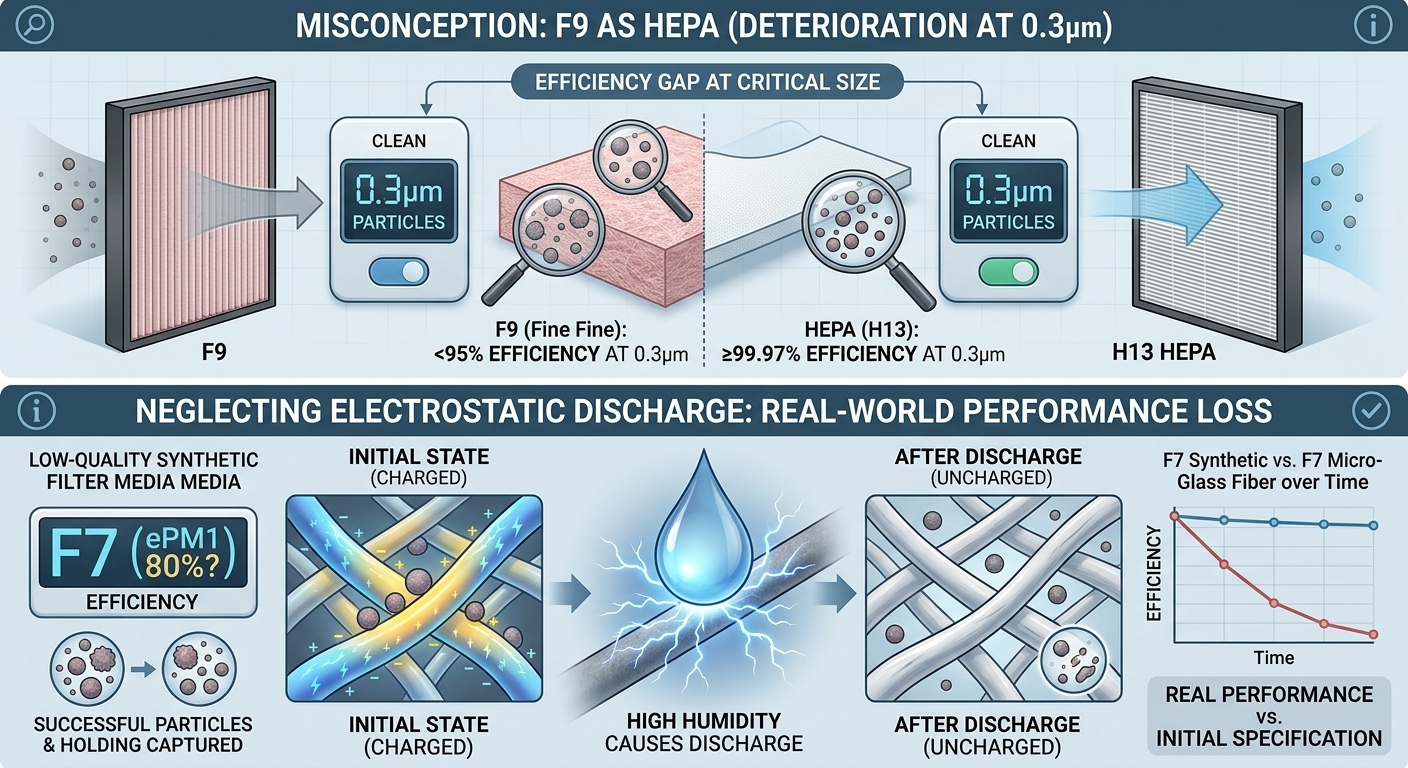
- Assuming F9 Can Act as a HEPA Filter: F9 captures fine particles well, but it does not achieve the 99.97% الكفاءة في 0.3 μm required for HEPA certification.
- Neglecting Electrostatic Discharge Effects: Some low-quality F7 synthetic filters rely purely on static charge; once discharged in high humidity, their real-world efficiency drops drastically.
The Airy Solution
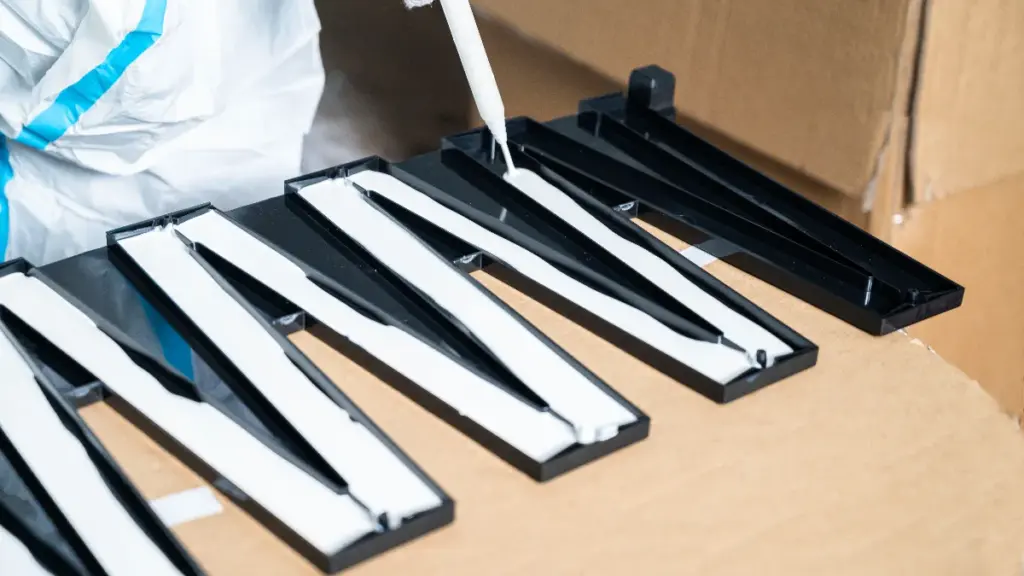
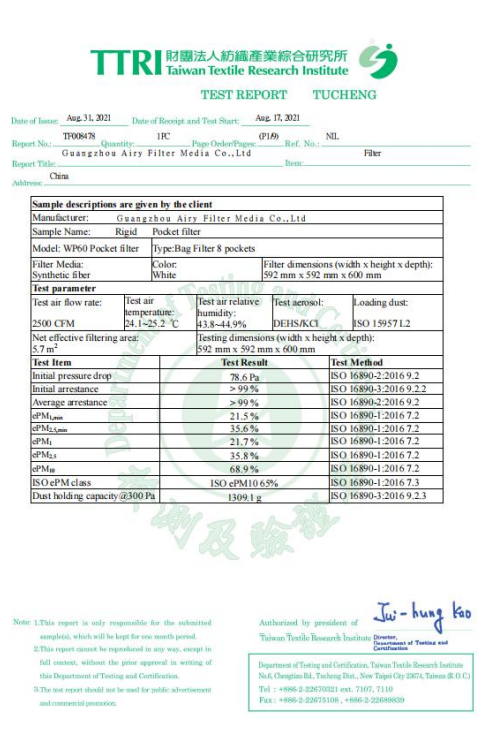
- Airy F7/F9 Pocket Filters: Built with ultrasonic seamless welding technology to prevent edge leakage, coupled with mechanically stable, non-discharging micro-synthetic media.
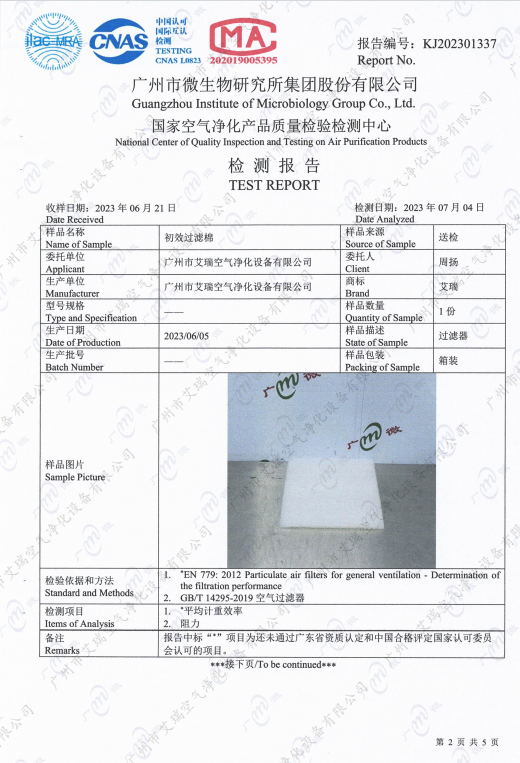
- Strict Standard Compliance: All Airy filter media are tested to verify exact compliance with EN779 and ISO 16890 test protocols, ensuring your submittals pass local engineering audits smoothly.
الأسئلة المتداولة
What is the equivalent ISO 16890 rating for an EN779 F7 pocket filter?
An EN779 F7 filter typically corresponds to ISO ePM1 55–65% or ISO ePM2.5 70–80%, depending on the media structure.
How many pockets (bags) should I select for an F7 filter?
More pockets increase total media surface area, which reduces resistance and extends dust-holding capacity. Airy offers 3, 5, 6, and 8-pocket configurations.