Two quotes for an “industrial HEPA filter” can differ by a wide margin. Both can still be correct. The gap is rarely the filter alone. It is what each supplier assumed about size, classe, débit d'air nominal, cadre, joint, documentation, and delivery scope. Before any number means anything, the specifications behind it have to line up. That alignment, not the lowest digit, is what makes two industrial HEPA filter cost estimates comparable.
This guide explains why there is no single price. It shows how to match the specification before reading a unit cost. It separates purchase price from landed and operating cost, and ends with a like-for-like comparison sheet you fill on every bid.
Points clés à retenir
- Price is a function of the spec, not a number to look up: taille, classe, débit d'air nominal, cadre, joint, documentation, and delivery scope each move it.
- Match the specification first: “both H14” is not enough to compare two unit prices fairly.
- Low unit price is not low total cost: conditionnement, freight, trade terms, and operating energy belong in the decision.

Why There Is No Single Industrial HEPA Filter Price
A price only exists once the specification, quantité, evidence, and delivery scope are fixed. Ask for “the price” before those, and every answer is a guess dressed as a quote.
A single industrial HEPA filter price does not exist because the product is a bundle of variables. Each variable changes material use, testing burden, and handling. A 305×305 terminal and a 610×610 V-bank are both “HEPA.” Yet their media area, cadre, and shipping cube differ by multiples. A filter sold on a datasheet claim and one sold with per-unit efficiency and leak records are not the same product. The evidence itself is a line item. Order quantity moves unit price through setup and material batching. Delivery scope moves the number you actually pay, whether ex-works or freight-inclusive, standard or export packaging.
À cause de ça, publishing a flat “HEPA price list” would mislead more than it helps. A transparent cost breakdown, where each driver is visible, is the useful form. That is why we keep an itemized stainless-steel cost write-up ici. It shows how a price should be argued rather than asserted. Treat a quoted range the same way. A range only means something when the spec, quantity band, and inclusions behind it are named. A number without that context is decoration.
Match the Specification Before Comparing Unit Prices
Compare prices only after the products are identical on paper. Fixing the spec is the step most buyers skip. It is also the step that most explains a big price gap.
Put two quotes side by side and align them field by field before you look at the totals. Check outer dimensions and depth, efficiency class, rated airflow with its initial resistance, matériau à cadre, sealing type, and the test documentation each bid includes. Two bids that differ on any of these are not two prices for one product. They are prices for two different products. The cheaper one is usually cheaper for a reason you can name once the fields line up.
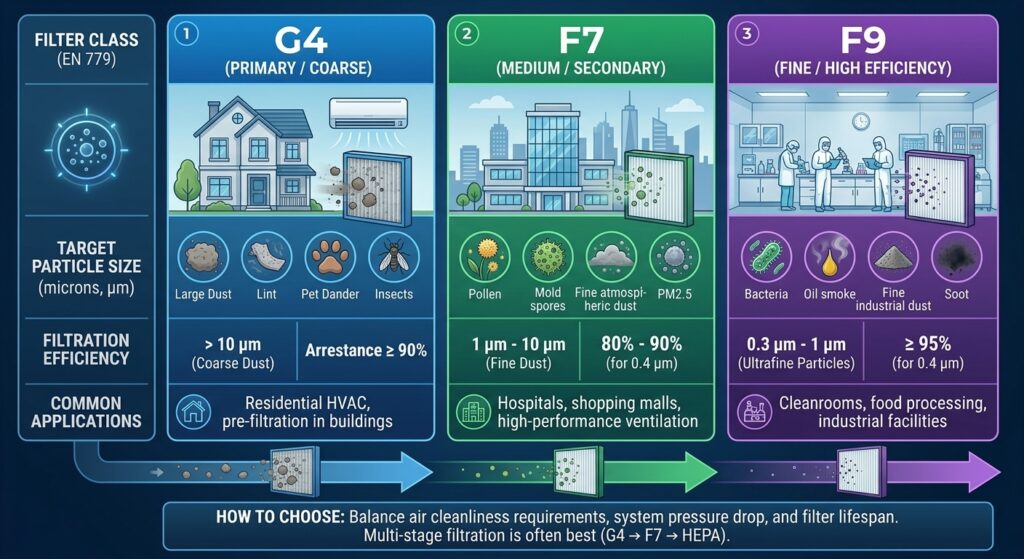
“Both are H14” does not make two bids comparable. H14 fixes one thing: a minimum efficiency class under a stated test standard, ISO 29463 and its companion test methods. It says nothing about the rest. An H14 at 650 m³/h and an H14 at 1,300 m³/h use different media area and cost different amounts to build. An H14 in a gel-seal frame and an H14 in a gasketed aluminum frame carry different hardware. Notre H14 specification sheet lists the fields that have to match. Run both quotes down that same list. Le “mystery gap” usually dissolves into a handful of concrete differences: one bid sized for higher airflow, or one including reports the other quietly left out.
When the specification is the same and only the price differs, the comparison becomes meaningful. At that point the gap is about supplier cost structure, scale, or margin. That is a real signal you can act on. Everything above is about not mistaking a spec difference for a price advantage.
Identify the Main Quote Drivers
Six inputs move an industrial HEPA quote. Know which ones your bid changed, and you know why the number moved.
You do not need a cost-percentage breakdown. Anyone quoting precise percentages without your drawings and order file is guessing. What you need is to recognize the levers and watch which one each supplier pulled. In rough order of how often they explain a gap:
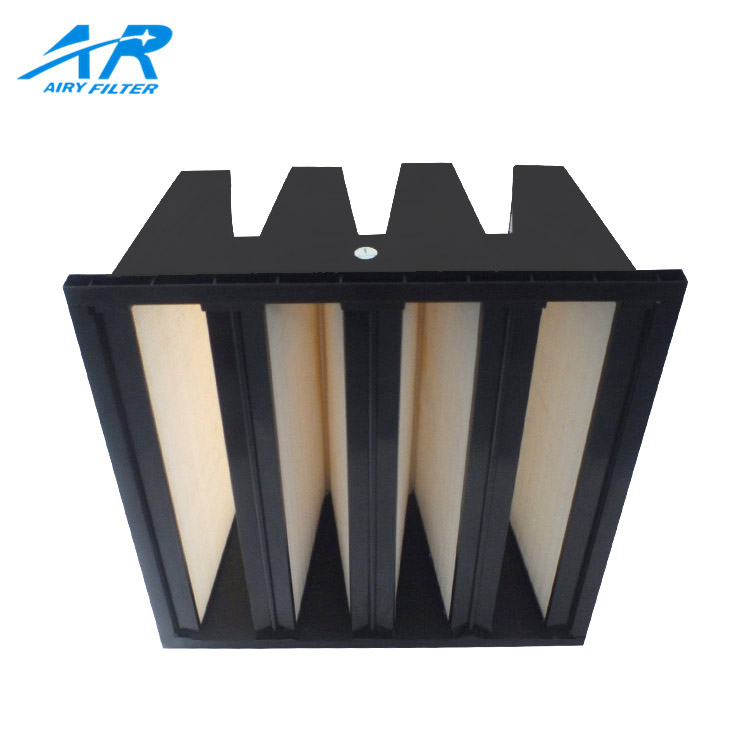
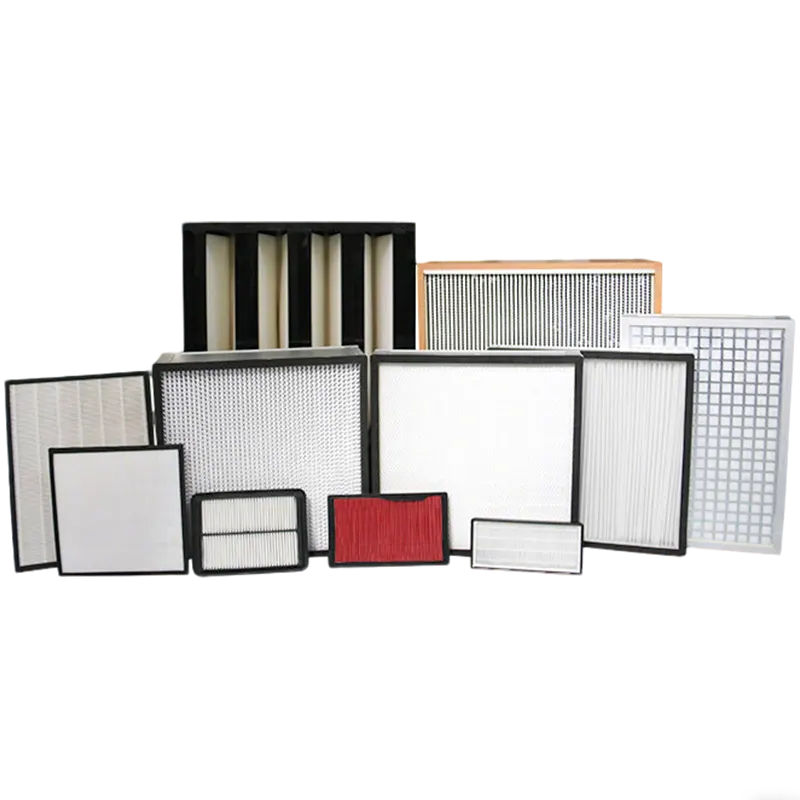
Media and structure. Higher class, more media area, and denser pleating all use more of the expensive input. A mini-pleat gel-seal HEPA terminal and a deep V-bank pack very different amounts of media behind similar face sizes.
Frame and sealing. Carton, galvanisé, aluminium, and stainless frames; gasket, gel, or knife-edge seals. These change hardware, tooling, and installation compatibility. Gel-seal and stainless constructions cost more to build than a basic frame.
Personnalisation. A non-standard size on a drawing, a special depth, or an unusual interface adds setup. It often brings minimum-quantity effects versus a catalog line.
Order quantity. Repeat, batched orders price lower per unit than one-offs. Setup and purchasing spread across volume.
Documentation des tests. Per-unit efficiency and leak reports, packaging records, and traceability are work a datasheet-only bid does not include. This is one of the most common invisible differences between two “identical” quotes.
Delivery scope. What is included moves the number that reaches your dock: export packaging, palletization, freight, incoterm, duties. Two quotes on different terms are not the same product at two prices.
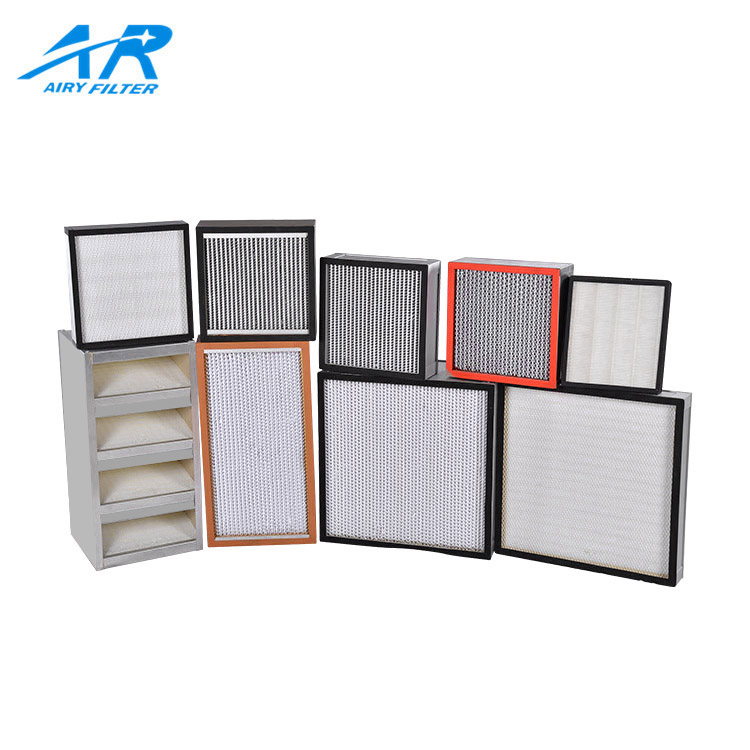
These drivers combine rather than act alone, which is why a headline number hides so much. A stainless frame in a gasketed seal is one build. A higher class and a real per-unit test file add to the difference. That is a different build from a basic framed, datasheet-only bid of the same size. The spread between them is legitimate, not padding. Watch for the opposite trap too. A supplier quoting you “typical percentages” of material versus labor, when they have not seen your drawings or order quantity, is describing someone else’s cost structure, not yours. Read each driver as one question: did this bid change this input versus my baseline? Then the price moves from mystery to arithmetic.
Treat any precise cost split that arrives without your specification as unverified until it can be tied to your fields.
Separate Purchase Price, Landed Cost, and Operating Cost
The invoice price is the first of three cost layers. A buyer who compares only layer one routinely pays more overall.
Lay the three layers out separately rather than collapsing them into “unit price.” The table below is a checklist of what belongs in each. The point is completeness, not a specific split.
| Cost layer | What it covers | Why a low unit price can mislead |
|---|---|---|
| Purchase price | The filter itself at the stated spec and quantity | A cheaper unit may be a lower class, thinner frame, or excluded reports |
| Landed cost | Emballage d'exportation, palletization, freight, incoterm, duties, handling | Ex-works pricing looks low until freight and packaging land |
| Operating cost | Fan energy against resistance over service life, change-out labor, waste | A high-resistance unit can cost more per year than it “saved” |
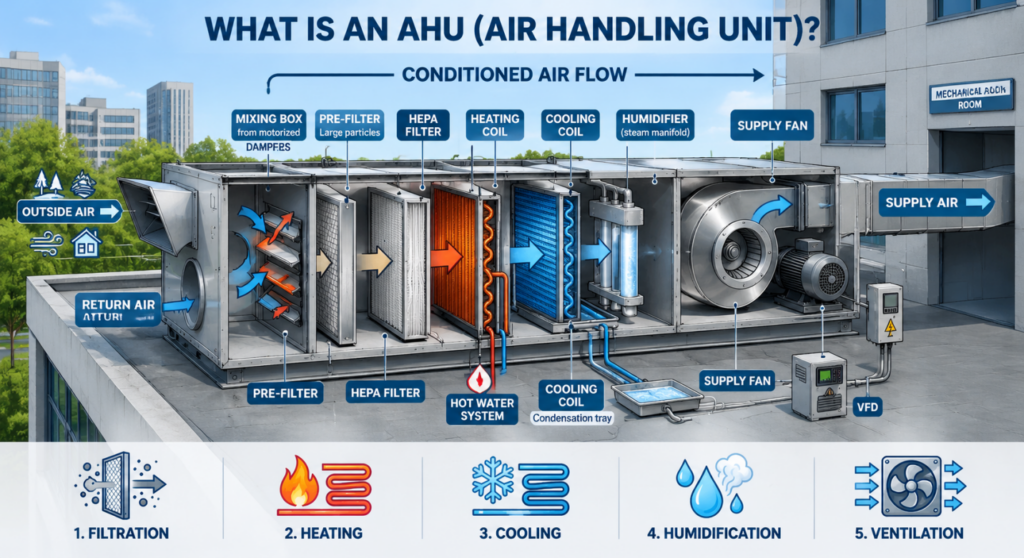
The operating layer is where matching matters again. Resistance is a duty decision, not a datasheet trivia point. A format with more media area behind the same face can move more air at lower resistance per unit of flow. That is exactly the trade that pushes buyers toward a deep V-bank in high-volume air handling units. The reverse is true for a shallow terminal box. When you compare bids, ask each supplier for resistance at the same débit d'air nominal. Reason about energy and service interval from there, not from whichever unit price looked friendly.
None of this says pay more. It says compare the whole stack. A quote that wins on purchase price can quietly exclude freight, reports, or a heavier energy bill.

Use a Like-for-Like Supplier Quote Comparison Sheet
One sheet, every field, three supplier columns. Fill it before you rank anything. The price gap then becomes a list of differences you can act on.
Use the comparison sheet below for every industrial HEPA bid. Enter each supplier’s answer in its own column. Leave a cell blank where a quote stays silent, and note it as an open item. State your baseline in the first column before you fill anything. The dimensions belong on this sheet too, et le sizes guide names the measured fields to confirm across all three bids.
| Line item (state your baseline) | Supplier A | Supplier B | Supplier C |
|---|---|---|---|
| Dimensions W×H×D (MM) + tolérance | |||
| Classe d'efficacité + standard | |||
| Débit d'air nominal (m³ / h) & initial ΔP (Pennsylvanie) | |||
| Matériau du cadre | |||
| Seal type (gasket / gel / bord du couteau) | |||
| Per-unit reports included | |||
| Unit price at stated quantity | |||
| Delivery scope / incoterm / conditionnement | |||
| Quote validity & délai de mise en œuvre |

Add a “to clarify” block under the sheet for anything each quote left blank or worded ambiguously. Note the excluded packaging, the unstated test basis, and the incoterm that changes the landed figure. Send that block back to the supplier rather than assuming. A bid you cannot score on this sheet is a bid you cannot fairly rank, no matter how attractive its headline unit price looks. Ranking comes after the fields match, not before.
Aéré Industrial HEPA Filter Solutions
Airy provides customized HEPA solutions to help buyers control cost scope, maintain tested efficiency, and improve quote comparability.
Built to the Specification You Set
Airy prices a unit against your stated class, flux d'air, taille, and seal. The same specification drives the quote for every bid you run.
Terminal, V-bank, and gel-seal formats span the catalog in the Filtres HEPA et salles blanches ligne sur ce site.
Reports and Delivery Scope in Writing
Per-unit efficiency and leak records, export packaging, and freight terms are named on the quote. The scope that reaches your dock stays explicit.
From Comparable Quote to Approved Sample
Send your baseline sheet and Airy can help match it line for line. One approved sample then fixes the standard for every later reorder.
Foire aux questions
Five questions that come up on every industrial HEPA cost conversation.
How much does an industrial HEPA filter cost?
There is no single number. Price follows size, classe, débit d'air nominal, cadre, joint, documentation, quantité, and delivery scope. A range only means something when all of those are named. Treat any flat list or bare quote without that context as unusable for comparison.
Is H14 always more expensive than H13?
Not by itself. Class is only one field, and an H14 at a low airflow in a basic frame can cost less than an H13 sized and built for a heavier duty. Compare whole specifications, not one letter of the grade.
Do custom sizes cost more?
Généralement, because non-standard dimensions add setup, tooling, and often minimum-quantity effects versus a catalog line. How much depends on the drawing and the run length. Get it priced against a stated quantity on the same spec sheet as the standard option.
Are testing and packaging included in the quote?
Do not assume either way, so put them on the sheet. Per-unit efficiency and leak reports, export packaging, palletization, and freight are common inclusions that vary between bids. Their absence can explain most of a “cheaper” quote.
How do I compare quotes fairly?
Match the specification field by field first. Split purchase price from landed and operating cost, and score every bid on the same like-for-like sheet. Rank only after the products are identical on paper.