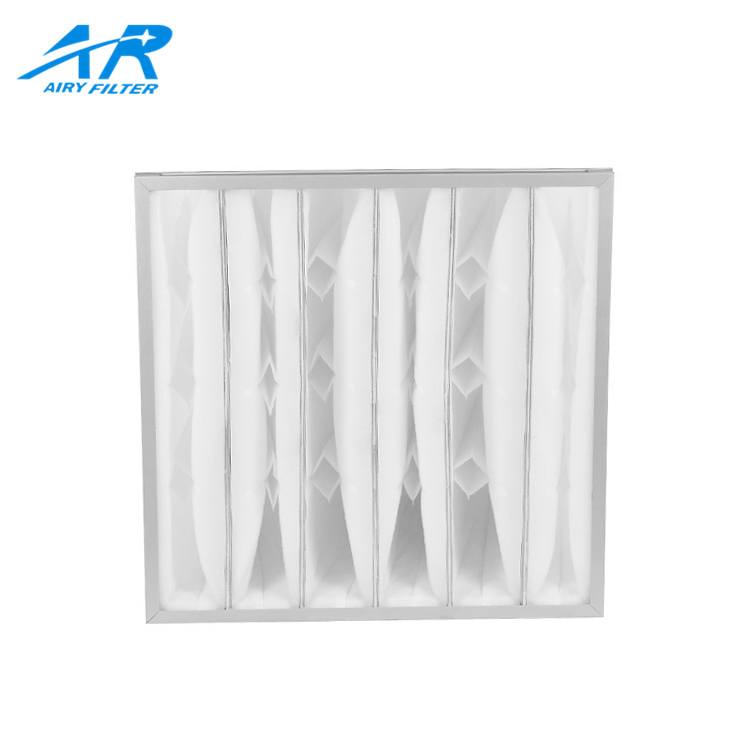
“Rigid pocket filter” names a construction, not a performance promise. On Airy’s AR-HCD line the name is precise. Filter pockets are made by high-frequency welding and joined seam-to-seam by hot-melt. They sit in a rigid frame, offered in aluminium alloy, galvanised sheet, stainless steel, or ABS plastic. That welded, self-supporting build separates the unit from a soft bag that hangs from a header. It is why the same nominal face can sit at a different depth, airflow, and resistance than the element it replaces. Choosing one is a datasheet read, not a label swap.
This guide defines that name, then sets it against the flexible bag. It ends with the product-specific ordering sheet you fill in with your supplier. One clarification up front: “MERV 5-14” in the product title and “F5-F7” in the spec table come from two different systems. Keep the grade and its standard on the same line of your sheet before you compare anything.
Key Takeaways
- Rigid pocket is a build, the F-grade is a result: welded pockets in a frame say nothing about efficiency until the grade row is named.
- Fit comes from the frame and seams, not the word pocket: rigid pockets and flexible bags are different families that need different measurements.
- Compare only at equal face, depth, class, and airflow: order from the AR-HCD row, then confirm the housing interface in writing.

What Does a Rigid Pocket Filter Refer To?
“Rigid” is the frame plus the welded seam. The product data, not the catalog word, is what you order against.
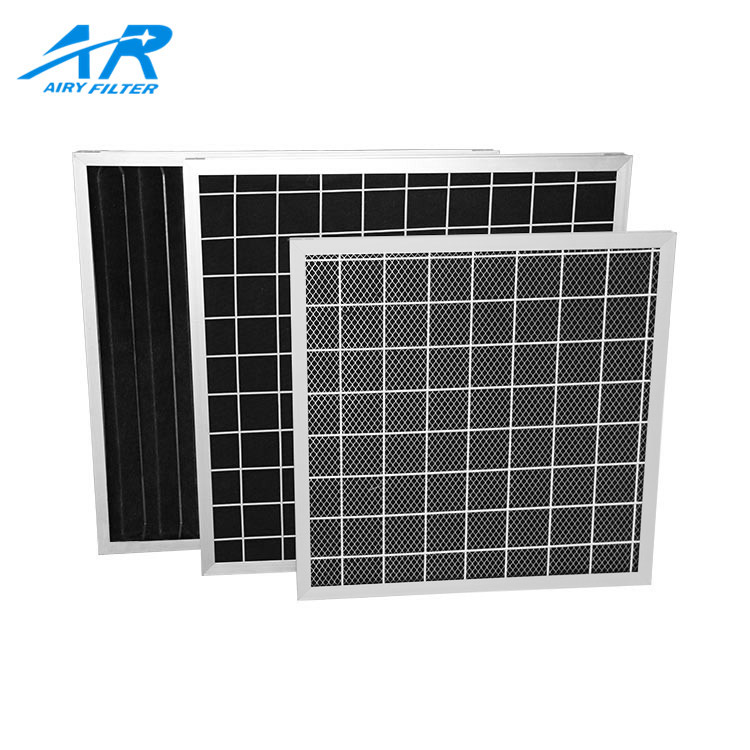
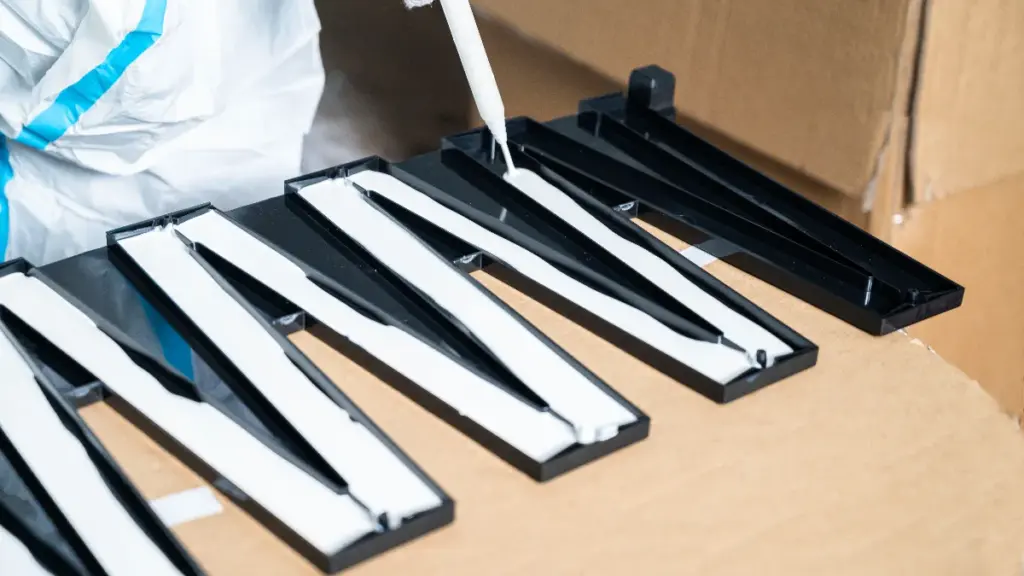
The construction is stated plainly on the AR-HCD page. The pockets are made by a high-frequency welding process and connected without seams through hot-melt technology. They are carried in a rigid frame of aluminium alloy, galvanised sheet, stainless steel, or ABS plastic. The “rigid” in the name is that frame-and-seam build. The pockets hold their shape on their own rather than flopping from a mounting ring. The listed duty runs F5 / F6 / F7, Europe’s EU5 / EU6 / EU7, and the product title carries a MERV 5-14 band.
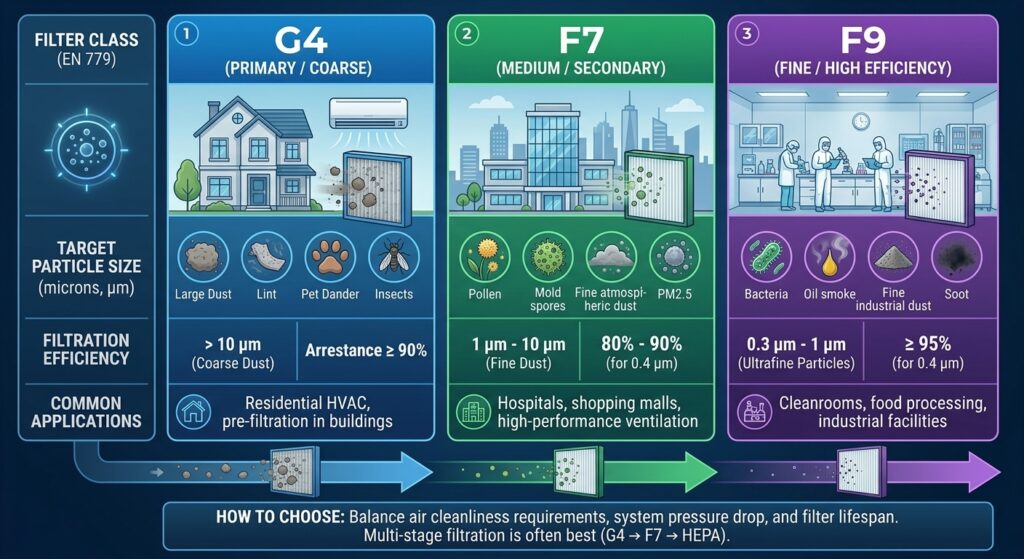
Expect other vendors to label the same shape differently. Some say “rigid pocket,” some say “bag,” and some name it by frame material. Pin the term to the data, not the brochure word. The F-class grades belong to the general-ventilation standard ISO 16890 and its ePM vocabulary. MERV comes from a different system, ASHRAE 52.2, and is not a one-to-one translation. That is why this guide quotes the factory’s own F5-F7 rows instead of converting between grade systems. For where pockets sit among the other formats, see our HVAC filter types guide.
How It Differs from a Flexible Bag Filter
Both are “pockets.” One is a self-supporting welded frame. The other hangs from a header. That single difference drives the measurements.
The clearest distinction is support. A rigid pocket filter keeps its shape through a welded, self-supporting frame. That is the high-frequency-welded, hot-melt seam above, listed by the factory with high air-tightness and high bag strength as datasheet features. The flexible alternatives sold on the same site are separate product families. Their pockets are carried from a header and move with the airflow. One example is the non-woven pocket filter. The word “pocket” covers both, which is the trap when you swap one for the other.
Two consequences follow from that build, and one thing does not follow. The self-supporting pockets keep their channel spacing under load instead of bags clapping together. That is where the “high dust holding, low resistance” line on the datasheet earns its place. Treat it as a claim to verify against your own airflow, not a given. Mounting also differs, because a frame seats into a track while a bag header seals against a bulkhead. The sealing interface you measure is therefore a different part on the two designs.
What does not follow from “rigid” is any verdict that it is the better filter. It is a different shape that needs its own four measurements before it replaces anything. The difference also shows at change-out. A bag filter is pulled from its header and its pockets fold as it comes away. A rigid pocket frame lifts as one unit, its welded pockets holding shape. That matters in tight plant rooms and on high grids where you handle the element awkwardly.
When to Consider a Rigid Pocket Filter
Three conditions decide it: depth, airflow band, and duty. None of them is a promise about service life.
The first condition is available depth. Every AR-HCD row is 600 mm deep, plus clearance to slide the frame in and out. A housing built for a 300 mm bag will not take it. Forcing it means reworking the section, and the drop-in saving is gone.
The second condition is the airflow band the format serves. The three rows carry 2,100, 3,650, and 4,250 m³/h at their stated faces. If your air handling unit needs that volume behind one standard face, the format is in its lane.
The third condition is duty and cleanliness context. The page lists commercial building air quality, food and beverage processing, general industrial manufacturing, and industrial painting. It also notes the welded build as suitable for strict cleanliness industries such as medicine, food, and electronics.
What the shape does not automatically buy is lower energy use or a longer service life handed to you. “Long service life” sits on the feature list as marketing copy. The only hard number is the recommended final resistance of 200 Pa, and that is a change-out guide, not a calendar. Real life depends on how dusty your air is and how hard you run the fan. Decide it from your own pressure-rise data, as you would for a flexible bag.
Two more situations decide often enough to name. When you restock a housing that already holds these units, the frame stamping plus the pocket count and size identify the exact row. That works only if the crew records model, face, and depth before the label is discarded. When a distributor stocks the format, depth is the shelf-space problem. One 600 mm family covers airflows that would take several shallower panels.
Check Performance and Replacement Compatibility
Read every candidate at the same operating point. Treat face size as one of four measurements, not the only one.
The factory’s own data shows why equal conditions matter. At one fixed 287x592x600 face running 2,100 m³/h, initial resistance climbs from 55 Pa at F5 to 60 Pa at F6 to 80 Pa at F7. Same size, same airflow, and the pressure rises with the grade. A quote that swaps your F6 for an F7 “because it fits” quietly changes that number without changing the box.
The fair comparison therefore holds class and airflow constant, then reads resistance. That is the same discipline our pocket-versus-panel guide applies across formats.
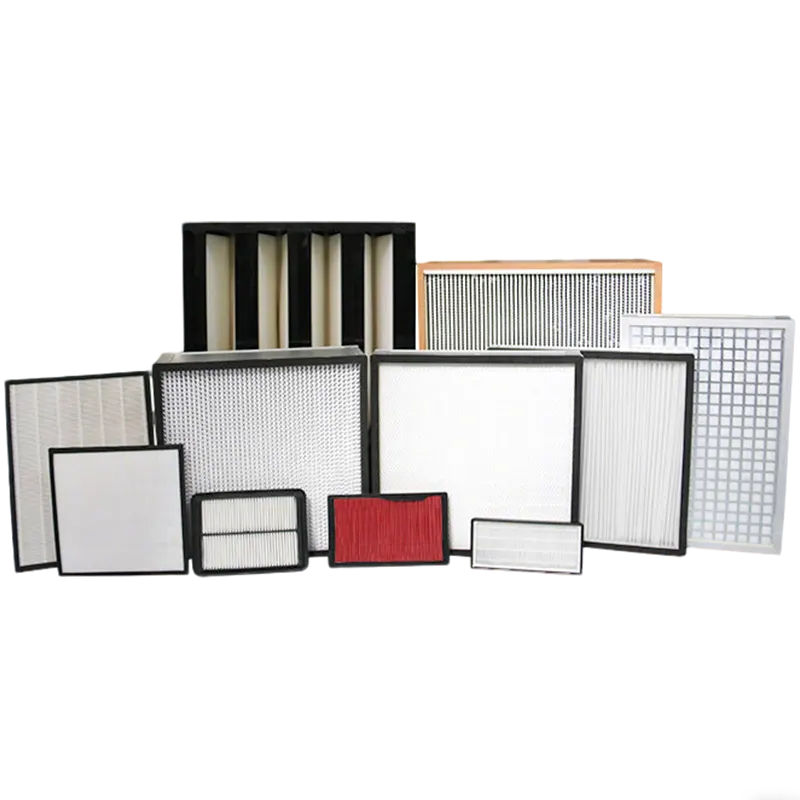
Replacement compatibility is four measurements, not one label. They are face size, depth, the mounting interface, and the seal surface. Here the depth is 600 mm on every row. A rigid pocket is also not a V-bank, since that format is angled mini-pleat packs rated for much higher airflow. “Same 592 face” does not mean interchangeable across those builds. The depth and the interface decide, and both belong on the order sheet.
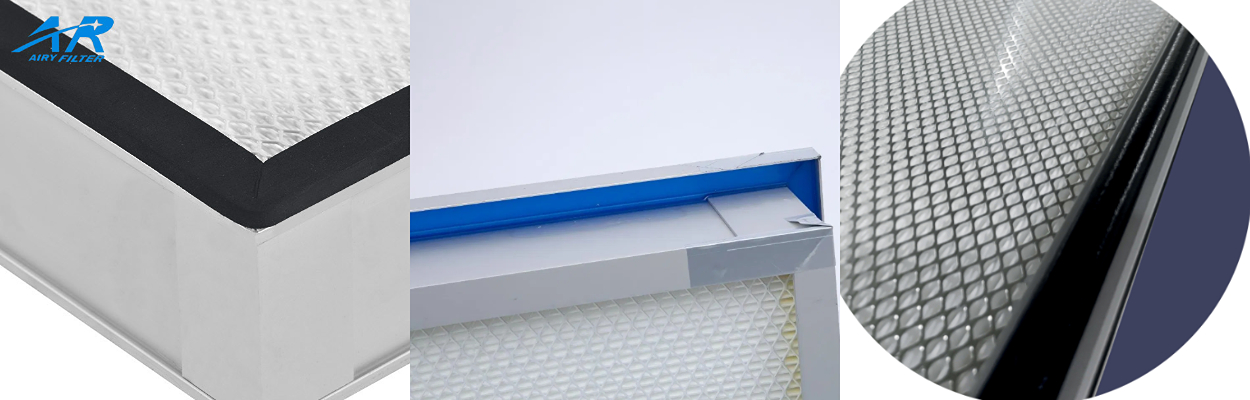
A 600 mm frame at 592×592 is heavier and stiffer to seat than a slim bag. The rails, clamps, and seal surface have to carry it without flexing the frame out of square. A bent frame reopens the seam-to-housing path that the welded build was chosen to close. Confirm the seating face and clamp compression against a photo of your own housing before the door closes.
Order a Rigid Pocket Filter From a Checklist
Ten fields turn “the same pocket as before” into an order that fits. The middle column is the AR-HCD reference; confirm the rest against your housing.
Work the table below line by line with your supplier. Each row names one field, what to confirm, and the matching AR-HCD reference. Filling it is the difference between a datasheet read and a label swap.
| Field | What to confirm | AR-HCD reference |
|---|---|---|
| Model / class code | Grade carried in the part number, not the box label | AR-HCD-F5 / -F6 / -F7 (EU5/6/7) |
| Nominal size W x H x D | Confirm actual versus nominal, and withdrawal clearance | 287 / 490 / 592 x 592 x 600 mm |
| Pockets | Count tied to the face, affects area and resistance | 3 / 5 / 6 by size |
| Efficiency class | Name grade and standard together | F5-F7 (ISO 16890); MERV band in title |
| Rated airflow | Your duty airflow versus the row’s rating | 2,100 / 3,650 / 4,250 m³/h |
| Initial resistance | Read at your class and your airflow | 55 / 60 / 80 Pa at F5 / F6 / F7 |
| Final resistance | Agree the change-out limit in writing | 200 Pa recommended |
| Filter area | Sanity-check area against airflow claims | 2.3 / 3.8 / 4.5 m² |
| Frame material | Match corrosion and cleanliness duty | Aluminium / galvanised / stainless / ABS |
| Seal and interface | Header or gasket to the housing, confirmed by photo | Welded pockets; interface per your track |
Where a field is unknown, do not fill a default. The two you are most likely to guess are actual dimensions and the sealing interface. Those are the ones that fail in the field, so request the built size and a photo of the header against your housing before production. Our HEPA filter sizes guide walks the nominal-versus-actual measurement that applies here too.
Non-standard sizes are listed as customizable on the datasheet. That path needs a versioned drawing both sides sign, not a phone note. When you order a rigid pocket filter this way, the drawing fixes depth, pocket count, and the seal so the next reorder reads the same row.
Airy Rigid Pocket Filter Solutions
Airy provides customized air filtration solutions to help buyers control fit, maintain sealed housings, and improve replacement accuracy.
Built to the AR-HCD Row You Confirm
Airy can build to the class, size, and airflow you name from the checklist. Frame material and seal are set against your housing, not a catalog default.
The welded pocket families are listed on this site, including the non-woven pocket filter and the polyester pocket filter.
Housings Matched on Paper
Airy can confirm the track, depth, and seal surface from your photos and drawings. The interface is agreed in writing before production starts.
From Replacement Photo to Signed Order
Send the old element and its stamped model, and Airy can help match the row or draw a custom size. One approved sample then fixes the standard for every reorder.
Frequently Asked Questions
Five questions a buyer asks a rigid pocket datasheet, and what actually answers them.
Is a rigid pocket filter the same as a V-bank?
No. A rigid pocket holds welded media bags inside a frame. A V-bank arranges angled mini-pleat packs in a deep frame rated for far higher airflow per face. Confirm which format your housing was built for before ordering.
Can it replace a flexible bag filter?
Only when four measurements match: face, depth of 600 mm, the mounting interface, and the seal. Then re-confirm class and airflow at your duty. Both are pockets, but the frame and header differ between the two families.
Is rigid-pocket resistance always lower?
No. Resistance moves with class and airflow, not with the word rigid. At one 287x592x600 face and 2,100 m³/h the sheet shows 55, 60, then 80 Pa across F5, F6, and F7. Higher grade is not lower pressure. Compare only at equal class and airflow.
Do same-face sizes interchange?
Not reliably. Two units stamped 592×592 can differ in depth, pocket count, frame, and sealing. The face is one of four measurements, so treat a same-face fit as a guess until depth and interface are confirmed on a photo or drawing.
What parameters do I need to order?
The ten checklist fields: class code, real size, pocket count, grade and standard, duty airflow, initial and final resistance, filter area, frame material, and the sealing interface. Where any is unknown, mark it to confirm rather than filling a default.