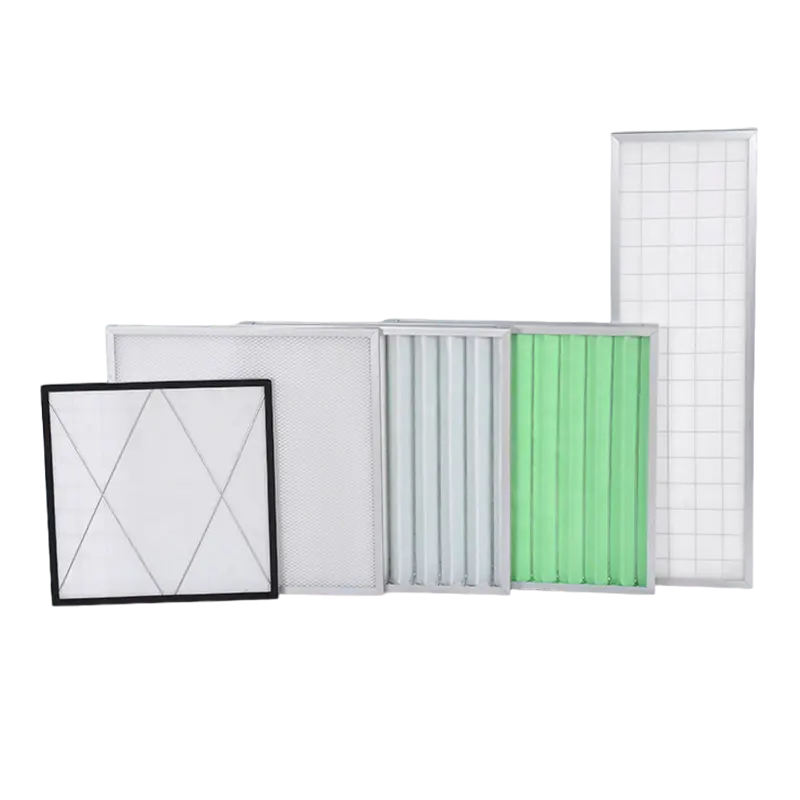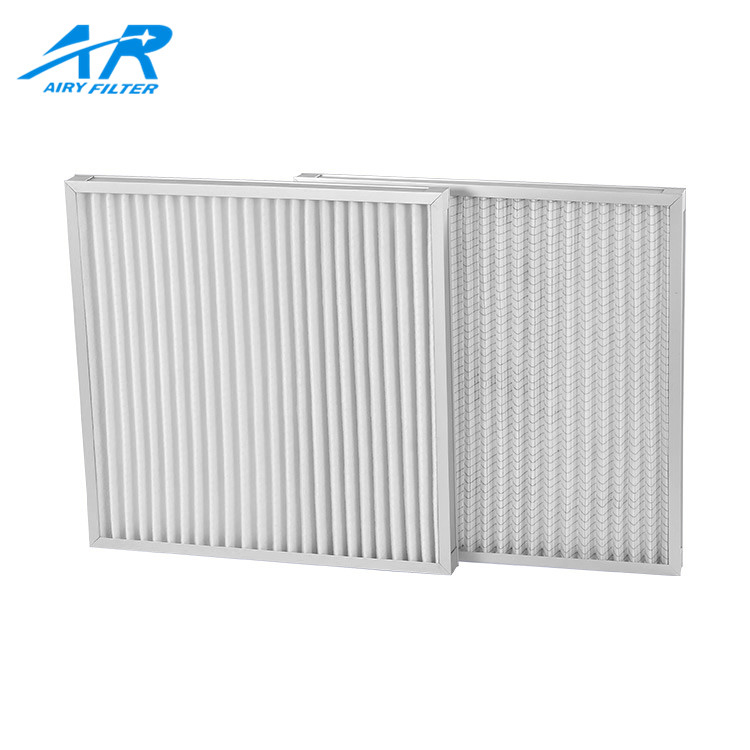
Na fabricação de alta precisão, produção farmacêutica, e ambientes de sala limpa, o controle rigoroso de partículas é essencial para prevenir a contaminação e manter a conformidade regulatória. Os filtros HEPA para salas limpas fornecem purificação crítica do ar, capturando partículas submicrométricas, microorganismos, e contaminantes transportados pelo ar em ambientes controlados.
A seleção do filtro HEPA correto para aplicações em salas limpas requer uma avaliação cuidadosa da eficiência da filtração, classificações de filtro, projetos de molduras, configurações de vedação, capacidade de fluxo de ar, e requisitos de certificação. Neste guia, explicamos as principais especificações dos filtros HEPA para salas limpas, incluindo classes de eficiência EN1822, tipos estruturais, considerações de dimensionamento, e fatores de fornecimento para ajudar engenheiros e compradores a escolher a solução de filtragem certa.
O que é um filtro HEPA para sala limpa?
UM filtro HEPA para sala limpa é uma unidade de filtragem de ar de alta precisão projetada para capturar partículas submicrométricas, microorganismos, e outros contaminantes transportados pelo ar em ambientes controlados.
Como um componente crítico dos sistemas de filtragem de salas limpas, Os filtros HEPA para salas limpas usam meios de fibra de vidro ultrafinos para reter partículas através de três mecanismos principais: interceptação, impactação, e difusão.
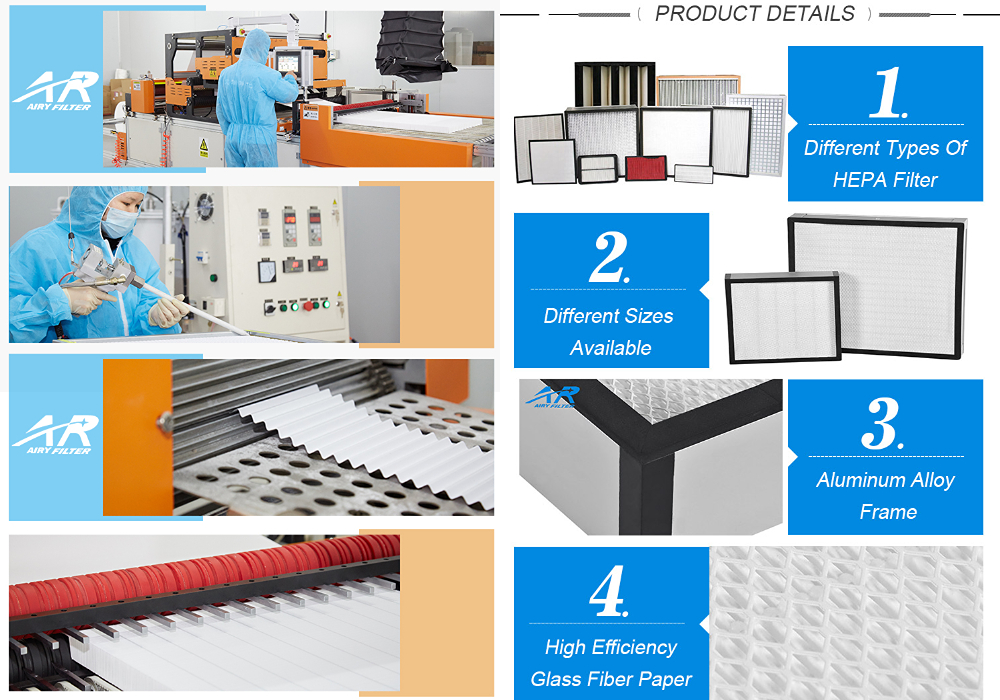
Componentes principais e construção de filtros HEPA para salas limpas:
- Mídia de filtro: Meio de microfibra de vidro submícron com distribuição de poros altamente uniforme e excelente resistência à umidade, fornecendo desempenho confiável de captura de partículas.
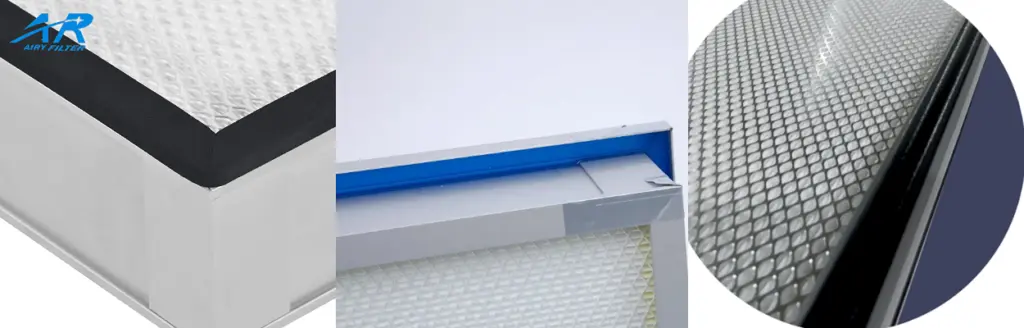
- Separadores de mídia: Fios adesivos termofusíveis contínuos para filtros HEPA de mini pregas ou separadores de folha de alumínio corrugado para filtros HEPA de pregas profundas, garantindo uma distribuição consistente do fluxo de ar.
- Materiais de moldura: Extrusões de liga de alumínio anodizado, 304/316 aço inoxidável, chapa galvanizada, ou estruturas de núcleo de madeira selecionadas de acordo com diferentes requisitos de aplicação em salas limpas.
- Vedação e Juntas: Selos de gel de poliuretano líquido autocurativos, Juntas de espuma PU, ou juntas de borracha de neoprene sem costura projetadas para evitar desvios de ar e manter a integridade da sala limpa.
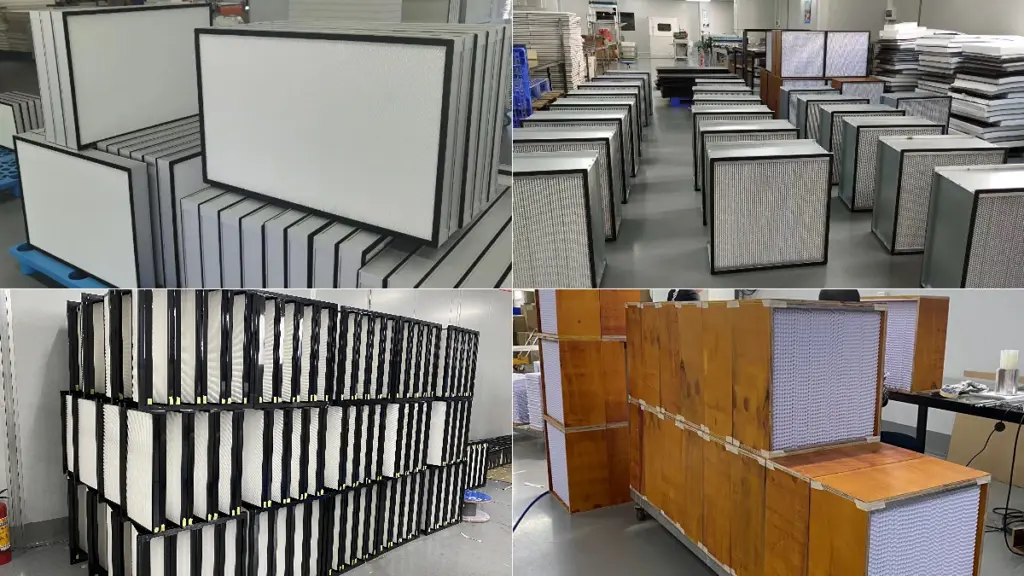
Classificações de filtros HEPA e padrões de certificação: EN1822, IEST, e ISO
As classificações do filtro HEPA definem a eficiência de filtragem e os requisitos de classificação dos filtros para salas limpas. Normas como EN1822, IEST-RP-CC001, e ISO 14644-1 são comumente usados para avaliar o desempenho do filtro HEPA e ULPA. A tabela abaixo resume os graus de filtros comuns, níveis de eficiência, e aplicações.
| Classe de filtro (EN1822) | Eficiência MPPS | Equivalente ao IEST | Classe de sala limpa ISO | Aplicações Típicas |
|---|---|---|---|---|
| H13HEPA | ≥99,95% | Tipo C (≈99,99%) | Classe ISO 7–8 | Salas limpas gerais, dispositivos médicos, Filtragem final de HVAC |
| H14HEPA | ≥99,995% | Tipo K / Tipo D | Classe ISO 5–6 | Enchimento farmacêutico, salas de cirurgia, Sistemas FFU |
| ULP Sub15 | ≥99,9995% | Tipo F | Classe ISO 3–4 | Fábricas de semicondutores, fotolitografia, fabricação avançada |
Tipos de filtros HEPA para aplicações em salas limpas
Os filtros HEPA para salas limpas estão disponíveis em diferentes designs estruturais para atender a vários fluxos de ar, espaço de instalação, e requisitos de filtragem. As duas configurações mais comuns usadas na indústria farmacêutica, semicondutor, médico, e salas limpas industriais são filtros HEPA mini-plissados e profundos.
Filtros HEPA mini-plissados
Os filtros HEPA de mini pregas usam dobras de mídia bem espaçadas e separadas por fios adesivos contínuos de fusão a quente. Este design compacto aumenta a área de filtração eficaz, mantendo ao mesmo tempo uma baixa resistência ao fluxo de ar, tornando-os adequados para salas limpas onde o espaço de instalação e a eficiência energética são importantes.
Principais vantagens:
- Design Compacto: Adequado para aplicações com profundidade de teto limitada ou espaço de instalação restrito.
- Baixa queda de pressão: A estrutura de pregas otimizada ajuda a reduzir a resistência ao fluxo de ar e a melhorar a eficiência energética do HVAC.
- Desempenho estável do fluxo de ar: O arranjo uniforme da mídia suporta distribuição consistente do fluxo de ar.
Aplicações Típicas: Módulos terminais de teto, bancos limpos, e unidades de filtro de ventiladores para salas limpas (UFFs).
Filtros HEPA de pregas profundas
Os filtros HEPA de pregas profundas utilizam pacotes de meios mais profundos suportados por separadores de alumínio corrugado para aumentar a área de filtração e a capacidade de retenção de poeira. Comparado com designs de mini-plissados, eles são mais adequados para sistemas que exigem maior capacidade de fluxo de ar, vida útil mais longa, e desempenho estrutural mais forte.
Principais vantagens:
- Alta capacidade de fluxo de ar: Adequado para sistemas HVAC de grande escala que exigem maior volume de filtração.
- Maior capacidade de retenção de poeira: A estrutura mais profunda do meio ajuda a prolongar os intervalos de substituição do filtro.
- Forte estabilidade estrutural: Os separadores de alumínio mantêm a geometria do filtro sob condições operacionais exigentes.
Aplicações Típicas: Unidades centrais de tratamento de ar (Ahus), salas limpas industriais, e sistemas de filtragem de alto volume.
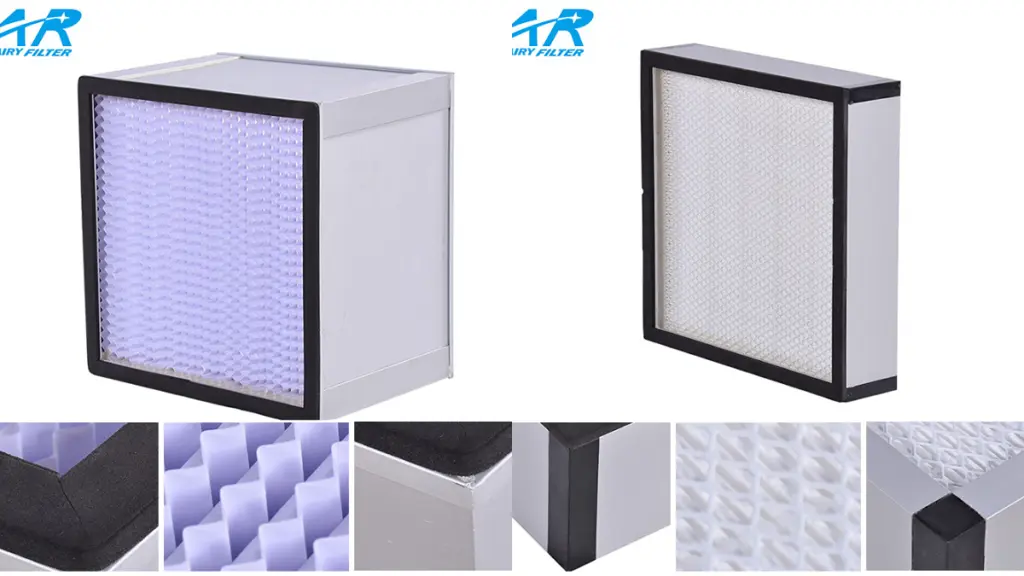
Opções de vedação de filtro HEPA e configurações de gaxeta
As vedações do filtro HEPA ajudam a evitar o desvio de ar e a manter o desempenho da filtragem em salas limpas. As soluções de vedação comuns incluem vedações de gel líquido, juntas de borracha de neoprene, e juntas de espuma de poliuretano, cada um projetado para diferentes requisitos de instalação e aplicações em salas limpas.
Selo de gel líquido (Selo Fluido)
Os filtros HEPA com vedação de gel líquido usam um canal de estrutura de filtro preenchido com poliuretano autocurativo ou gel de silicone. Durante a instalação, a vedação de gel se encaixa em um sistema de grade com ponta de faca para criar uma interface de vedação contínua e reduzir o vazamento de ar.
Principais recursos:
- Excelente controle de vazamento: Fornece uma vedação altamente confiável para ambientes críticos onde a prevenção de bypass é essencial.
- Desempenho de autocura: O material do gel pode se recuperar após pequenas deformações, ajudando a manter o desempenho de vedação a longo prazo.
Aplicações: Comumente usado na classe ISO 5 salas limpas, estéril instalações farmacêuticas, e sistemas de filtragem terminal de alto desempenho.
Junta de borracha de neoprene (EVA)
Os filtros HEPA com junta de borracha de neoprene usam uma tira de junta perfeita que é comprimida contra a estrutura da caixa do filtro para evitar vazamento de ar. Este método de vedação fornece uma solução prática para instalações padrão em salas limpas que exigem desempenho confiável e fácil manutenção.
Principais recursos:
- Solução econômica: Fornece desempenho de vedação confiável com uma estrutura de instalação mais simples.
- Manutenção fácil: Adequado para sistemas que exigem substituição regular do filtro ou manutenção de acesso lateral.
Aplicações: Amplamente utilizado em módulos terminais padrão, bancos de filtros de acesso lateral, laboratórios, e sistemas HVAC gerais para salas limpas.
Junta de espuma de poliuretano (Espuma PU)
Junta de espuma de poliuretano Os filtros HEPA usam uma junta de distribuição contínua de líquido aplicada diretamente na estrutura do filtro através de processos de fabricação automatizados. Depois de curar, a espuma PU forma uma vedação sem juntas flexível e durável com excelente recuperação elástica.
Principais recursos:
- Desempenho de vedação flexível: Mantém contato próximo com a superfície da carcaça sob diferentes condições operacionais.
- Recuperação Elástica Forte: Ajuda a compensar variações de instalação e vibrações mecânicas.
Aplicações: Adequado para sistemas de alta vibração, salas limpas industriais, e aplicações que exigem desempenho confiável de vedação a longo prazo.
Como selecionar o filtro HEPA correto para sua sala limpa
Selecionar o filtro HEPA certo para sala limpa requer a avaliação dos requisitos de fluxo de ar, dimensões do filtro, queda de pressão, e condições de aplicação. Os engenheiros devem considerar o volume da sala limpa, trocas de ar necessárias por hora (ACH), e projeto do sistema HVAC para determinar as especificações de filtro HEPA mais adequadas.
Calcule os requisitos de fluxo de ar para salas limpas
Determinar o fluxo de ar necessário é o primeiro passo ao selecionar filtros HEPA para salas limpas. O cálculo depende do volume da sala limpa, classe de limpeza ISO alvo, e trocas de ar necessárias por hora (ACH).
Etapa 1: Calcular o volume do fluxo de ar da sala limpa
A necessidade total de fluxo de ar pode ser calculada usando a seguinte fórmula:
Q (m³/h) = Volume da sala limpa (m³) × ACH obrigatório
Os requisitos típicos de troca de ar variam de acordo com a classificação da sala limpa:
| Classificação de salas limpas | Mudanças de ar típicas por hora (ACH) | Aplicações Típicas |
|---|---|---|
| Classe ISO 8 | 10–25 CAH | Áreas gerais de fabricação e ambientes controlados |
| Classe ISO 7 | 30–60 ACH | Produção de dispositivos médicos e áreas de processamento farmacêutico |
| Classe ISO 5 | 240–360 ACH ou fluxo de ar laminar de 0,35–0,55 m/s | Enchimento farmacêutico estéril e aplicações em salas limpas de alta precisão |
Etapa 2: Determinar a quantidade necessária de filtro HEPA
Depois de calcular a necessidade total de fluxo de ar, o número necessário de filtros HEPA pode ser determinado usando a seguinte fórmula:
Quantidade de filtro = volume total de fluxo de ar (Q) ÷ Capacidade nominal de fluxo de ar do filtro
Por exemplo, se uma sala limpa exigir 6000 m³/h de fluxo de ar e cada filtro HEPA fornece 1200 m³/h:
6000 ÷ 1200 = 5 Filtros Hepa
Este cálculo ajuda os engenheiros a determinar o número necessário de unidades de filtração, garantindo ao mesmo tempo distribuição suficiente do fluxo de ar e controle de contaminação.
Selecione o tamanho correto do filtro HEPA e a capacidade de fluxo de ar
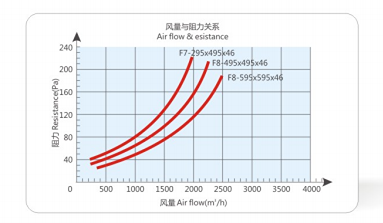
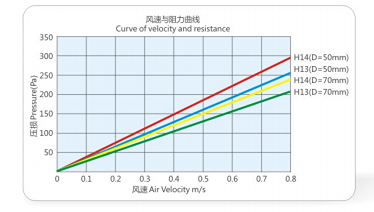
Depois de determinar o volume de fluxo de ar necessário, os engenheiros precisam selecionar dimensões do filtro HEPA e especificações de fluxo de ar que correspondam ao sistema HVAC da sala limpa. Tamanho do filtro, fluxo de ar avaliado, e a resistência inicial afetam diretamente a compatibilidade do HVAC, consumo de energia, e desempenho geral de filtragem de salas limpas.
As especificações comuns do filtro HEPA para salas limpas incluem:
| Tamanho nominal (milímetros) | Tamanho nominal (Polegadas) | Fluxo de ar avaliado | Fluxo de ar avaliado (CFM) | Resistência Inicial | Estrutura |
|---|---|---|---|---|---|
| 610 × 610 × 69 | 24″ × 24″ × 2,7″ | 600 m³/h | 350 CFM | ≤110Pa | Mini-plissado |
| 1220 × 610 × 69 | 48″ × 24″ × 2,7″ | 1200 m³/h | 700 CFM | ≤110Pa | Mini-plissado |
| 1170 × 570 × 69 | 46″ × 22,5″ × 2,7″ | 1000 m³/h | 590 CFM | ≤110Pa | Mini-plissado (UFF) |
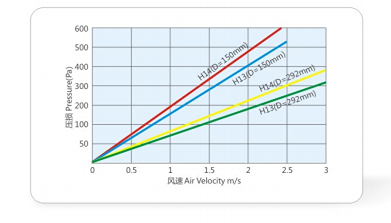
| 610 × 610 × 150 | 24″ × 24″ × 6″ | 1000 m³/h | 590 CFM | ≤180 Pa | Plissada Profunda |
| 610 × 610 × 292 | 24″ × 24″ × 11,5″ | 1500 m³/h | 880 CFM | ≤220 Pa | Plissada Profunda |
Ao selecionar tamanhos de filtro HEPA, engenheiros devem garantir a compatibilidade com grades de teto, Carcaças FFU, ou unidades de tratamento de ar. A resistência inicial mais baixa também pode ajudar a reduzir o consumo de energia HVAC durante a operação a longo prazo.
Role para ver mais dados:
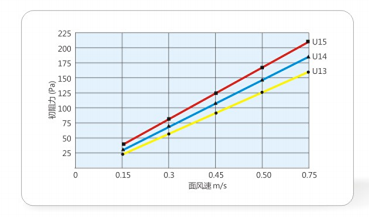
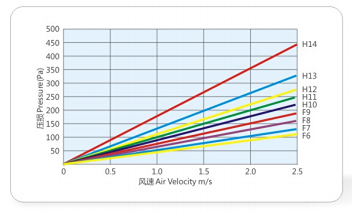
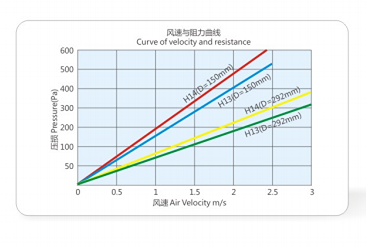
Combine a seleção do filtro HEPA com os requisitos da aplicação
Diferentes aplicações em salas limpas exigem eficiência de filtragem específica, capacidade de fluxo de ar, e projetos estruturais. O filtro HEPA selecionado deve corresponder ao nível de controle de contaminação, requisitos do sistema, e padrões da indústria.
Fatores de seleção comuns:
- Instalações farmacêuticas e médicas: Os filtros HEPA H13 ou H14 são comumente selecionados para ambientes estéreis, áreas de preenchimento, e salas cirúrgicas.
- Fabricação de semicondutores e eletrônicos: Os filtros U15 ULPA são usados para aplicações que exigem níveis de partículas extremamente baixos e controle avançado de contaminação.
- Salas Limpas Industriais: Filtros HEPA mini-plissados ou profundos são selecionados com base no espaço de instalação, requisitos de fluxo de ar, e expectativas de vida útil.
Fatores-chave ao escolher um fornecedor de filtros HEPA para salas limpas
Ao avaliar um fornecedor OEM de filtros de ar para salas limpas ou fazer pedidos em grandes quantidades no atacado, equipes de engenharia devem verificar:
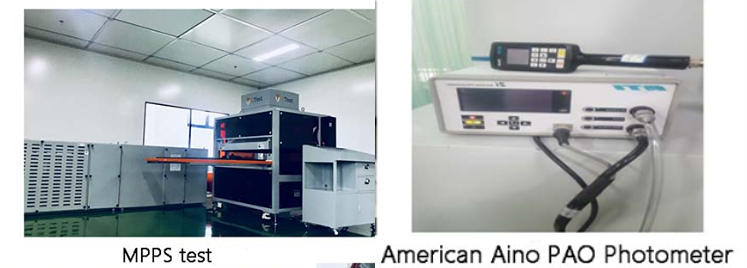
- 100% Teste de vazamento de varredura individual: Certifique-se de que cada filtro HEPA H13/H14 seja submetido a MPPS ou DOP EN1822 automatizado / Varredura de vazamento do fotômetro PAO, completo com certificados de teste individuais com número de série.
- Baixa queda de pressão inicial: Opte por uma geometria uniforme de mini pregas para minimizar a resistência estática do ventilador HVAC, reduzindo drasticamente o consumo anual de energia em salas limpas.
- Embalagem para salas limpas sem poeira: Os filtros devem ser ensacados duas vezes dentro da classe ISO 7 embalagens para salas limpas para eliminar riscos de contaminação durante frete marítimo e trânsito internacional.
Por que fazer parceria com a AiryFilter como seu fabricante de filtros HEPA?
Guangzhou Filtro arejado Companhia de Mídia, Ltd. é especializada na fabricação de alta eficiência produtos de filtragem para salas limpas projetado para atender a rigorosos requisitos de conformidade internacional, incluindo ISO 14644-1, EN1822, e padrões CE.
Com capacidades de fabricação profissional e soluções personalizadas, Airy oferece suporte a clientes globais com soluções confiáveis Filtros Hepa para sala limpa, Hvac, e aplicações industriais.
- Fabricante HEPA de fonte direta: Preços competitivos no atacado direto da fábrica com rastreabilidade total da matéria-prima.
- Filtragem de ar de espectro total: Catálogo completo que vai desde pré-filtros de painel G4 e filtros de bolso F7 até módulos H13/H14 HEPA e U15 ULPA.
- 100% Garantia de qualidade de fábrica: Cada unidade HEPA é testada individualmente quanto à queda de pressão, Resistência ao fluxo de ar, e penetração de partículas.
- Engenharia OEM/ODM personalizada: Dimensões personalizadas, profundidades de quadro especializadas, canais de vedação fluida, e etiquetagem privada para clientes B2B internacionais.
Com instalações de última geração e rigoroso controle de qualidade, garantimos soluções de filtragem de alto desempenho adaptadas às suas necessidades. Explorar Airy's Fabricação avançada para filtragem superior.
Perguntas frequentes
Qual é a vida útil média de um filtro HEPA para sala limpa?
Na classe ISO padrão 7/8 ambientes de sala limpa com pré-filtração G4/F7 adequada, Os filtros HEPA para salas limpas normalmente duram entre 3 para 5 anos. A substituição é obrigatória quando a resistência final atinge o dobro da queda de pressão inicial (Por exemplo, 250 – 300 Pai) ou durante falhas de auditoria de vazamento PAO.
Qual é a principal diferença de eficiência entre os filtros HEPA H13 e H14?
Filtros H13 HEPA oferecem ≥ 99.95% eficiência no MPPS (Tamanho de partícula mais penetrante), tornando-os adequados para a classe ISO 7/8 instalações. Os filtros H14 HEPA fornecem ≥ 99.995% eficiência no MPPS (10 vezes menor penetração de partículas), que é necessário para a classe ISO 5 enchimento farmacêutico estéril e produção de semicondutores.
Quando devo escolher o Gel Seal em vez dos filtros Gasket Seal HEPA?
Os filtros HEPA com vedação de gel são recomendados para instalações de grade de teto de carregamento superior em classe ISO crítica 5 salas limpas onde o bypass zero é obrigatório. As juntas de espuma de neoprene ou PU são ideais para unidades habitacionais de acesso lateral ou módulos de teto padrão com mecanismos de fixação.
O Airy Filter pode fornecer tamanhos de filtro OEM HEPA personalizados e rotulagem privada?
Sim, como fabricante de filtro HEPA de fonte direta, O filtro arejado de Guangzhou fornece personalização completa de OEM / ODM para dimensões, profundidades de quadro (alumínio, aço inoxidável), canais de gel fluido, e marca própria para distribuidores globais.