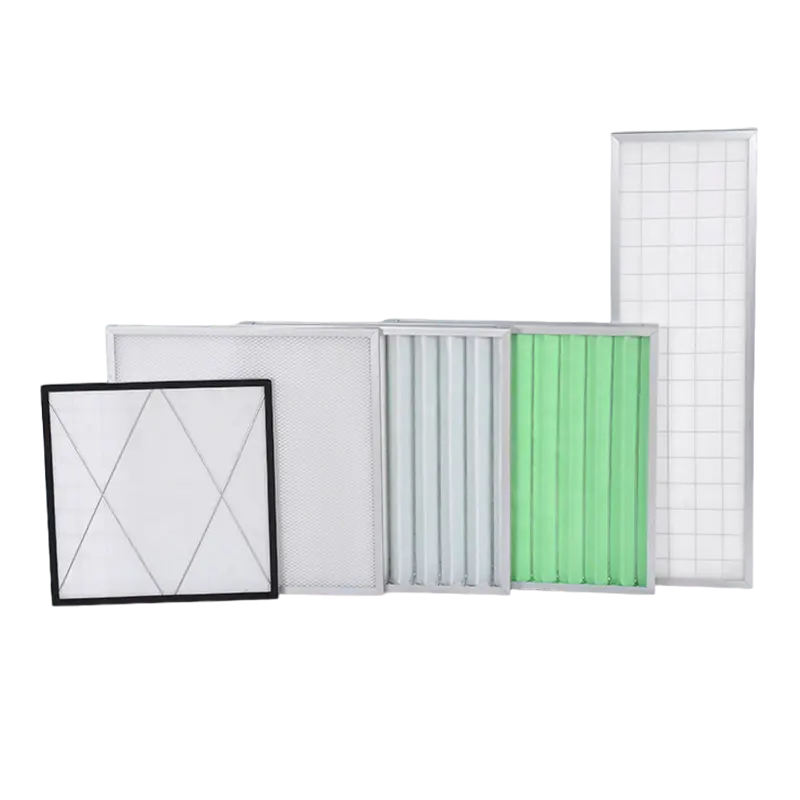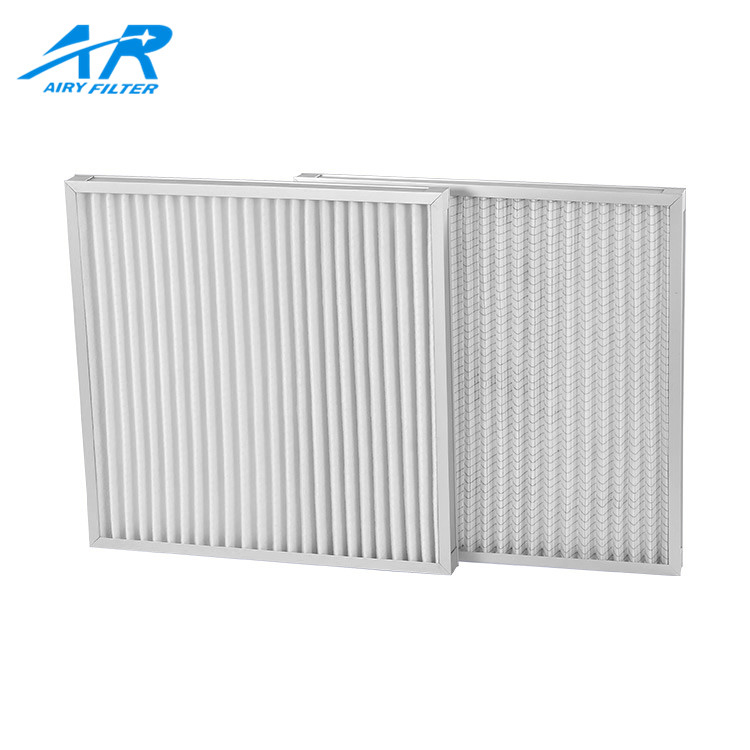
Trong sản xuất có độ chính xác cao, sản xuất dược phẩm, và môi trường phòng sạch, kiểm soát hạt nghiêm ngặt là điều cần thiết để ngăn ngừa ô nhiễm và duy trì tuân thủ quy định. Bộ lọc HEPA trong phòng sạch cung cấp khả năng lọc không khí quan trọng bằng cách thu giữ các hạt siêu nhỏ, vi sinh vật, và các chất gây ô nhiễm trong không khí trong môi trường được kiểm soát.
Việc lựa chọn bộ lọc HEPA phù hợp cho các ứng dụng phòng sạch đòi hỏi phải đánh giá cẩn thận hiệu quả lọc, lọc xếp hạng, thiết kế khung, cấu hình con dấu, công suất luồng không khí, và yêu cầu chứng nhận. Trong hướng dẫn này, chúng tôi giải thích các thông số kỹ thuật chính của bộ lọc HEPA cho phòng sạch, bao gồm các lớp hiệu quả EN1822, kiểu kết cấu, cân nhắc về kích thước, và các yếu tố tìm nguồn cung ứng để giúp các kỹ sư và người mua lựa chọn giải pháp lọc phù hợp.
Bộ lọc HEPA phòng sạch là gì?
MỘT bộ lọc HEPA phòng sạch là thiết bị lọc không khí có độ chính xác cao được thiết kế để thu giữ các hạt có kích thước nhỏ hơn micron, vi sinh vật, và các chất gây ô nhiễm không khí khác trong môi trường được kiểm soát.
Là một thành phần quan trọng của hệ thống lọc phòng sạch, Bộ lọc HEPA cho phòng sạch sử dụng vật liệu sợi thủy tinh siêu mịn để bẫy các hạt thông qua ba cơ chế chính: đánh chặn, sự va chạm, và khuếch tán.
Các thành phần cốt lõi và cấu tạo của bộ lọc HEPA phòng sạch:
- Lọc phương tiện: Vật liệu sợi thủy tinh siêu nhỏ có độ phân bố lỗ chân lông đồng đều cao và khả năng chống ẩm tuyệt vời, cung cấp hiệu suất thu giữ hạt đáng tin cậy.
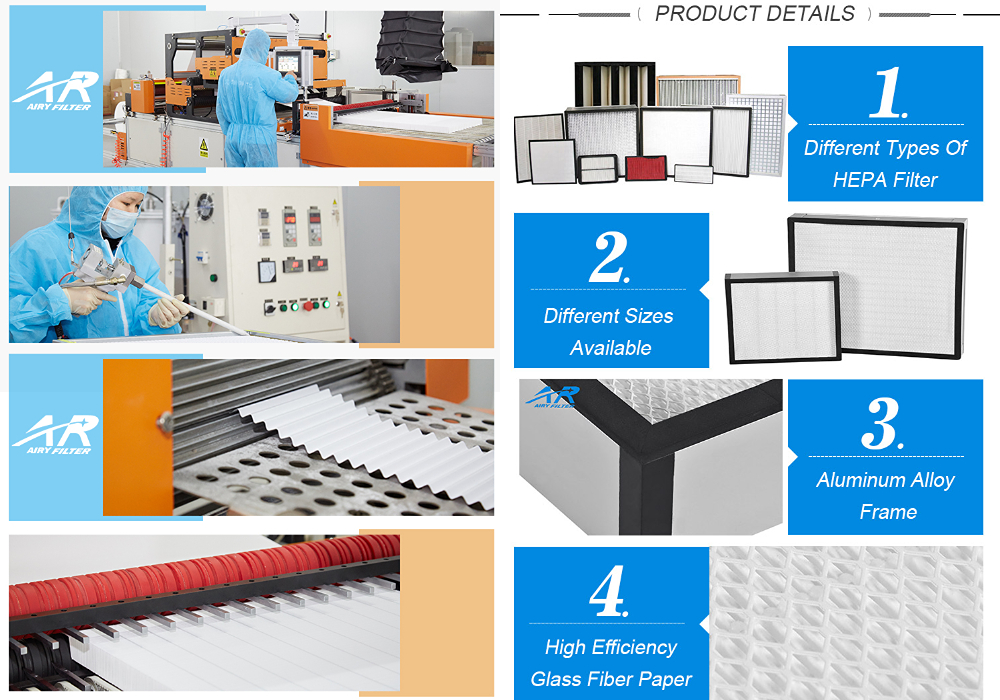
- Bộ tách phương tiện: Sợi dính nóng chảy liên tục dành cho bộ lọc HEPA nếp gấp nhỏ hoặc dải phân cách lá nhôm dạng sóng dành cho bộ lọc HEPA nếp gấp sâu, đảm bảo phân phối luồng không khí nhất quán.
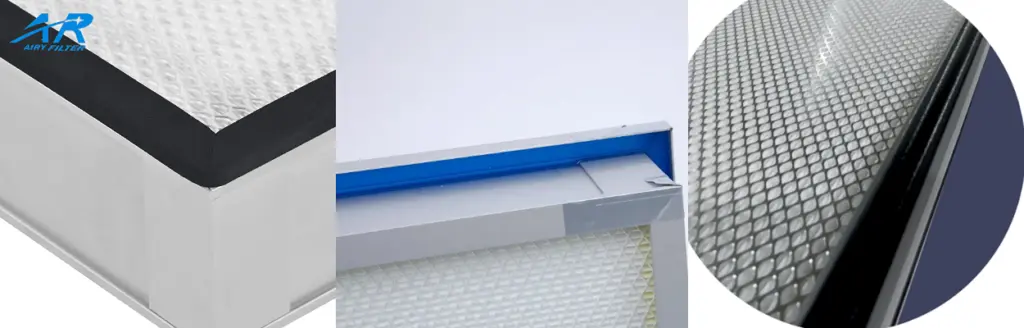
- Vật liệu khung: Đùn hợp kim nhôm anodized, 304/316 thép không gỉ, tấm kim loại mạ kẽm, hoặc khung lõi gỗ được lựa chọn theo yêu cầu ứng dụng phòng sạch khác nhau.
- Niêm phong và miếng đệm: Con dấu gel polyurethane lỏng tự phục hồi, Miếng đệm xốp PU, hoặc các miếng đệm cao su tổng hợp liền mạch được thiết kế để ngăn không khí lọt qua và duy trì tính toàn vẹn của phòng sạch.
Tiêu chuẩn chứng nhận và xếp hạng bộ lọc HEPA: EN1822, IEST, và ISO
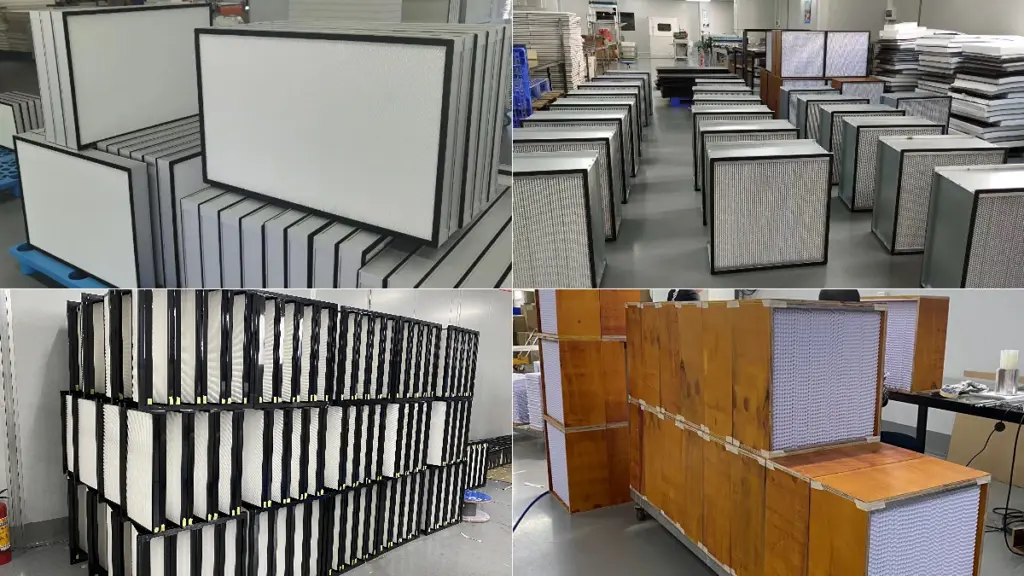
Xếp hạng bộ lọc HEPA xác định hiệu quả lọc và yêu cầu phân loại của bộ lọc phòng sạch. Các tiêu chuẩn như EN1822, IEST-RP-CC001, và ISO 14644-1 thường được sử dụng để đánh giá hiệu suất của bộ lọc HEPA và ULPA. Bảng dưới đây tóm tắt các cấp lọc phổ biến, mức độ hiệu quả, và ứng dụng.
| Lớp lọc (EN1822) | Hiệu quả MPPS | IEST tương đương | Lớp phòng sạch ISO | Các ứng dụng điển hình |
|---|---|---|---|---|
| H13 HEPA | ≥99,95% | Loại C (≈99,99%) | ISO lớp 7–8 | Phòng sạch chung, thiết bị y tế, Lọc cuối cùng HVAC |
| H14 HEPA | ≥99,995% | Loại K / Loại D | ISO lớp 5–6 | Làm đầy dược phẩm, phòng mổ, Hệ thống FFU |
| U15 ULP | ≥99,9995% | Loại F | ISO lớp 3–4 | Nhà máy bán dẫn, quang khắc, sản xuất tiên tiến |
Các loại bộ lọc HEPA cho ứng dụng phòng sạch
Bộ lọc HEPA phòng sạch có sẵn trong các thiết kế cấu trúc khác nhau để đáp ứng các luồng không khí khác nhau, không gian lắp đặt, và yêu cầu lọc. Hai cấu hình phổ biến nhất được sử dụng trong dược phẩm, chất bán dẫn, thuộc về y học, và phòng sạch công nghiệp là các bộ lọc HEPA có nếp gấp nhỏ và nếp gấp sâu.
Bộ lọc HEPA mini Pleat
Bộ lọc HEPA nếp gấp nhỏ sử dụng các nếp gấp vật liệu có khoảng cách gần nhau được ngăn cách bằng các sợi keo nóng chảy liên tục. Thiết kế nhỏ gọn này làm tăng diện tích lọc hiệu quả trong khi vẫn duy trì sức cản luồng khí thấp, làm cho chúng phù hợp với phòng sạch nơi không gian lắp đặt và hiệu quả sử dụng năng lượng là quan trọng.
Ưu điểm chính:
- Thiết kế nhỏ gọn: Thích hợp cho các ứng dụng có độ sâu trần hạn chế hoặc không gian lắp đặt hạn chế.
- Giảm áp suất thấp: Cấu trúc nếp gấp được tối ưu hóa giúp giảm sức cản của luồng không khí và cải thiện hiệu quả sử dụng năng lượng HVAC.
- Hiệu suất luồng không khí ổn định: Sự sắp xếp phương tiện thống nhất hỗ trợ phân phối luồng không khí nhất quán.
Các ứng dụng điển hình: Mô-đun trần nhà ga, băng ghế sạch sẽ, và bộ lọc quạt phòng sạch (FFU).
Bộ lọc HEPA nếp gấp sâu
Bộ lọc HEPA nếp gấp sâu sử dụng các gói vật liệu sâu hơn được hỗ trợ bởi các dải phân cách bằng nhôm dạng sóng để tăng diện tích lọc và khả năng giữ bụi. So với thiết kế xếp li mini, chúng phù hợp hơn với các hệ thống yêu cầu công suất luồng không khí cao hơn, tuổi thọ dài hơn, và hiệu suất cấu trúc mạnh mẽ hơn.
Ưu điểm chính:
- Công suất luồng không khí cao: Thích hợp cho các hệ thống HVAC quy mô lớn đòi hỏi khối lượng lọc cao hơn.
- Khả năng giữ bụi lớn hơn: Cấu trúc phương tiện sâu hơn giúp kéo dài khoảng thời gian thay thế bộ lọc.
- Ổn định kết cấu mạnh mẽ: Bộ tách nhôm duy trì hình dạng bộ lọc trong các điều kiện vận hành đòi hỏi khắt khe.
Các ứng dụng điển hình: Đơn vị xử lý không khí trung tâm (Ahus), phòng sạch công nghiệp, và hệ thống lọc khối lượng lớn.
Tùy chọn con dấu bộ lọc HEPA và cấu hình miếng đệm
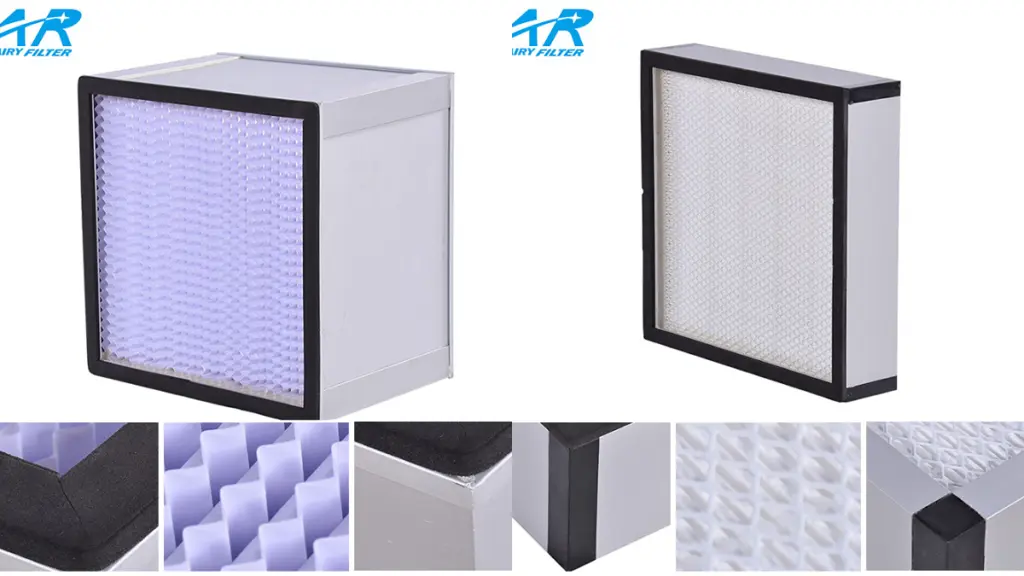
Phớt lọc HEPA giúp ngăn chặn không khí đi qua và duy trì hiệu suất lọc phòng sạch. Các giải pháp bịt kín phổ biến bao gồm niêm phong gel lỏng, miếng đệm cao su tổng hợp, và miếng đệm xốp polyurethane, mỗi loại được thiết kế cho các yêu cầu lắp đặt và ứng dụng phòng sạch khác nhau.
Con dấu gel lỏng (Con dấu chất lỏng)
Bộ lọc HEPA bịt kín bằng gel lỏng sử dụng kênh khung lọc chứa đầy gel polyurethane hoặc silicone tự phục hồi. Trong quá trình cài đặt, con dấu gel kết hợp với hệ thống lưới cạnh dao để tạo ra bề mặt bịt kín liên tục và giảm rò rỉ không khí.
Các tính năng chính:
- Kiểm soát rò rỉ tuyệt vời: Cung cấp lớp bịt kín có độ tin cậy cao cho các môi trường quan trọng nơi việc ngăn chặn đường vòng là cần thiết.
- Hiệu suất tự phục hồi: Vật liệu gel có thể phục hồi sau khi bị biến dạng nhỏ, giúp duy trì hiệu suất bịt kín lâu dài.
Ứng dụng: Thường được sử dụng trong lớp ISO 5 phòng sạch, vô trùng cơ sở dược phẩm, và hệ thống lọc đầu cuối hiệu suất cao.
Vòng đệm cao su tổng hợp (EVA)
Miếng đệm cao su tổng hợp Bộ lọc HEPA sử dụng dải đệm liền mạch nén vào khung vỏ bộ lọc để tránh rò rỉ không khí. Phương pháp bịt kín này cung cấp giải pháp thiết thực cho việc lắp đặt phòng sạch tiêu chuẩn đòi hỏi hiệu suất đáng tin cậy và bảo trì dễ dàng.
Các tính năng chính:
- Giải pháp hiệu quả về chi phí: Cung cấp hiệu suất bịt kín đáng tin cậy với cấu trúc lắp đặt đơn giản hơn.
- Bảo trì dễ dàng: Thích hợp cho các hệ thống yêu cầu thay thế bộ lọc thường xuyên hoặc bảo trì bên cạnh.
Ứng dụng: Được sử dụng rộng rãi trong các mô-đun thiết bị đầu cuối tiêu chuẩn, ngân hàng bộ lọc truy cập bên, Phòng thí nghiệm, và hệ thống HVAC phòng sạch chung.
Miếng đệm bọt Polyurethane (Bọt PU)
Miếng đệm xốp polyurethane Bộ lọc HEPA sử dụng miếng đệm phân phối chất lỏng liên tục được bôi trực tiếp lên khung bộ lọc thông qua quy trình sản xuất tự động. Sau khi chữa khỏi, Bọt PU tạo thành một lớp đệm kín không mối nối linh hoạt và bền bỉ với khả năng phục hồi đàn hồi tuyệt vời.
Các tính năng chính:
- Hiệu suất niêm phong linh hoạt: Duy trì sự tiếp xúc chặt chẽ với bề mặt vỏ trong các điều kiện hoạt động khác nhau.
- Phục hồi đàn hồi mạnh mẽ: Giúp bù đắp cho các biến thể lắp đặt và độ rung cơ học.
Ứng dụng: Thích hợp cho hệ thống rung động cao, phòng sạch công nghiệp, và các ứng dụng yêu cầu hiệu suất bịt kín lâu dài đáng tin cậy.
Cách chọn Bộ lọc HEPA phù hợp cho phòng sạch của bạn
Việc lựa chọn bộ lọc HEPA phòng sạch phù hợp đòi hỏi phải đánh giá các yêu cầu về luồng không khí, kích thước bộ lọc, áp lực giảm, và điều kiện áp dụng. Các kỹ sư nên xem xét thể tích phòng sạch, số lần thay đổi không khí cần thiết mỗi giờ (ACH), và thiết kế hệ thống HVAC để xác định thông số kỹ thuật của bộ lọc HEPA phù hợp nhất.
Tính toán yêu cầu về luồng không khí trong phòng sạch
Xác định lưu lượng gió cần thiết là bước đầu tiên khi lựa chọn bộ lọc HEPA phòng sạch. Việc tính toán phụ thuộc vào thể tích phòng sạch, mục tiêu lớp sạch ISO, và yêu cầu thay đổi không khí mỗi giờ (ACH).
Bước chân 1: Tính toán lưu lượng luồng không khí trong phòng sạch
Tổng nhu cầu luồng không khí có thể được tính bằng công thức sau:
Q. (m³/h) = Khối lượng phòng sạch (m³) × ACH bắt buộc
Yêu cầu thay đổi không khí điển hình khác nhau tùy theo phân loại phòng sạch:
| Phân loại phòng sạch | Thay đổi không khí điển hình mỗi giờ (ACH) | Các ứng dụng điển hình |
|---|---|---|
| Lớp ISO 8 | 10–25 ACH | Khu vực sản xuất chung và môi trường được kiểm soát |
| Lớp ISO 7 | 30–60 ACH | Khu sản xuất thiết bị y tế và chế biến dược phẩm |
| Lớp ISO 5 | 240–360 ACH hoặc luồng không khí tầng 0,35–0,55 m/s | Ứng dụng chiết rót dược phẩm vô trùng và phòng sạch có độ chính xác cao |
Bước chân 2: Xác định số lượng bộ lọc HEPA cần thiết
Sau khi tính toán tổng nhu cầu luồng không khí, số lượng bộ lọc HEPA cần thiết có thể được xác định bằng công thức sau:
Số lượng bộ lọc = Tổng lưu lượng khí (Q.) ` Công suất luồng không khí của bộ lọc định mức
Ví dụ, nếu một phòng sạch yêu cầu 6000 m³/h luồng không khí và mỗi bộ lọc HEPA cung cấp 1200 m³/h:
6000 -> 1200 = 5 bộ lọc HEPA
Tính toán này giúp các kỹ sư xác định số lượng bộ lọc cần thiết trong khi vẫn đảm bảo phân phối đủ luồng không khí và kiểm soát ô nhiễm.
Chọn kích thước bộ lọc HEPA và công suất luồng khí phù hợp
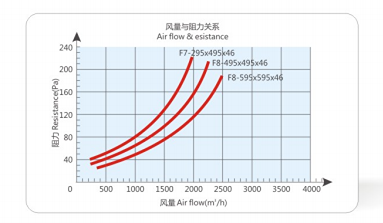
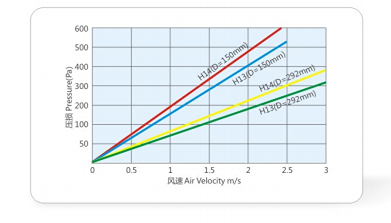
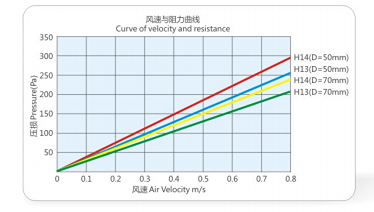
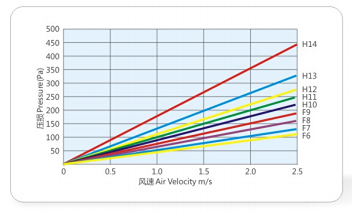
Sau khi xác định lưu lượng gió yêu cầu, các kỹ sư cần chọn kích thước bộ lọc HEPA và thông số kỹ thuật luồng khí phù hợp với hệ thống HVAC phòng sạch. Kích thước bộ lọc, luồng không khí định mức, và điện trở ban đầu ảnh hưởng trực tiếp đến khả năng tương thích HVAC, tiêu thụ năng lượng, và hiệu suất lọc phòng sạch tổng thể.
Thông số kỹ thuật bộ lọc HEPA phòng sạch phổ biến bao gồm:
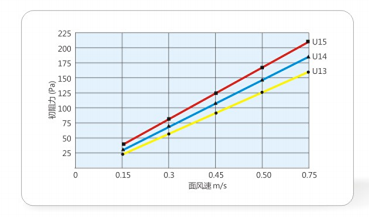
| Kích thước danh nghĩa (mm) | Kích thước danh nghĩa (Inch) | Luồng khí định mức | Luồng khí định mức (CFM) | Kháng cự ban đầu | Kết cấu |
|---|---|---|---|---|---|
| 610 × 610 × 69 | 24″ × 24″ × 2,7″ | 600 m³/h | 350 CFM | 110 Pa | Nếp gấp nhỏ |
| 1220 × 610 × 69 | 48″ × 24″ × 2,7″ | 1200 m³/h | 700 CFM | 110 Pa | Nếp gấp nhỏ |
| 1170 × 570 × 69 | 46″ × 22,5″ × 2,7″ | 1000 m³/h | 590 CFM | 110 Pa | Nếp gấp nhỏ (FFU) |
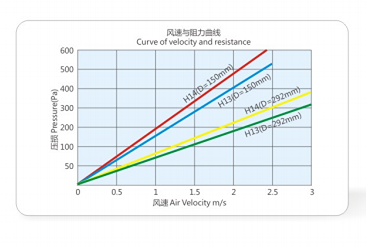
| 610 × 610 × 150 | 24″ × 24″ × 6″ | 1000 m³/h | 590 CFM | 180 Pa | nếp gấp sâu |
| 610 × 610 × 292 | 24″ × 24″ × 11,5″ | 1500 m³/h | 880 CFM | 220 Pa | nếp gấp sâu |
Khi chọn kích thước bộ lọc HEPA, kỹ sư cần đảm bảo khả năng tương thích với lưới trần, Vỏ FFU, hoặc thiết bị xử lý không khí. Điện trở ban đầu thấp hơn cũng có thể giúp giảm mức tiêu thụ năng lượng HVAC trong quá trình hoạt động lâu dài.
Cuộn để xem thêm dữ liệu:
Lựa chọn bộ lọc HEPA phù hợp với yêu cầu ứng dụng
Các ứng dụng phòng sạch khác nhau yêu cầu hiệu quả lọc cụ thể, công suất luồng không khí, và thiết kế kết cấu. Bộ lọc HEPA được chọn phải phù hợp với mức độ kiểm soát ô nhiễm, yêu cầu hệ thống, và tiêu chuẩn ngành.
Các yếu tố lựa chọn chung:
- Cơ sở dược phẩm và y tế: Bộ lọc HEPA H13 hoặc H14 thường được lựa chọn cho môi trường vô trùng, khu vực lấp đầy, và phòng mổ.
- Sản xuất chất bán dẫn và điện tử: Bộ lọc U15 ULPA được sử dụng cho các ứng dụng yêu cầu mức hạt cực thấp và kiểm soát ô nhiễm tiên tiến.
- Phòng sạch công nghiệp: Bộ lọc HEPA nếp gấp nhỏ hoặc nếp gấp sâu được lựa chọn dựa trên không gian lắp đặt, yêu cầu về luồng không khí, và kỳ vọng về tuổi thọ sử dụng.
Các yếu tố chính khi chọn nhà cung cấp bộ lọc HEPA phòng sạch
Khi đánh giá nhà cung cấp bộ lọc không khí phòng sạch OEM hoặc đặt hàng bán buôn số lượng lớn, đội kỹ thuật nên xác minh:
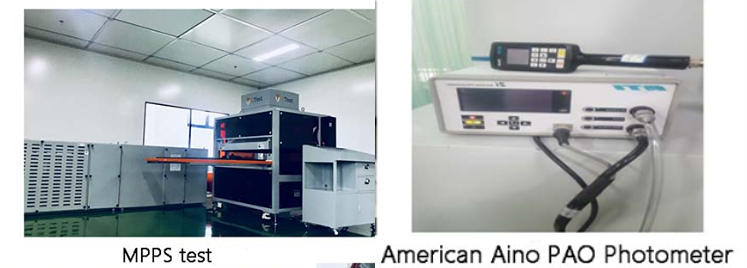
- 100% Kiểm tra rò rỉ quét riêng lẻ: Đảm bảo mọi bộ lọc HEPA H13/H14 đều trải qua EN1822 MPPS hoặc DOP tự động / Quét rò rỉ quang kế PAO, hoàn thành với các chứng chỉ kiểm tra được đánh số sê-ri riêng.
- Giảm áp suất ban đầu thấp: Lựa chọn hình dạng nếp gấp nhỏ đồng nhất để giảm thiểu lực cản tĩnh của quạt HVAC, giảm đáng kể mức tiêu thụ năng lượng phòng sạch hàng năm.
- Bao bì phòng sạch không bụi: Bộ lọc phải được đóng túi đôi bên trong Lớp ISO 7 đóng gói phòng sạch để loại bỏ rủi ro ô nhiễm trong quá trình vận chuyển đường biển và vận chuyển quốc tế.
Tại sao hợp tác với AiryFilter với tư cách là nhà sản xuất bộ lọc HEPA của bạn?
Quảng Châu Bộ lọc thoáng mát Công ty truyền thông, Ltd. chuyên sản xuất hiệu quả cao sản phẩm lọc phòng sạch được thiết kế để đáp ứng các yêu cầu tuân thủ quốc tế nghiêm ngặt, bao gồm ISO 14644-1, EN1822, và tiêu chuẩn CE.
Với khả năng sản xuất chuyên nghiệp và các giải pháp tùy chỉnh, Airy hỗ trợ khách hàng toàn cầu bằng các dịch vụ đáng tin cậy bộ lọc HEPA cho phòng sạch, HVAC, và ứng dụng công nghiệp.
- Nhà sản xuất HEPA nguồn trực tiếp: Giá bán buôn trực tiếp tại nhà máy cạnh tranh với khả năng truy xuất nguồn gốc nguyên liệu thô đầy đủ.
- Lọc không khí toàn phổ: Danh mục hoàn chỉnh từ bộ lọc trước bảng G4 và bộ lọc bỏ túi F7 đến các mô-đun H13/H14 HEPA và U15 ULPA.
- 100% Đảm bảo chất lượng nhà máy: Mỗi thiết bị HEPA đều được kiểm tra riêng về độ giảm áp suất, sức cản luồng không khí, và sự thâm nhập của hạt.
- Kỹ thuật OEM/ODM tùy chỉnh: Thứ nguyên tùy chỉnh, độ sâu khung chuyên dụng, kênh bịt kín chất lỏng, và ghi nhãn riêng cho khách hàng B2B quốc tế.
Với cơ sở vật chất hiện đại và kiểm soát chất lượng nghiêm ngặt, chúng tôi đảm bảo các giải pháp lọc hiệu suất cao phù hợp với nhu cầu của bạn. Khám phá Airy Sản xuất tiên tiến để lọc vượt trội.
Câu hỏi thường gặp
Tuổi thọ trung bình của bộ lọc HEPA phòng sạch là bao nhiêu??
Trong lớp ISO tiêu chuẩn 7/8 môi trường phòng sạch với bộ lọc trước G4/F7 thích hợp, Bộ lọc HEPA phòng sạch thường kéo dài giữa 3 ĐẾN 5 năm. Bắt buộc phải thay thế khi điện trở cuối cùng đạt gấp đôi mức giảm áp suất ban đầu (ví dụ., 250 – 300 Pa) hoặc trong quá trình kiểm tra rò rỉ PAO không thành công.
Sự khác biệt hiệu quả chính giữa bộ lọc HEPA H13 và H14 là gì?
Bộ lọc H13 HEPA cung cấp ≥ 99.95% hiệu quả tại MPPS (Kích thước hạt xuyên thấu nhất), làm cho chúng phù hợp với Lớp ISO 7/8 cơ sở. Bộ lọc H14 HEPA cung cấp ≥ 99.995% hiệu quả tại MPPS (10 độ xuyên thấu của hạt thấp hơn lần), được yêu cầu cho Lớp ISO 5 sản xuất chất bán dẫn và chiết rót dược phẩm vô trùng.
Khi nào tôi nên chọn Gel Seal thay vì Gasket Seal Bộ lọc HEPA?
Bộ lọc HEPA bịt kín bằng gel được khuyên dùng cho việc lắp đặt lưới trần tải hàng đầu ở Cấp ISO quan trọng 5 phòng sạch nơi bắt buộc phải bỏ qua bằng 0. Miếng đệm xốp cao su tổng hợp hoặc PU lý tưởng cho các đơn vị nhà ở có lối vào từ bên cạnh hoặc mô-đun trần tiêu chuẩn có cơ cấu kẹp.
Bộ lọc Airy có thể cung cấp kích thước bộ lọc OEM HEPA tùy chỉnh và ghi nhãn riêng?
Đúng, là nhà sản xuất bộ lọc HEPA nguồn trực tiếp, Bộ lọc Airy Quảng Châu cung cấp đầy đủ tùy chỉnh OEM/ODM cho kích thước, độ sâu khung (nhôm, thép không gỉ), kênh gel chất lỏng, và nhãn hiệu riêng cho các nhà phân phối toàn cầu.